WW/PORTSTERMI
US Port Authorities Back Dock-Side Nuclear Reactors to Power Cranes
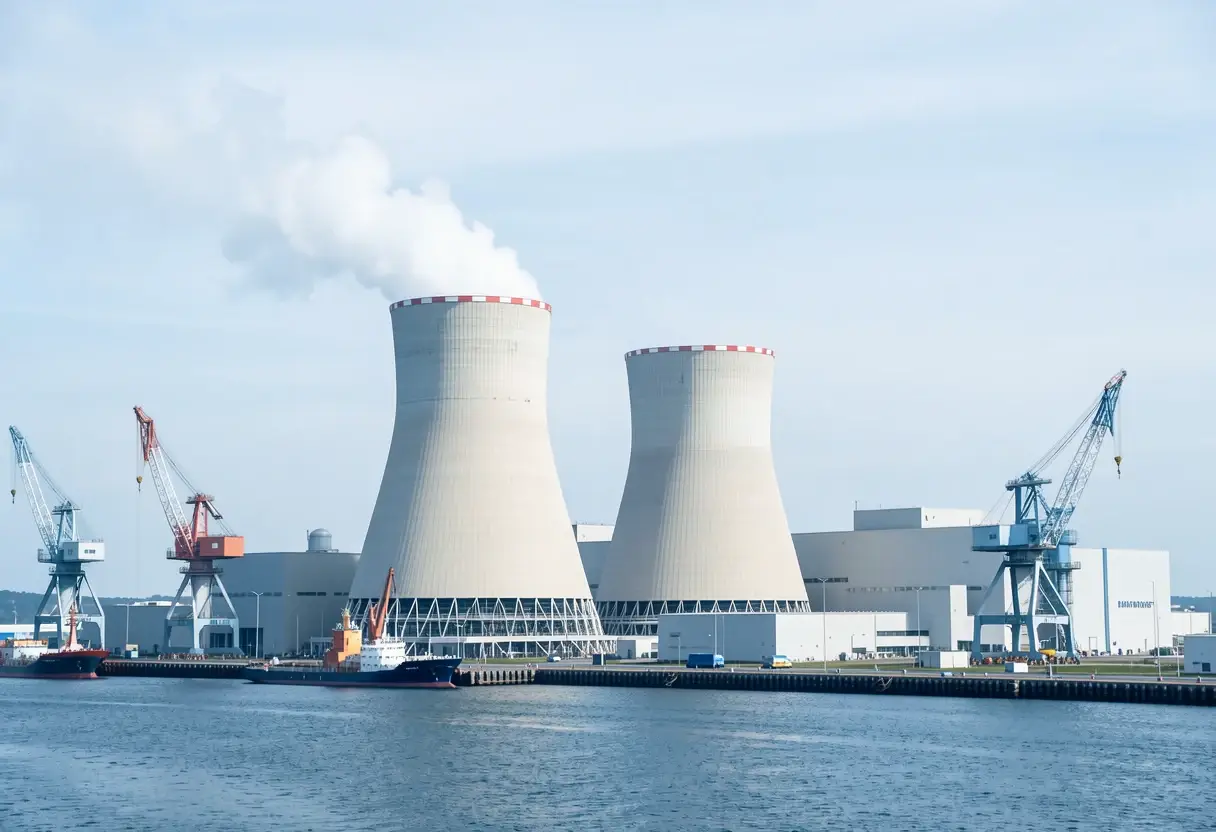
AAPA has endorsed White House plans for small modular reactors at maritime ports, with Long Beach and Corpus Christi backing SMR and floating nuclear plant feasibility studies.
- By
- James Calloway
- Filed
- Length
- 636 words
- Read
- 3 min
Key points05
- AAPA has endorsed White House efforts to build small modular reactors (SMRs) at US maritime ports
- Port of Long Beach hosts SMR start-up Bluecore as a tenant
- Port of Corpus Christi partnered with CORE POWER on a floating nuclear power plant feasibility study
- US Navy has used small modular reactor technology for seventy years
- AAPA wants federal permitting clarity and Coast Guard emergency-response protocols
The American Association of Port Authorities (AAPA) has formally backed White House efforts to build small modular reactors (SMRs) at maritime ports, arguing the units could keep ship-to-shore cranes running through the night and anchor a diversified power strategy for US cargo gateways.
"We are witnessing an undeniable momentum for nuclear energy at ports across the maritime industry," AAPA President and CEO Sang Yi said in a release announcing the association's position.
What is AAPA actually proposing?
Yi laid out a broad energy vision rather than a single-technology bet. Partnerships have already emerged across the country, he said, to examine port microgrids, shoreside power, and emerging vessel propulsion technology applications. Those partnerships, according to Yi, see potential for SMRs well beyond propelling cargo ships across oceans — including job creation for American workers and overnight power for port cranes.
"A diverse energy portfolio, including expanded grid connections, energy storage, microgrids, and other emerging technologies like SMRs, will be the answer," Yi said.
He drew a clear line on safety. Nuclear technology, he stressed, must meet rigorous safety, security, environmental, and regulatory standards. AAPA is now working across industries for clear federal permitting responsibilities and strong emergency-response protocols developed with the US Coast Guard through meaningful public and stakeholder engagement.
"America's ports are gateways to the global economy and require reliable, resilient, and sufficient power to keep American commerce moving," Yi said.
Which ports are moving first?
Two of the country's major gateways put concrete projects behind the rhetoric.
At the Port of Long Beach, CEO Noel Hacegaba pointed to a live tenant as proof the concept has traction: start-up Bluecore is already operating at the port. "When you look at the different options that are on the table, small modular reactor has already been used by the US Navy for seventy years, it's been adopted in different sectors and industries across the globe," Hacegaba said. "Thanks to federal leadership at the US maritime administration and to start ups like Bluecore who is a tenant at the Port of Long Beach now, we can now leverage federal leadership and private sector innovate to explore fully the adoption of SMR technology to power the port of the future."
The Port of Corpus Christi has gone a step further on paper. Chief Strategy and Innovation Officer Jeff Pollack disclosed a partnership with CORE POWER on a site-specific feasibility study covering the technical, logistical, and regulatory questions around deploying Floating Nuclear Power Plants (FNPPs) and receiving nuclear-propelled vessels.
"This is a critical step toward advancing nuclear applications in maritime," Pollack said. "We are excited about producing the first end-to-end evaluation of nuclear readiness on an existing maritime trade route."
Why does this matter for shippers?
The commercial logic is straightforward. Electrification of port equipment — cranes, shoreside power for berthed vessels, cold ironing — is driving demand for firm, round-the-clock power that many local grids near port districts struggle to supply. An SMR or floating plant sited at a terminal would reduce exposure to grid constraints and price spikes while supporting the emissions-reduction commitments carriers and cargo owners increasingly write into service contracts.
There are hurdles. Federal permitting for nuclear installations remains complex, and AAPA itself concedes that clear agency responsibilities and Coast Guard-coordinated emergency protocols have not yet been settled. The Corpus Christi study is billed as the first end-to-end evaluation of nuclear readiness on an existing trade route, which suggests how early the industry still is in the process.
With AAPA now lobbying alongside the White House, and Long Beach and Corpus Christi running live feasibility work, expect the permitting and emergency-response framework — not the reactor technology itself — to be the gating factor for dock-side nuclear power at US ports.
Original: ports.org
More from James Calloway
Show full bio
Correspondent covering companies, deals and strategy in Ocean and air freight, container shipping at Waybill Wire.
607 articles
Related05
ABS and US DOE Sign Maritime Nuclear MOU With No Money Attached
ABS and DOE Sign MOU to Push Nuclear Power Onto Commercial Ships
ABS and U.S. DOE Sign Agreement to Advance Nuclear-Powered Shipping
US DOE, ABS sign nuclear shipping framework agreement
Record AAPA Convention Puts Nuclear Power and Faster Dredging Front and Center