WW/MARKETANAL
U.S. chip curbs and three Suez service returns redraw supply-chain risk
U.S. chip export controls, three restored Suez services and a proposed rail merger join a 0.4% industrial contraction and $748.2 billion in retail sales.
- Desk
- Rates & Markets
- By
- Elena Vasquez
- Filed
- Length
- 755 words
- Read
- 4 min
Key points05
- Maersk and Hapag-Lloyd will restore three Asia-Europe services through the Suez Canal in December.
- New U.S. advanced-chip export restrictions cover Malaysia, Singapore and Thailand.
- October demand and output diverged: retail sales rose 0.8% to $748.2 billion, manufacturing rose 0.3%, and total industrial production fell 0.4%.
- Kontoor Brands plans $50 million for core-product inventory following third-quarter delivery disruptions.
- OSHA substance-related hazard-communication changes have a Nov. 20 deadline.
U.S. retail sales reached $748.2 billion in October, up 0.8% from September and 6.8% from a year earlier. The Wednesday, Nov. 18 supply-chain snapshot contrasted that demand with a 0.4% fall in total U.S. industrial production.
The Federal Reserve reported manufacturing output up 0.3% in October, supported by motor vehicles and technology equipment, while capacity utilization declined to 76.4%. Logistics Management reported gains in e-commerce and general merchandise despite inflation pressure. For retailers, carriers and forwarders, the readings support holiday replenishment, but not a uniform rise across every cargo category.
What does the Suez return change for freight buyers?
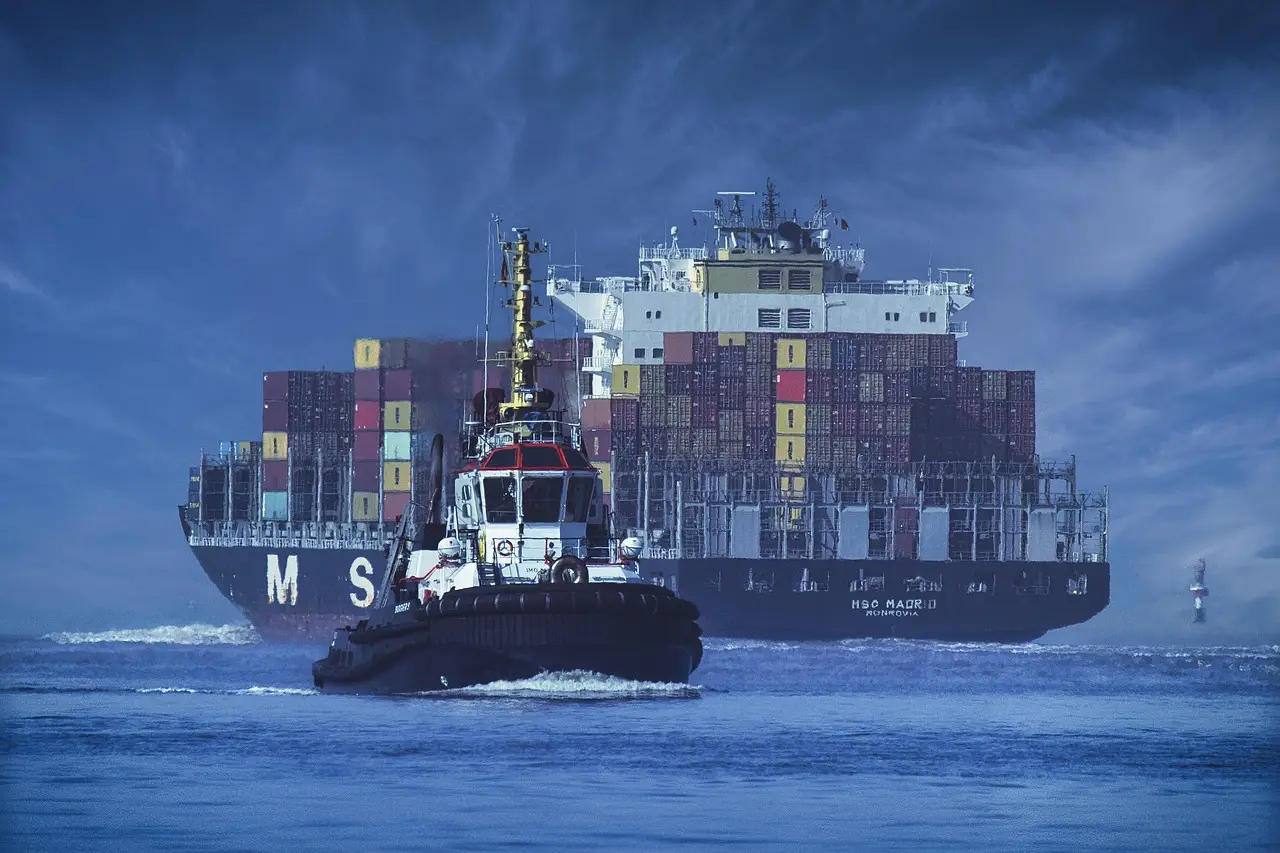
Maersk and Hapag-Lloyd will return three Asia-Europe services to the Suez Canal in December, FreightWaves reported. FreightWaves said the restored routings could free vessel capacity and give shippers more service options, but congestion and security risks leave schedules and rate effects uncertain.
Carriers may therefore regain deployable capacity without guaranteeing lower spot prices. Forwarders need to test the restored routings against live congestion, security costs and customer commitments before assuming a market-wide rate reduction.
How do U.S. chip controls reach freight networks?
Reuters reported that new U.S. restrictions on advanced-chip exports to Malaysia, Singapore and Thailand add compliance duties for overseas data centers. Reuters also said the controls threaten investment across Southeast Asia’s fast-growing AI infrastructure market.
For project logistics providers and forwarders, uncertainty over those investment decisions can complicate equipment-origin and shipment-volume planning. The restriction therefore reaches beyond semiconductor exporters into the infrastructure supply chains supporting overseas data centers.
What could the Union Pacific-Norfolk Southern merger change?
Union Pacific and Norfolk Southern argue their combination would lower costs and improve service, according to FreightWaves. FreightWaves also reported that rival railroads warn a proposed transcontinental network would reduce competition as regulators prepare to assess the transaction.
For shippers, lower costs and better service would be the central commercial test, while reduced competition could limit pricing and service choices. Forwarders would need to track the regulators’ conditions before those effects reach customer contracts.
How far is warehouse AI scaling?
An MIT–Mecalux survey of 1,967 professionals found that companies expect AI to make more warehouse decisions by 2028. The survey identified legacy integration, weak data and uncertain returns as persistent barriers that prevent operators from scaling projects consistently.
US Foods plans to extend autonomous inventory-scanning trials from one warehouse to six additional facilities by year-end, Supply Chain Dive reported. The company expects the robots to accelerate counts and support forecasting, productivity and working-capital goals.
The two developments show a narrow physical pilot alongside broader expectations for decision authority. For carriers and third-party logistics providers, measurable throughput gains will determine whether the investment case holds beyond the trial stage.
What is Kontoor doing about slower deliveries?
Kontoor Brands, the parent of Wrangler, plans $50 million for core-product inventory, Supply Chain Dive reported. The company made the decision after longer lead times and supply-chain turbulence reduced inventory and delayed deliveries during the third quarter.
The investment gives Kontoor a financial buffer for core-product replenishment after a quarter of delayed deliveries. For apparel carriers and forwarders, the plan could support replenishment demand, although the announcement sets no shipment targets.
What changes under OSHA’s revised rule?
Employers handling hazardous chemicals must update workplace labels, written programs and training as revised information arrives, Work Safety 24/7 reported. Substance-related changes face a Nov. 20 deadline under OSHA’s updated hazard-communication standard.
The deadline makes the work immediate for warehouses and distributors that handle regulated materials. Companies must align labels, written programs and training because no single element can satisfy the standard alone.
How does the Supreme Court action affect shipper liability?
The U.S. Supreme Court returned a California crash case involving Walmart and a produce shipper for reconsideration, according to FreightWaves. The action preserves uncertainty over when shippers or freight recipients may face transportation-related liability.
For shippers, freight receivers and their advisers, that leaves the allocation of transportation risk unsettled. Contract and insurance decisions must therefore account for liability that the court has not resolved.
By December, the three restored Suez services will show whether additional vessel capacity reaches shippers as lower rates or gets absorbed by congestion and security costs. Alongside that test, the chip curbs, the Nov. 20 hazard deadline and the rail review will determine how much policy and network uncertainty remains in freight plans.
Source: scmr.com
More from Elena Vasquez
Show full bio
News editor covering people, launches and day-to-day practice in Ocean and air freight, container shipping at Waybill Wire.
956 articles
Related05
Suez Traffic Hits 35% of Normal as Carriers Push Rates Higher
Suez Return Threatens to Cap November Rate Hikes, Sogese Warns
Ocean freight rates retreat as tariff uncertainty freezes import demand
Ocean freight rates spike again, Modern Retail reports
Air Cargo Carried $157 Billion in Frontloaded Trade in 2025, IATA Says