WW/OCEANFREIG
South Korea completes first Arctic container voyage as commercial challenges surface
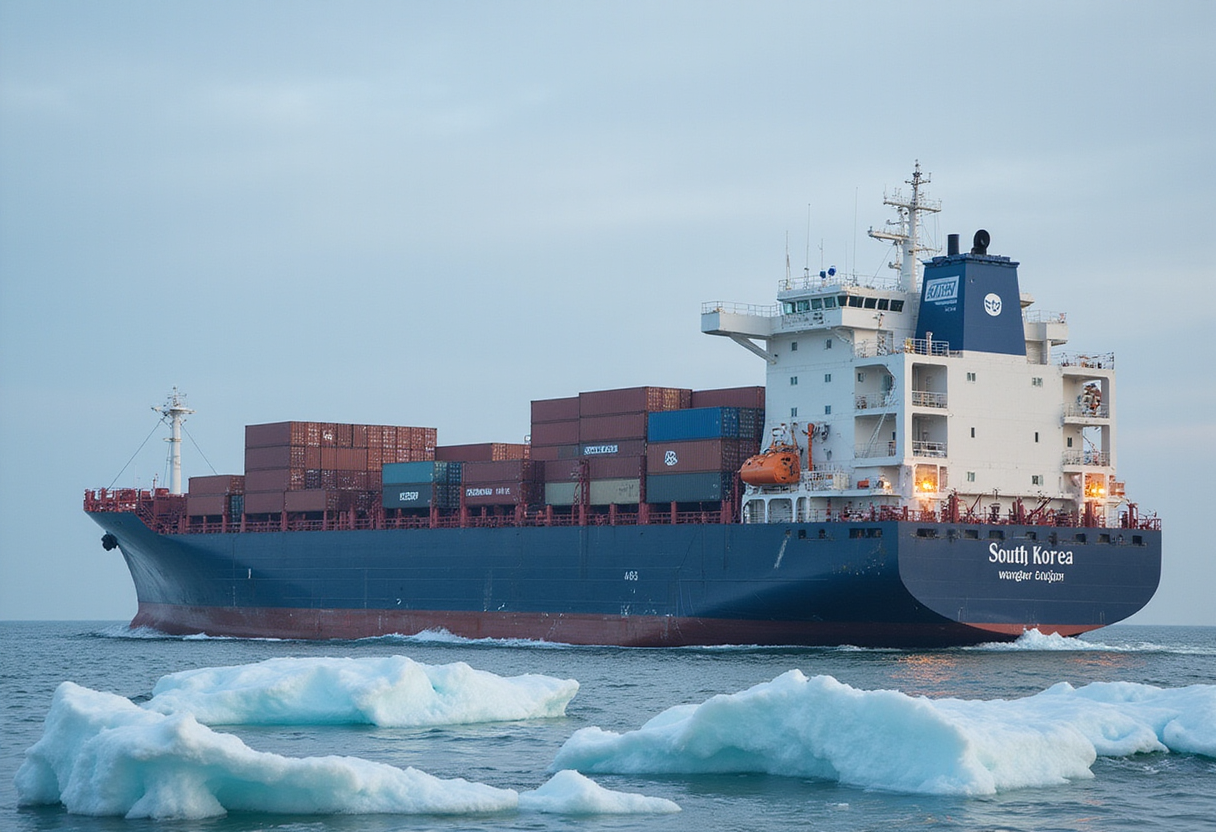
South Korea has completed its first Arctic container voyage, Container News reports, demonstrating polar capability but exposing cost, regulation, and schedule challenges that complicate regular Asia-Northern Europe service.
- Desk
- Ocean Freight
- By
- Elena Vasquez
- Filed
- Length
- 565 words
- Read
- 3 min
Key points05
- South Korea completed its first Arctic container voyage, according to Container News
- Russian Northern Sea Route regulations add icebreaker escort and pilotage fees for foreign operators on most segments
- Arctic container transits typically save days versus Suez routing between Northeast Asia and Northern Europe
- Arctic container service attempts have remained a minority pursuit since the late 2010s
- A single completed voyage does not constitute a scheduled Asia-Europe container service
South Korea has completed its first Arctic container voyage, with Container News reporting that commercial challenges to expanding the route have begun to surface alongside the operational milestone.
The voyage extends polar shipping beyond bulk cargoes into containerized freight and lands at a moment when operators outside the traditional route must weigh the economic factors that have kept Arctic service thin for years. The headline event — a Korean-linked container operation moving end-to-end through Arctic waters — confirmed technical readiness that planners and shipbuilders had prepared over recent years. The Container News framing, however, shifts attention from achievement to obstacle.
Why is the Arctic route commercially difficult?
For shippers and carriers, the commercial challenges cluster around three categories. Ice-class tonnage remains a structural constraint: polar-capable container ships carry a premium in both capital cost and charter rate, which narrows the operating margin a polar service can clear. Russian Northern Sea Route regulations continue to add fees for foreign operators, including icebreaker escort and pilotage costs on most segments of the passage. Insurance and bunker exposures for the route have also tightened in recent years as the operating environment around Russian Arctic ports grew more complex.
For forwarders, the harder question is regularity. Container trades run on fixed weekly schedules. A single demonstration voyage does not give shippers the consistency they need to plan inventory or lock in transit times against Asia-Northern Europe services. Until a service cadence emerges — or specific shippers identify one-off polar-transit requirements — the route is unlikely to feature in standard Asia-Europe procurement documents.
What does an Arctic transit offer shippers?
For South Korean policymakers, the voyage serves a strategic purpose independent of its commercial result. It demonstrates that Korean-built vessels can operate in polar conditions, that Korean ports can coordinate the logistics, and that Korean cargo interests are willing to back an Arctic option. Whether those capabilities translate into a sustained commercial service is the question the Container News source identifies as still open.
Broader industry context supports the cautious read. Arctic container transits have remained a minority pursuit since the first non-Russian commercial voyages in the late 2010s. The combination of seasonality, regulatory friction, and operational risk has kept most carriers focused on conventional Suez and Cape of Good Hope routes for general containerized cargoes, with polar passages reserved for specific use cases such as project cargo or seasonal speed-sensitive freight.
The competitive question for shippers now is whether the time savings of an Arctic transit — measured in days shorter than the conventional Suez route between Northeast Asia and Northern Europe — compensate for the higher cost and uncertainty attached to polar passages. Containers routed through the Northern Sea Route arrive faster on paper. The economic premium has kept most volume on the established lines, where schedule reliability and bunker availability support standard procurement.
What comes next for Korean polar shipping?
Looking forward, the trajectory the Container News report signals is incremental rather than transformational. The successful completion of one voyage validates capability. The next data points will be whether additional voyages are announced, whether rates stabilize at a level shippers will accept for regular use, and whether ice conditions and regulatory frameworks continue to support an expanding operating window.
For now, Korean shipping has logged a first. The harder commercial work — turning one transit into a recurring service — is just beginning.
Source: Google News: container shipping
More from Elena Vasquez
Show full bio
News editor covering people, launches and day-to-day practice in Ocean and air freight, container shipping at Waybill Wire.
329 articles
Related05
South Korea Trials Arctic Container Sailing as Regular Service Looms
China Opens Regular Arctic Container Service to Europe
PanStar Acro Completes Korea's First Commercial Arctic-Europe Round Trip
Container lines share the risk on Northern Sea Route sailings
Busan-Vladivostok box volumes top 33,000 TEU on China rail congestion