WW/OCEANFREIG
Sanctioned Tankers Flee to Russian Flag as Shadow Registries Close
Russia's registry grew 38.2% this year to become the world's 16th largest flag, with 87% of 107 reflagged vessels already sanctioned, CREA data shows.
- Desk
- Ocean Freight
- By
- Elena Vasquez
- Filed
- Length
- 589 words
- Read
- 3 min
Key points03
- CREA identified 107 vessels joining the Russian registry between January 2025 and June 2026; 87% were already sanctioned at the time of switching
- Seventy-two reflagged vessels subsequently carried an estimated €7.5bn ($8.8bn) of Russian fossil fuels
- Clarksons data through September 1 shows the Russian registry up 38.2% this year, now the 16th largest flag worldwide
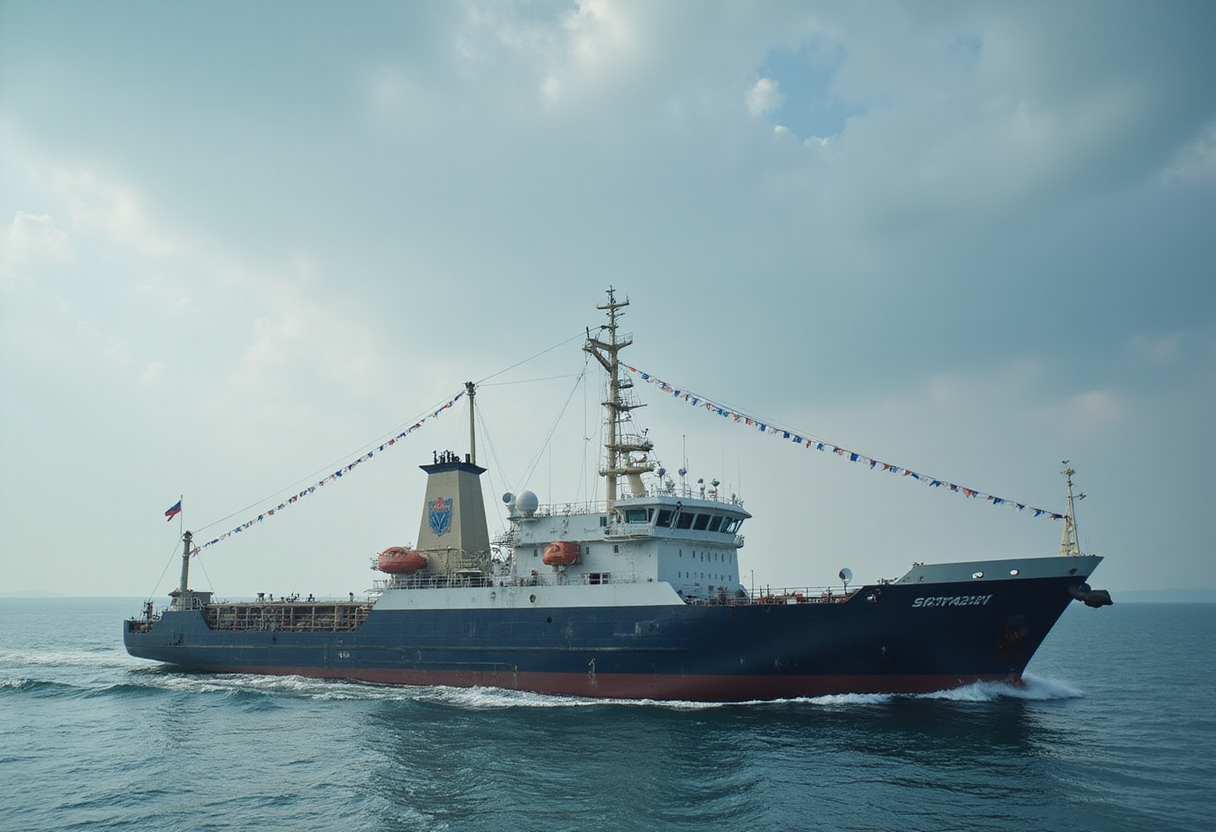
Russia's commercial registry has swollen 38.2% since the start of the year, making it the world's 16th largest flag, as sanctioned tankers abandon fraudulent registrations and revert to Moscow's flag — the last port of legal refuge left to them.
The numbers behind the shift are stark. A new study by the Centre for Research on Energy and Clean Air (CREA) identified 107 vessels that joined the Russian registry between January 2025 and the end of June 2026. Of those, 87% were already sanctioned when they switched flags. Seventy-two of the reflagged ships went on to carry an estimated €7.5bn ($8.8bn) of Russian fossil fuels.
CREA calculated that the relevant Russian-flagged fleet grew 36% over the period, from 280 vessels to 382. Clarksons Research data through September 1 confirms the trajectory, ranking Russia 16th globally by flag size after this year's expansion.
From fraud to flag
The migration marks the third stage in the evolution of the shadow fleet business model. Sanctioned tankers first hopscotched between permissive open registries. When those flags came under Western pressure, owners moved to fraudulent registrations — vessels effectively became stateless and, with that, considerably more exposed to interdiction. That escape route is now closing as well.
CREA's data shows falsely flagged shadow vessels falling from a peak of 101 last October to 45 by June. More than half of the vessels that subsequently joined the Russian registry had used at least one false flag after being sanctioned.
Windward, the maritime intelligence firm, anticipated the pivot. In February, Splash reported the company expected the crackdown on stateless tonnage to drive a major reflagging wave towards Moscow, arguing that a Russian flag restores legal standing and some protection under international maritime law. By July, Windward counted more than 213 sanctioned tankers flying the Russian flag — more than one-fifth of the 1,000-plus Western-sanctioned tankers it tracks.
Havens disappear
The acceleration reflects the collapse of former shadow fleet sanctuaries rather than any preference for Moscow's registry. CREA found Barbados and Palau have removed all sanctioned shadow vessels from their flags. Panama has cut its sanctioned shadow fleet registrations by almost two-thirds since May last year. Comoros and Gambia have also shed large numbers of vessels following sanctions directly targeting registry operators.
For shipowners carrying Russian crude and products, the calculus is straightforward: a Russian flag buys legal cover that a fake Gabonese or Comorian registration no longer provides. For insurers, P&I clubs and charterers screening counterparty risk, the shift simplifies identification — but it hardens the geopolitical fault lines around enforcement.
The enforcement question shifts
The commercial consequence cuts both ways. Less concealment means better visibility for compliance teams tracking sanctioned tonnage; a vessel openly flying the Russian tricolor is trivially flagged in screening systems. But it also removes the legal pretext of statelessness that coastal and naval authorities could previously invoke to intercept suspect ships.
A falsely flagged vessel can be challenged as stateless under international law. A sanctioned tanker flying Russia's flag instead becomes a Russian-registered ship, and enforcement questions shift from registry fraud to how far coastal states and navies are willing to confront Moscow directly.
With Western-sanctioned tanker numbers still climbing past 1,000 vessels and CREA documenting continued fossil fuel flows on reflagged tonnage, expect further growth in the Russian registry — and sharper decisions ahead for European naval and port authorities on whether direct interdiction of Russian-flagged, sanctioned ships becomes policy rather than exception.
Source: Splash247
More from Elena Vasquez
Show full bio
News editor covering industry trends and analytics at Waybill Wire.
144 articles
Related05
UK Sanctions Eight Russian Ships in Latest Crack on Energy Trade
Shadow-Fleet Traffic on Northern Sea Route Already Exceeds 2025
Russian Crude Flows Hit Six-Week High at 3.71m bpd, but Diesel Ban Eats Into Kremlin Windfall
US Gulf Coast ULSD Hits Record $5.18/gal as Export Pull Reshapes Refining
Satellite Data Exposes 1.58 Million km² of Annual Oil Slicks