WW/AIRCARGO
Retired Delta 747s Now Feed Parts Lifeline for UPS and Atlas Air Cargo Fleets
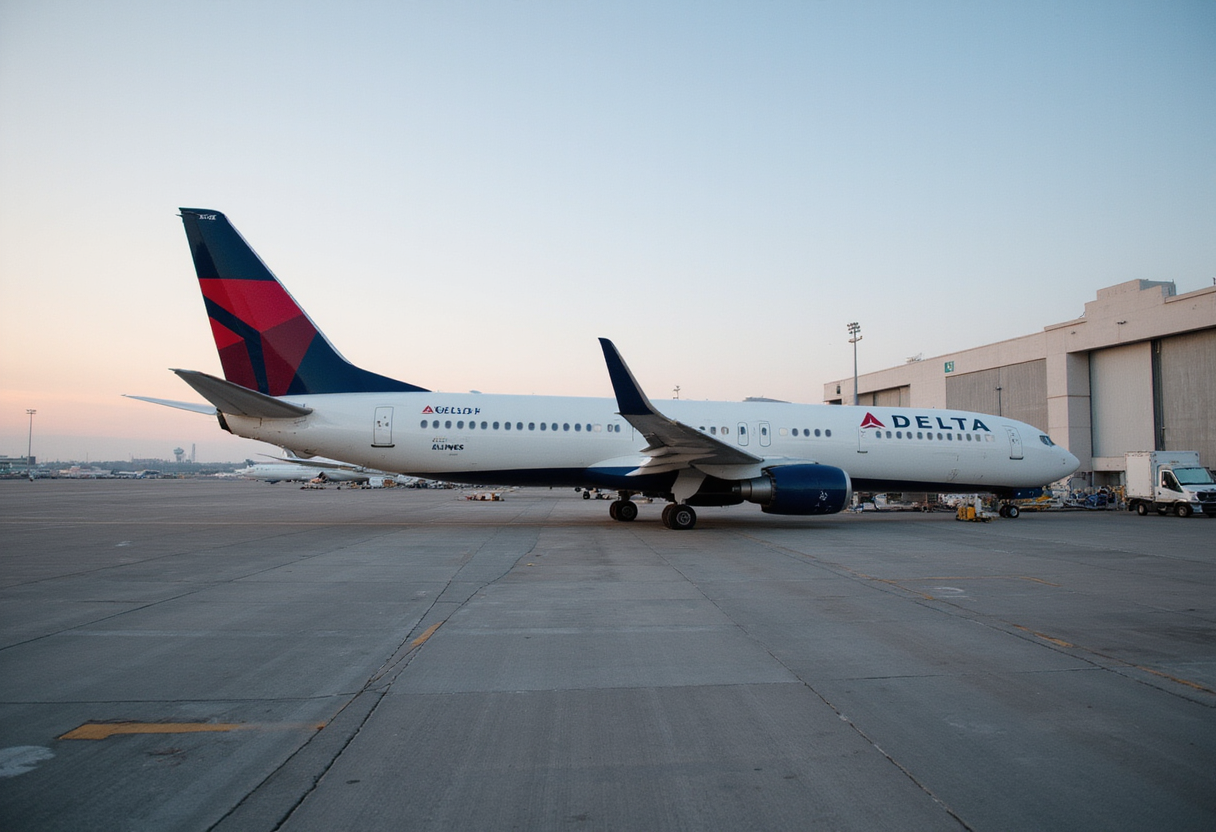
Delta Air Lines' retired Boeing 747s in desert boneyards are feeding a parts pipeline that keeps UPS and Atlas Air widebody freighters operational, extending service lives as new production ends.
- Desk
- Air Cargo
- By
- Elena Vasquez
- Filed
- Length
- 456 words
- Read
- 2 min
Key points04
- Delta Air Lines' retired Boeing 747s are supplying parts that keep UPS Airlines and Atlas Air 747 freighters operational, per Simple Flying.
- Boeing ended 747 freighter production in 2022 and 747 passenger production in 2023, shrinking the new-airframe pipeline.
- Boneyard donor airframes yield engines, APUs, landing gear, avionics and rotables for active freighter fleets.
- Atlas Air's 747 fleet serves Amazon Air, DHL and other integrators on long-haul express lanes.
Delta Air Lines' retired Boeing 747s, parked in desert storage facilities, are quietly supplying a parts pipeline that keeps UPS Airlines and Atlas Air 747 freighters flying, according to a Simple Flying report.
The transfer of serviceable components from stored Delta 747-400s to operators still flying the type underscores a familiar second-life economics in widebody cargo: airframes reach retirement with one carrier, then re-enter the supply chain as donor airframes for freight operators that still need the type.
Why does this matter for cargo operators?
UPS and Atlas Air both run 747 freighters on long-haul express and charter networks. The four-engine widebody remains attractive on dense, high-payload lanes because of its volumetric capacity and range. But as Boeing closed 747 passenger production in 2023 and the freighter line in 2022, the pool of new airframes has dried up. Operators that want more 747 capacity now have to source it from existing fleets, conversions, or, as in this case, harvested parts.
The boneyard pipeline covers high-value, limited-supply items: engines, auxiliary power units, landing gear assemblies, avionics, and cabin components reworked for freighter use. Each donor airframe yields thousands of part numbers that keep active freighters airworthy and reduce heavy-maintenance downtime.
What are the commercial consequences?
For shippers and forwarders, the practical effect is fleet stability. The longer UPS and Atlas Air can sustain their 747 fleets, the more predictable capacity remains on transpacific and transatlantic express lanes where the type dominates. Harvested parts compress maintenance turn-times, holding down shop-visit costs that would otherwise be passed through as rate increases.
For Delta, the retired 747s generate residual value that the carrier would not otherwise capture. Engines and rotables pulled from the boneyard can be sold to lessors, MRO shops, or directly to operators, supplementing the residual gains already booked when Delta retired the type.
For Atlas Air, which runs a leased and chartered 747 fleet serving Amazon Air, DHL, and other integrators, the harvested inventory is a hedge against tightening rotables supply. The carrier has been the most aggressive in extending 747 service lives, with some airframes now exceeding 25 years.
How long can this last?
The same economics that drive the boneyard trade also bound it. Each donor airframe yields parts once. As more 747s reach retirement worldwide, the parts pool eventually shrinks, and operators will be pushed toward next-generation freighters such as the 777F and 747-8F conversions.
For now, the Delta 747s sit in the desert as a quiet, unglamorous but real form of cargo capacity support. Watch the retirement schedules of remaining passenger 747 operators in Asia, where donor airframes are entering storage, to gauge how long the harvested supply will last.
Source: Google News: air cargo
More from Elena Vasquez
Show full bio
News editor covering industry trends and analytics at Waybill Wire.
262 articles
Related05
Airbus A350 Freighter Takes to the Skies for First Test Flight
Airbus A350F Freighter Completes First Flight
Airbus A350F Takes to the Air in Toulouse as Certification Campaign Begins
Alaska Airlines doubles freighter fleet to four 737-700Fs
Ethiopian Airlines signs Boeing 777-8F and 777F freighter deal