Warehousing & Fulfillment
Prologis bets big on US warehousing recovery with 1m sq ft Chicago build
Prologis will break ground on a 1m sq ft Chicago warehouse as Q3 absorption hits 63m sq ft, with data centre users driving 25% of US leases over 1m sq ft this year.
- By
- Elena Vasquez
- Filed
- Length
- 669 words
- Read
- 3 min
Key points
- Prologis to build 1m sq ft cross-dock warehouse in the Chicago area, with a second 454,000 sq ft project on a 26-acre lot.
- Prologis agreed in August to acquire Segro for about $18.8bn, creating a European player with about $269bn in assets covering 368m sq ft.
- Q3 logistics space absorption reached 63m sq ft; the Industrial Business Indicator averaged 59.5 in Q3 and 59.4 in October.
- Data centre-related users accounted for 25% of US leases over 1m sq ft signed this year; Prologis Research forecasts 150m+ sq ft of such leasing through 2030.
- New warehouse deliveries are roughly 20% lower than typical, and vacancy fell ten basis points.
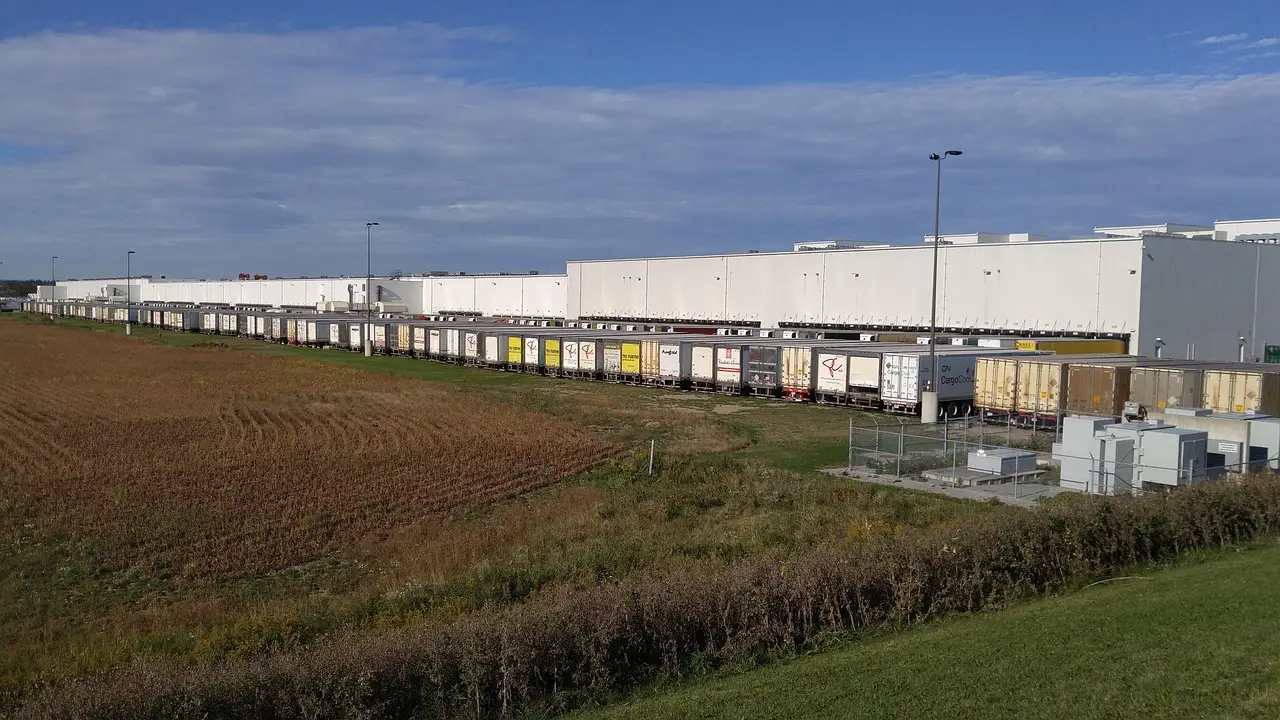
Prologis is set to break ground on a 1m sq ft single-storey, cross-dock warehouse in the Chicago area, signalling that the US logistics real estate market has moved from contraction back into expansion mode. The building, designed with a 40ft clear height and 290 parking spaces, will be followed by a second Chicago-area development on a 26-acre lot Prologis recently acquired, where the company intends to create some 454,000 sq ft of warehousing.
The appetite for space is not confined to the US. In August, Prologis signed an agreement to acquire UK-based warehousing firm Segro for about $18.8bn, a deal expected to close in the first half of next year. The combined entity would hold roughly $269bn in assets across Europe, covering 368m sq ft of space.
Why is demand suddenly recovering?
The sector limped through last year, when tariff policy headwinds out of Washington coincided with a large volume of new warehousing space entering the market. Occupied floor space shrank on economic uncertainty and slower growth, pushing net absorption well below the 2m sq ft average recorded in previous years.
The latest Prologis Industrial Business Indicator, a quarterly customer-survey index, tells a different story now. It averaged 59.5 in Q3, followed by 59.4 in October — readings Prologis interprets as an extended peak season and robust growth in the flow of goods, prompting logistics users to expand their activities. Absorption of logistics space hit 63m sq ft in the third quarter, sustaining the growth rate registered in the first half.
Vacancy rates fell ten basis points and are expected to decline further in the new year on current leasing and pipeline activity, according to Melinda McLaughlin, SVP and global head of research at Prologis.
"Scarcity is beginning to emerge in a growing number of locations and size categories as new deliveries are roughly 20% lower than typical," she said. "In some markets, data centre development is adding competition for land, power, materials, and workers, which can make new logistics space harder and more expensive to build."
How big is the data centre effect?
A recent Prologis Research paper found that "companies building and supporting data centres are creating new demand for logistic space, from equipment makers and suppliers to contractors and logistics providers".
Cushman & Wakefield corroborated the picture. Jason Price, the firm's head of Americas logistics & industrial research, said: "Data centre development is creating a physical supply chain that extends well beyond the campus itself. Servers, power and cooling equipment, construction materials, and replacement parts all have to be manufactured, stored, and distributed, and that is now showing up as a meaningful new source of industrial leasing."
The numbers behind that claim are striking. Data centre-related users accounted for 25% of US leases for properties over 1m sq ft signed this year, according to Cushman & Wakefield. Prologis Research forecasts 150m sq ft or more of leasing associated with data centre development through the end of the decade — a pipeline roughly 2.4 times the size of the Q3 absorption figure for the whole market.
Prologis researchers also argued the demand is durable. "While nearly all demand will be needed for five or more years, we estimate 50% of generated demand and related jobs will be truly permanent, needed for ongoing maintenance, equipment replacement and upgrades," they wrote.
What still drives leasing besides AI?
AI-related traffic may have overtaken e-commerce as the primary engine of global airfreight, but e-commerce remains a major force in warehousing. In the first nine months of the year it accounted for 21% of new leasing activity, while advanced manufacturing and data centre support reached 17%, Prologis Research found.
For shippers and 3PLs, the implication is straightforward: with new deliveries running about a fifth below normal and vacancy trending down, securing large-format space in constrained markets is likely to get harder and more expensive into 2026 — particularly where data centre construction is competing for the same land, labour and materials.
Source: The Loadstar
Filed underPrologisWarehouse LeasingChicago Logistics Real EstateData Centre Supply ChainsUS Warehousing Market
More from Elena Vasquez
Show full bio
News editor covering people, launches and day-to-day practice in Ocean and air freight, container shipping at Waybill Wire.
1,028 articles
Related
U.S. warehouse vacancy falls 10 bps as Q3 absorption reaches 63 MSF
Online retail lifts UK Big Box take-up to 18.8m ft² in first nine months
Warehouse vacancy rises, but Flexe expects Q4 storage rates to climb
Big Box Industrial Leasing Hits 170.6M SF, Best Half Since 2022
£30m Greenwich logistics park targets Q4 2027 occupation