WW/PORTSTERMI
Port Congestion Hits Levels Beyond Covid-Era Peaks, Propping Up Charter Market
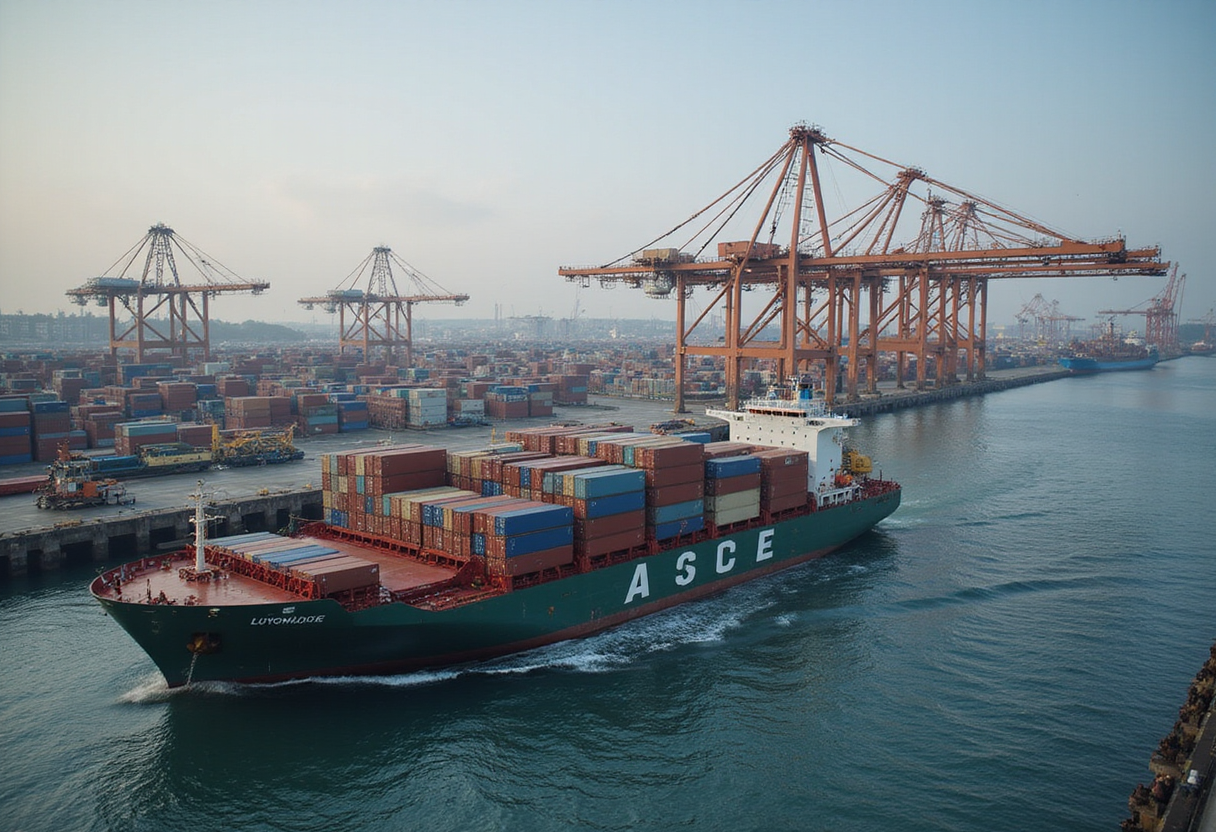
Container port congestion has passed its Covid-19 crisis peak, tying up vessel capacity, propping up charter rates and easing pressure on freight markets, TradeWinds reports.
- By
- Amara Osei
- Filed
- Length
- 521 words
- Read
- 3 min
Key points05
- Port congestion at major container ports has exceeded levels recorded during the Covid-19 supply chain crisis.
- Report published 28 August 2026 and updated 1 September 2026.
- Queues at ports are tying up vessel capacity worldwide.
- Congestion is propping up container charter rates.
- Absorbed capacity is easing pressure on container freight markets.
Congestion at the world's major container ports has reached levels that exceed even the peaks recorded during the Covid-19 supply chain crisis, according to a TradeWinds analysis published on 28 August 2026 and updated on 1 September.
The queues forming outside container terminals are now tying up a significant share of global vessel capacity. That absorbed tonnage is doing two things at once: propping up charter rates for owners and easing the downward pressure on container freight markets that many observers expected as newbuild deliveries swell the fleet.
For liner operators, the arithmetic is straightforward. Every boxship stuck waiting at a berth or at anchorage is effectively removed from the effective supply of the network, regardless of how many ships the carriers have on the water or on order. Congestion, in effect, works as a capacity withdrawal mechanism — one that requires no blank sailings and no announced service cuts.
Why does congestion exceed pandemic-era levels?
The Covid-19 crisis of 2020-2022 set the benchmark for port gridlock, with ships anchored for days or weeks outside gateways in Asia, Europe and North America while landside operations buckled under cargo surges and staffing shortages. The current situation has now pushed congestion indicators past those crisis peaks, TradeWinds reports, making this cycle — rather than the pandemic — the high-water mark for ships waiting at the world's container ports.
The consequences run in opposite directions for different market participants. Shipowners and charter owners benefit directly: with fewer free vessels available in the spot charter market, hire rates are holding firm. Charter markets have been buoyed by the shortage of deployable tonnage, the report notes.
What does it mean for freight rates?
For carriers and their customers, congestion is acting as a shock absorber. Fleet growth in 2026 has been substantial on paper, with large volumes of new tonnage delivered across the major trades — a dynamic that would normally crush spot rates. Instead, capacity tied up in port queues is easing the pressure on freight markets, cushioning rates that would otherwise face steep erosion from the supply influx.
Shippers and forwarders face the familiar consequences of gridlock: longer port-to-port transit times, less reliable schedules and reduced schedule integrity on affected loops. For importers and exporters, that means buffer stocks, longer lead times and less predictability on when cargo actually arrives — echoes of the pandemic era, now at a higher congestion benchmark.
Can the market rebalance?
The mechanism is self-limiting in one direction only. If congestion clears, the absorbed capacity returns to the market all at once, and the freight and charter rates now supported by the queues would face the full weight of delivered fleet capacity. If congestion persists, owners keep the benefit and shippers keep the delay costs.
TradeWinds' reporting points to a market in which the physical bottleneck at the quay, not the orderbook, is currently setting the effective supply-demand balance. How long the world's ports take to work down the queues will determine whether charter and freight rates hold their floor — or give way once that trapped tonnage is released back into service.
Original: image.dngroup.com
More from Amara Osei
Show full bio
Staff writer covering marketplaces and e-commerce at Waybill Wire.
316 articles