WW/TRUCKINGRA
Parallel Systems Banks $100M Series C to Scale Autonomous Rail
Parallel Systems raised $100M in Series C funding to scale production of its battery-electric autonomous Panther railcar and expand internationally, targeting sub-500-mile freight.
- Desk
- Trucking & Rail
- By
- Tom Whitfield
- Filed
- Length
- 608 words
- Read
- 3 min
Key points05
- Parallel Systems raised $100 million in a Series C round to scale production of its Panther autonomous rail vehicle
- The round was led by new investors AVP and Hillspire, Agility Global, and Cobalt Capital
- Routes under 500 miles represent 60% of the $1 trillion US surface freight market
- The company previously raised $38 million in Series B funding in 2025
- An FRA-approved pilot has demonstrated the platform in real-world corridors
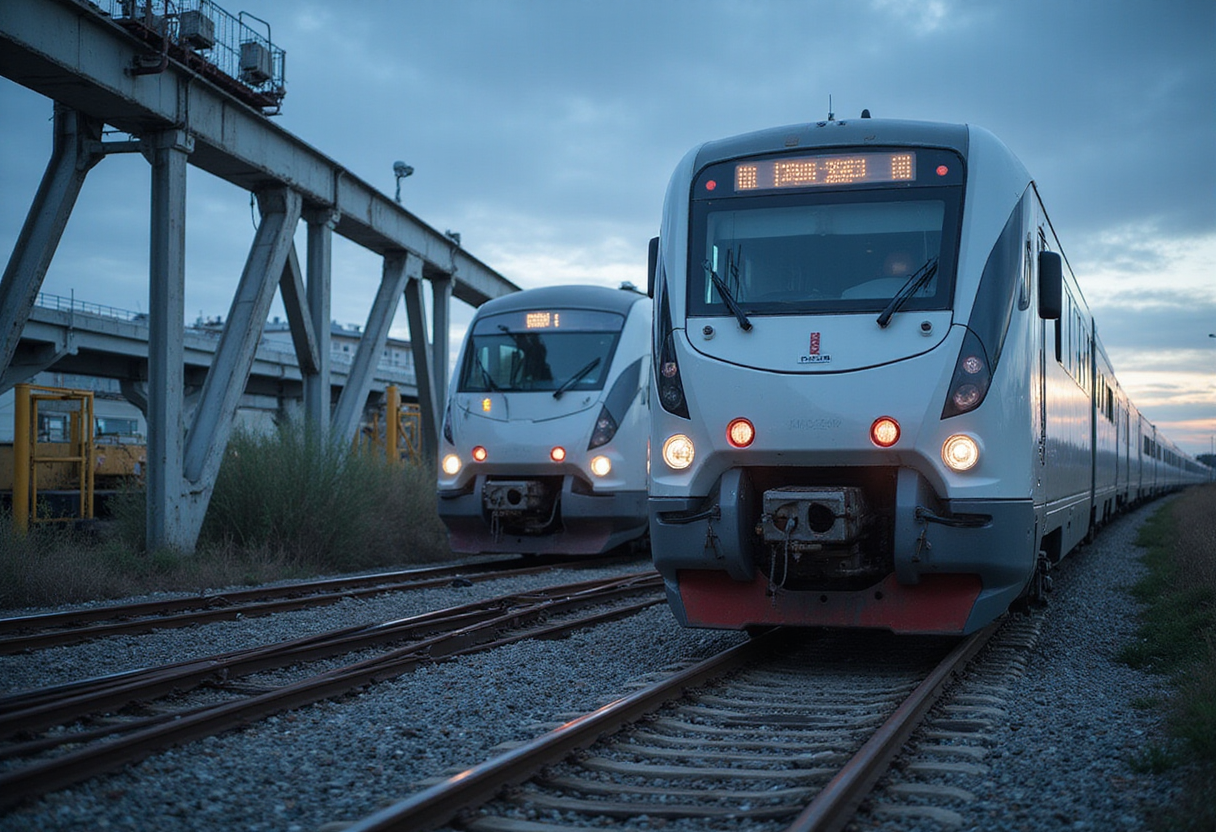
Autonomous freight rail developer Parallel Systems has closed a $100 million Series C round to push its battery-electric Panther rail vehicle into production and bankroll commercial expansion, including a push into international markets.
The Los Angeles-based company said the new capital will directly fund the production scale-up of the Panther vehicles, its autonomous, battery-electric railcar platform. The round was led by new investors AVP and Hillspire, Agility Global, and Cobalt Capital, with participation from existing backers Anthos Capital, Congruent Ventures, Riot Capital, and Collaborative Fund.
The raise follows Parallel's Series B round of $38 million in 2025, marking a sharp step-up in investor commitment to autonomous rail technology.
Why does this matter for freight?
Parallel's pitch targets one of the largest structural inefficiencies in US surface transportation. The $1 trillion surface freight market remains dominated by trucking, a sector under severe pressure from rising operational costs, tightening capacity, and strict logistics constraints.
At the same time, the American rail network is significantly underutilized — particularly on shorter haul routes of less than 500 miles, which represent 60% of the surface freight market, according to Parallel.
The company says its technology enables railroads to handle shorter, lower-density routes competitively. That would allow shippers to move short-haul freight by rail on lanes that previously required trucks.
For shippers, the commercial logic is straightforward: if autonomous, battery-electric railcars can serve sub-500-mile lanes economically, rail becomes a viable alternative to trucking precisely where trucking costs are rising fastest. For railroads, the technology opens revenue on low-density lines that conventional operations cannot serve profitably.
What has been proven so far?
The funding round lands on the back of a regulatory milestone. Parallel has completed a pilot approved by the Federal Railroad Administration (FRA), demonstrating its platform in real-world corridors.
Founder and CEO Matt Soule framed the Series C as a turning point for both the company and the short-haul logistics sector.
"Closing our Series C round is a major inflection point for Parallel and as well as the short-haul logistics industry, and is the strongest market signal to-date that autonomous freight rail is ready for its moment," Soule said.
"With the FRA-approved pilot proving our platform in real-world corridors, this capital will directly fund the production scale-up of our Panther vehicles and accelerate our entry into international markets hungry for lower cost, more resilient supply chains," he said.
Who is backing the bet?
The investor mix signals breadth of conviction:
- New lead investors: AVP and Hillspire, Agility Global, and Cobalt Capital
- Returning backers: Anthos Capital, Congruent Ventures, Riot Capital, and Collaborative Fund
- Prior round: $38 million Series B raised in 2025
The $100 million commitment more than doubles the company's previous raise, and the entry of Agility Global — a logistics and supply chain operator — alongside venture and growth investors points to strategic interest from within the freight industry itself, not purely financial bets.
What comes next?
Two priorities now define Parallel's roadmap. First, production scale-up of the Panther vehicle, moving from FRA-approved pilots toward serial manufacturing. Second, international expansion, which Soule said targets markets seeking lower-cost, more resilient supply chains.
The stakes are considerable. If autonomous rail can capture even a fraction of the sub-500-mile segment — 60% of a $1 trillion market — the technology would redraw the boundary between rail and trucking in US freight.
With fresh capital, a regulatory proof point, and production funding in place, Parallel now faces the execution test: converting a validated pilot platform into vehicles operating at commercial scale on paying lanes.
Original: moveparallel.com
More from Tom Whitfield
Show full bio
Market editor covering consumer brands and retail at Waybill Wire.
146 articles
Related05
Parallel Systems and Agility target autonomous rail across GCC
North American Railcar Fleet Shrinks as Carload Volumes Surge
Aurora tells Evercore forum driverless trucking is moving to scale
RCG adds 70 electric-vehicle wagons to car-carrier fleet
Diesel Price Surge Pushes US Truckers Toward Strike Action