WW/MARKETANAL
Offshore project commitments reach $131.6 billion in 2026
Projects worth $131.6 billion have cleared final investment decision in 2026, outpacing all of 2025 as Clarksons forecasts a sixth straight year of offshore expansion.
- Desk
- Rates & Markets
- By
- Amara Osei
- Filed
- Length
- 721 words
- Read
- 4 min
Key points
- Offshore projects worth $131.6 billion reached final investment decision in 2026, exceeding the $120 billion sanctioned in all of 2025.
- Clarksons forecasts $139 billion of 2026 offshore commitments, a 16% annual increase.
- ExxonMobil committed $12.5 billion to Longtail, its eighth offshore development in Guyana.
- Asia-Pacific offshore investment reached $33.1 billion, its highest annual level since 2021.
- Clarksons expects $137 billion of offshore project sanctions in 2027.
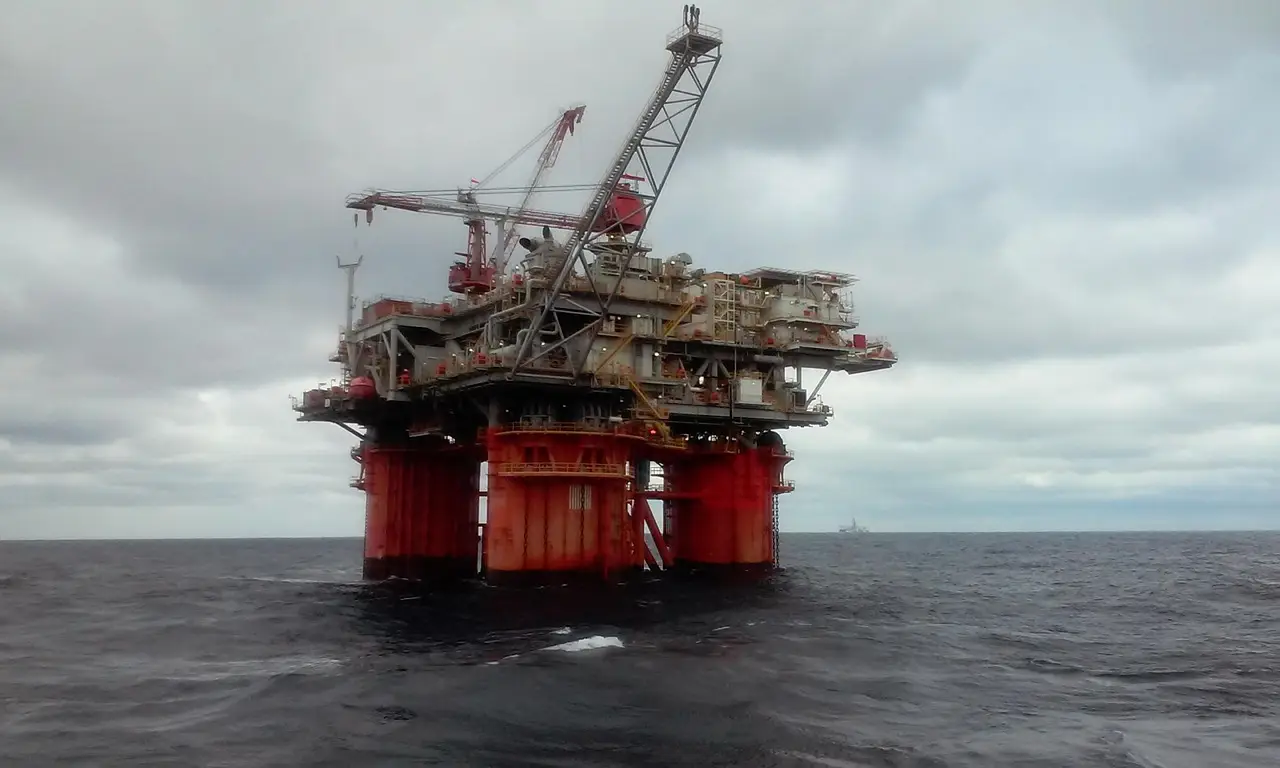
Global offshore oil and gas projects worth $131.6 billion have reached final investment decision so far in 2026, already $11.6 billion above the $120 billion sanctioned throughout 2025.
Clarksons Research expects commitments to reach $139 billion by year-end, a 16% annual increase and $19 billion more than 2025. The consultancy has repeatedly upgraded its forecast this year.
The Strait of Hormuz disruption has not stopped that spending. The crisis made headlines. The final investment decision calendar did not.
What is driving the upcycle?
Clarksons attributes the resilience to a multiyear offshore investment upcycle that began in 2021, rather than to a direct response to the Middle East crisis. The industry now enters its sixth consecutive year of expansion, with investment running ahead of expectations despite geopolitical uncertainty.
Major offshore developments usually spend several years in front-end engineering and design before reaching sanction. Many of this year's projects entered that pipeline before the crisis, so final investment decisions now reflect long-running engineering and procurement work more than a sudden policy response.
Higher oil prices have added support. Brent crude has averaged around $95 per barrel this year, up 37% year on year. Oil companies still judge projects on long-term economics, Clarksons said, but stronger cash flows improve their capacity and willingness to commit capital.
Energy security offers another reason to proceed, particularly for countries heavily dependent on Middle Eastern oil and gas imports. India is one such market.
Where is the money going?
Investment has remained especially strong in the Middle East as national oil companies in Saudi Arabia, the UAE and Qatar advance major offshore developments despite regional instability.
- Saudi Arabia: Marjan, Safaniya and Zuluf.
- UAE: Upper and Lower Zakum.
- Qatar: North Field.
Competition among Middle Eastern producers has also sharpened following the UAE's departure from OPEC. Clarksons sees that rivalry as another potential incentive for national oil companies to expand offshore production capacity.
Successive floating production, storage and offloading projects offshore Brazil and Guyana have supported South America's major role in the cycle. Brazilian investment has slowed this year, but Guyana supplied a major new commitment.
ExxonMobil sanctioned its eighth offshore development in Guyana earlier this month, committing $12.5 billion to the Longtail gas and condensate project.
Asia-Pacific offshore investment has reached $33.1 billion, its highest annual level since 2021. Indonesia's $10 billion Kutei Northern Hub gas development is a major contributor, underlining the growing role of deepwater gas projects in the regional pipeline.
What does this change for shippers and carriers?
A final investment decision normally starts a multiyear execution phase. Clarksons says sanctioned developments typically generate several years of demand for:
- Drilling rigs.
- Offshore construction and installation vessels.
- Subsea engineering contractors.
- Floating production units.
For offshore vessel operators and service companies, that means visible workload across several years. For shippers and forwarders linked to these programs, it improves visibility of project activity. It does not establish a specific charter-rate, utilization or freight-volume increase, because the source provides project commitments rather than shipping rates or capacity percentages.
What does this change for shippers, carriers and forwarders? It changes project visibility, not the rate card. Vessel owners can plan against a multiyear demand pool, while forwarders can use the sanctioned pipeline to identify project-linked opportunities. Neither should turn the $139 billion headline into a promise of higher spot rates or booked cargoes; those claims still require project-level contracts and schedules.
The distinction matters because capital sanctioning comes first, followed by vessel deployment and project execution as developments advance. The investment total is strong evidence of an expanding offshore workload, not a universal forecast for every logistics rate. The upcycle, in other words, has more shock absorption than its political backdrop suggests.
How long can the cycle last?
Clarksons expects another $137 billion of offshore project sanctions in 2027, only $2 billion below its projected 2026 total. A strong pipeline of developments approaching investment decisions should keep offshore activity robust and provide medium-term support for offshore vessel demand, even as geopolitical uncertainty persists.
The six-year expansion has therefore survived the Strait of Hormuz crisis without an investment retreat. With that pipeline still moving toward sanction, Clarksons expects offshore activity and vessel demand to remain robust despite continuing geopolitical uncertainty.
Source: Splash247
More from Amara Osei
Show full bio
Staff writer covering regulation, policy and their impact on Ocean and air freight, container shipping at Waybill Wire.
1,007 articles