WW/PORTSTERMI
Mitsui E&S lifts operating income target to ¥40 billion
Mitsui E&S lifted annual operating income guidance to ¥40 billion as port-equipment profit rose 15.8%, even as marine-engine costs cut segment profit and port-equipment orders fell.
- By
- Amara Osei
- Filed
- Length
- 785 words
- Read
- 4 min
Key points05
- For the fiscal year ending March 31, 2027, Mitsui E&S raised operating income guidance to ¥40 billion from ¥34 billion.
- Six-month net sales reached ¥175 billion ($1.15 billion), up 5.7%, while operating income rose 4.8% to ¥20.7 billion.
- Logistics Systems operating income increased 15.8% to ¥7.8 billion, and its annual target rose from ¥10 billion to ¥15 billion.
- Marine Propulsion Systems orders increased 29.3% to ¥81.2 billion, but operating income fell 37.8% to ¥5.6 billion.
- Mitsui E&S increased its projected annual dividend from ¥60 to ¥65 per share.
By Amara Osei
Mitsui E&S raised its full-year operating income forecast to ¥40 billion from ¥34 billion, a ¥6 billion, or 17.6%, increase. Revenue guidance stayed at ¥370 billion for the fiscal year ending March 31, 2027, while the projected annual dividend rose from ¥60 to ¥65 per share.
For the six months ended September 30, 2026, Mitsui E&S recorded net sales of ¥175 billion, equivalent to $1.15 billion, up 5.7% year on year. Operating income increased 4.8% to ¥20.7 billion, and new orders rose 8.2% to about ¥158 billion.
Profit attributable to owners of the parent slipped 0.6% to ¥17.4 billion. This revision follows an earlier upgrade the company announced after its first-quarter results.
Port equipment carries the upgrade
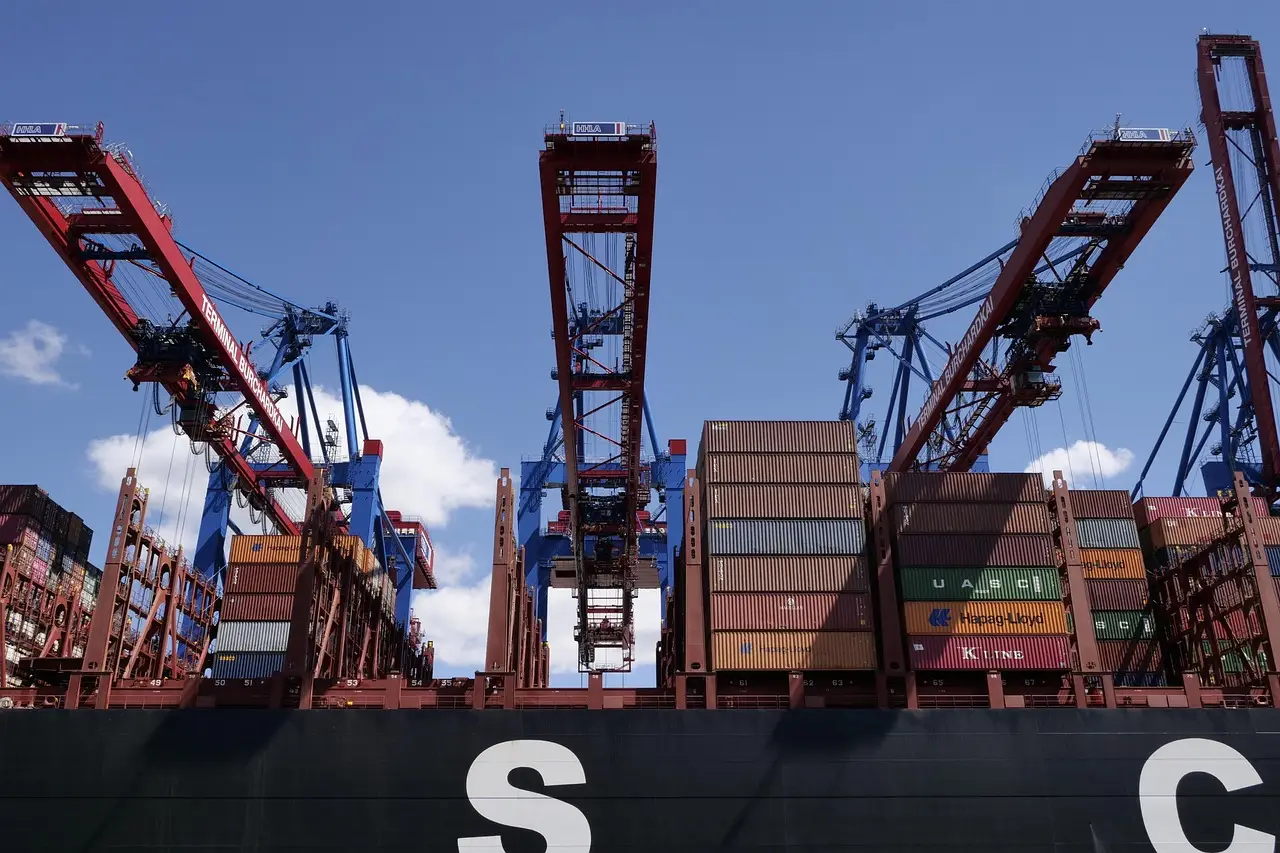
Logistics Systems, the division that supplies container cranes and related services, lifted segment revenue 7.1% to ¥33.3 billion. Operating income rose 15.8% to ¥7.8 billion as sales increased and project profitability improved, producing an approximate 23% operating margin.
New orders for the division fell 39.9% to ¥19.7 billion. Mitsui E&S blamed the comparison mainly on large contracts secured in Southeast Asia and the United States a year earlier, rather than a stated collapse in current demand.
The company still reported continuing demand for container-handling equipment and is expanding internationally. It secured an order in Argentina for environmentally friendly rubber-tyred gantry cranes while developing remotely operated and automated cranes for its wider port-equipment portfolio.
Mitsui E&S now expects Logistics Systems to generate ¥15 billion of annual operating income, up from ¥10 billion previously. That 50% increase in the target explains most of the group upgrade, with major construction projects in Japan and overseas supporting first-half sales.
Engine orders rise, earnings fall
Marine Propulsion Systems new orders jumped 29.3% to ¥81.2 billion, supported by demand for marine engines, including dual-fuel models. Segment revenue moved the other way, falling 3.2% to ¥72.7 billion, while operating income dropped 37.8% to ¥5.6 billion.
The division attributed the earnings pressure to lower sales and higher-than-expected costs associated with developing and introducing new products. The resulting operating margin was roughly 8%, about one-third of the port-equipment division’s rate.
Mitsui E&S continues to expand its alternative-fuel portfolio across LNG, LPG, methanol and ammonia technologies. Despite stronger orders, it cut the Marine Propulsion Systems annual operating-income forecast from ¥12 billion to ¥11 billion, an 8.3% reduction.
What does this change for shippers, carriers and forwarders?
The practical answer is limited because Mitsui E&S disclosed earnings and orders, but no freight rates, vessel additions, crane counts or TEU capacity. The results therefore do not establish a near-term change in box supply, sailing frequency or ocean rates.
- For shippers: Continued procurement of container-handling equipment signals ongoing terminal investment, but no delivery dates or handling-capacity figures support a forecast of lower freight rates or reduced congestion delays.
- For carriers: The 29.3% increase in marine-engine orders shows strong supplier demand, including for dual-fuel systems. Without vessel counts, engine specifications or installation plans, the results do not translate into measurable fleet-capacity or fuel-cost effects.
- For ports and terminal operators: The Argentina order confirms international demand for environmentally friendly rubber-tyred gantries. The company names no port, crane quantity, productivity gain or commissioning date, so no lane-level conclusion follows.
- For forwarders: Delivery timing matters more than the headline order totals. Mitsui E&S itself identifies development costs and project-delivery timing as profitability factors, making equipment lead times a practical watch point for shipment planning.
The accounting story is straightforward. Port-equipment projects arrived with better profitability and supplied the earnings upgrade; marine propulsion secured more orders but spent more to develop and introduce products, resulting in a lower annual profit target. One segment is funding the upgrade while the other carries the development bill.
The order figures still matter. Marine Propulsion Systems booked ¥81.2 billion of new orders against ¥72.7 billion of revenue, while Logistics Systems revenue rose despite a 39.9% decline in new orders. Together, they show an uneven conversion from contracts into recognized sales and profit.
Mitsui E&S expects continued demand for both marine propulsion systems and port equipment. The forward test is whether new-product development costs ease and project deliveries arrive on schedule.
For freight buyers, that delivery timetable matters more than the ¥40 billion target: until operators disclose TEU capacity, vessel deployments or crane commissioning dates, the upgrade indicates stronger equipment investment, not a measurable shift in rates or capacity.
Source: Container News
More from Amara Osei
Show full bio
Staff writer covering regulation, policy and their impact on Ocean and air freight, container shipping at Waybill Wire.
855 articles
Related05
Mitsui O.S.K. Lines revenue up 24.5%, operating profit down 1.8%
UPS lifts full-year outlook as Q3 revenue climbs 6.7% to $22.9bn
DSV's Q3 profit up 19.5% as Schenker synergies offset trucking slump
U.S. Steel profit doubles to $421M as tariffs lift prices
LX International Logistics Profit Soars 151% on Container Rates