WW/MARKETANAL
DSV's Q3 profit up 19.5% as Schenker synergies offset trucking slump
DSV's Q3 EBIT before special items rose 19.5% to $990.9 million as Schenker synergies lifted air, sea and contract logistics, though trucking EBIT fell 35.1% and some savings slip to 2027.
- Desk
- Rates & Markets
- By
- Marcus Bennett
- Filed
- Length
- 691 words
- Read
- 3 min
Key points05
- DSV Q3 operating profit before special items rose 19.5% to DKK6.606 billion ($990.9 million).
- Air and sea EBIT rose 18.9% to $641.7 million with conversion ratio jumping to 45.8% from 38.6%.
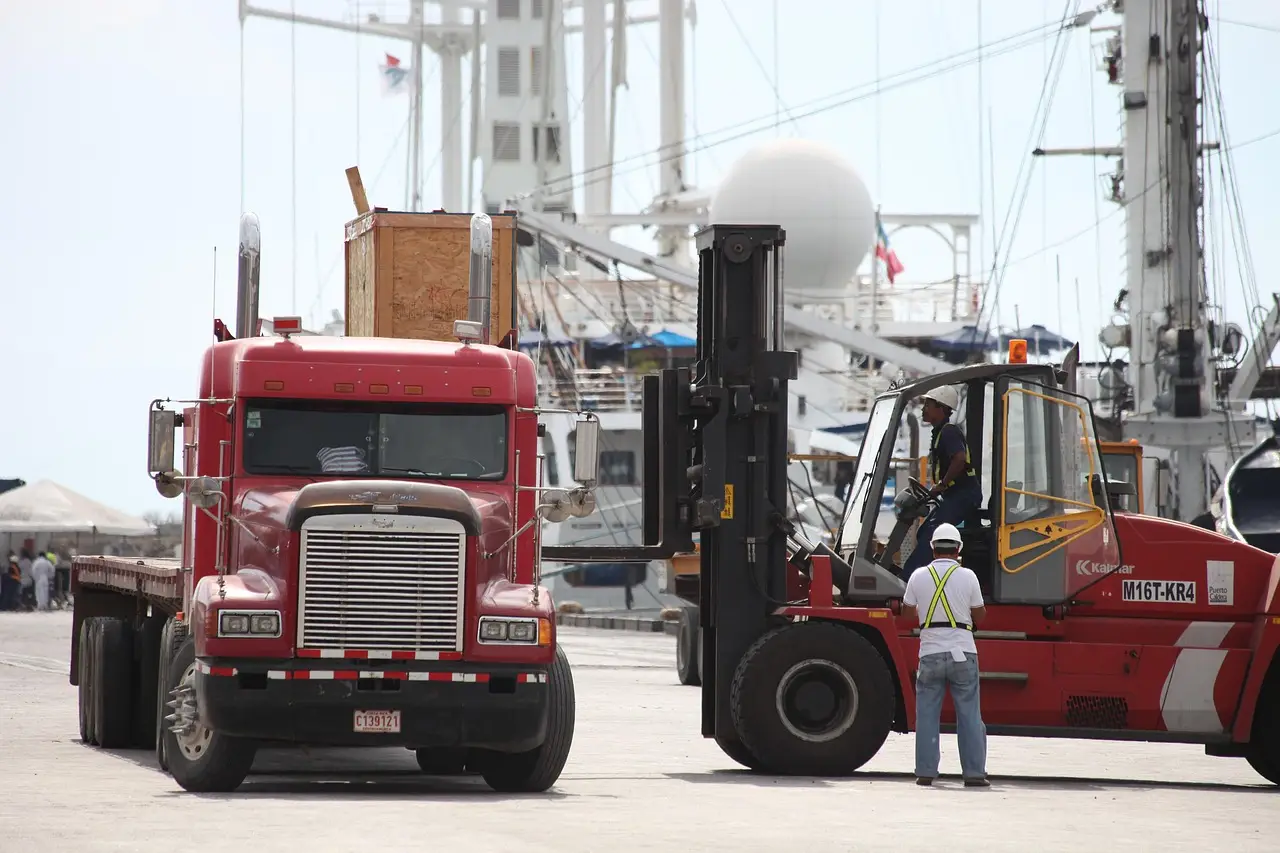
- Trucking EBIT fell 35.1% to $78.9 million on Schenker integration disruptions in Europe.
- DSV kept its $1.35 billion synergy target but delayed some trucking savings into 2027.
- 2026 EBIT guidance narrowed to $3.6–3.75 billion; $225 million buyback announced.
DSV posted a 19.5% rise in third-quarter operating profit before special items to DKK6.606 billion ($990.9 million), as Schenker integration savings lifted air, sea and contract logistics results far enough to absorb a 35.1% earnings drop in trucking. The figure includes $45 million in gains from property disposals, meaning the underlying improvement, while still solid, is somewhat smaller than the headline suggests.
Revenue at the world's largest forwarder rose 12.1% year over year to $12.11 billion. Gross profit grew more slowly, up 3.8% to $3.04 billion — a gap that signals revenue growth came partly from higher freight rates and fuel pass-throughs rather than margin-accretive volume.
Where the earnings came from
Air and sea generated $641.7 million in EBIT before special items, up 18.9%. The standout number is the conversion ratio: 45.8% of gross profit became operating profit, versus 38.6% a year earlier. That 7.2-point jump is the clearest evidence yet that Schenker cost synergies are landing in the group's largest division.
Contract logistics delivered the fastest growth, with EBIT up 50.3% to $251 million, supported by synergies, improved productivity and better capacity utilization.
Trucking told the opposite story. EBIT before special items fell 35.1% to $78.9 million — and that figure still contains $29.3 million of property gains, implying a sharply diminished underlying road result. DSV blamed lower volumes and productivity following service disruptions tied to the Schenker integration in Europe. Strip out the property gain, and the road division earned roughly $50 million on a business that generated $12 billion of group revenue.
The company said operations normalized toward the end of the quarter, with management attention now shifting to productivity and commercial performance — a claim shippers will weigh against continued service hiccups in European road networks.
What happens to the synergy target?
DSV said the Schenker integration is generally proceeding as planned, with almost all countries either completed or in integration by quarter's end. But the fine print carries a delay: remaining savings in trucking and some group functions will slip into 2027 because of operational issues.
The company held its $1.35 billion annual synergy target — roughly the annual EBIT of a mid-sized European carrier — while acknowledging it will arrive later than promised in parts of the road network.
As part of reshaping the acquired business, DSV announced in October 2025 that it will divest USA Truck, saying the carrier does not fit its mostly asset-light model. The sale would remove one of the more visible Schenker-era assets from the portfolio and test buyer appetite for US truckload capacity in a soft freight market.
Guidance, cash and the buyback
DSV narrowed its 2026 EBIT-before-special-items forecast to $3.6 billion to $3.75 billion, from a previous range of roughly $3.53 billion to $3.83 billion. The tighter band trims both tails, effectively ruling out the most optimistic scenario.
Integration costs continue to run heavy. DSV now expects about $825 million in integration-related special items for 2026, with some costs shifting into 2027, and still estimates total transaction and integration costs at about $1.65 billion — equivalent to nearly two quarters of current group EBIT.
Adjusted free cash flow reached $965.9 million for the quarter, helped by $478.4 million in property disposals. Working capital remained elevated amid higher freight rates and fuel prices — a pressure that persists as long as rates stay firm. Debt-to-equity fell to 2.5 times, still a leveraged position but moving in the right direction.
The company also launched a $225 million share buyback running from Oct. 21, 2026, to Feb. 1, 2027 — a signal that management sees deleveraging far enough along to return cash, even as integration bills keep arriving.
DSV cautioned that its demand outlook remains exposed to macroeconomic uncertainty, including higher energy prices, global inflation, Middle East tensions and trade tariffs.
The next test is whether European trucking productivity holds through the delayed integration work — and whether the 2027 synergy timeline survives another quarter of operational friction.
Original: live.freightwaves.com
More from Marcus Bennett
Show full bio
Senior reporter covering regulation, policy and their impact on Ocean and air freight, container shipping at Waybill Wire.
671 articles