WW/OCEANFREIG
Mercuria's $100M Tanker Fight Turns on Baltic Exchange Index
Hunter Group says Mercuria owes it over $100 million on a TD3C-linked charter, as a London court weighs whether the Baltic Exchange should have suspended the tanker benchmark.
- Desk
- Ocean Freight
- By
- Tom Whitfield
- Filed
- Length
- 837 words
- Read
- 4 min
Key points05
- Hunter Chairman Morten Astrup says Mercuria owes over $100 million in accrued charter income, losses and interest.
- Supertanker rates hit record highs above $1 million a day during the Iran war's disruption of the Strait of Hormuz.
- Hunter's Q2 profit jumped 13-fold to $47 million; its shares are up 882% this year to a market value of about $255 million.
- The disputed deal centers on the 10-year-old tanker DHT Puma, chartered by Mercuria at a fixed $52,000/day and re-let at a TD3C-linked floating rate.
- Mercuria now seeks only a declaration that the Baltic Exchange shouldn't have published TD3C from March to July 3.
A $100 million hole has opened in Hunter Group ASA's charter income, and the Norwegian company says Mercuria Energy Group put it there — one freight-rate index at a time.
That figure, cited by Hunter Chairman Morten Astrup in a London interview with Bloomberg News, covers accrued charter income, losses and interest tied to a back-to-back charter deal priced off the Baltic Exchange's TD3C index. Mercuria has been making reduced payments, according to Hunter, leaving the trader in breach of contract with arrears still building.
"As of now, it's more than $100 million total accrued charter income, losses and interest," Astrup said. A Mercuria spokesperson declined to comment.
The dispute is playing out on two fronts: a High Court lawsuit Mercuria filed against the Baltic Exchange over whether TD3C should have been suspended during the Iran war, and an arbitration Hunter launched to recover what it says it's owed.
What is the fight actually about?
TD3C is the global benchmark rate for shipping crude from the Persian Gulf to China, built on broker assessments of the cost of sending a supertanker from Saudi Arabia's Ras Tanura to Chinese discharge ports. It underpins not just physical charters between tanker owners and their customers, but billions of dollars in freight derivatives.
Mercuria argues the Baltic Exchange should have suspended the benchmark from early March to July 3, when oil flows through the Strait of Hormuz came to a near standstill after Tehran targeted commercial shipping in the waterway.
The Baltic Exchange disagrees. It maintains that even after Hormuz shipments were severely disrupted, brokers could still put a price on the freight risk through their assessments. A declaration that publication was improper would ripple through every contract indexed to TD3C across those months.
How the Hunter deal works
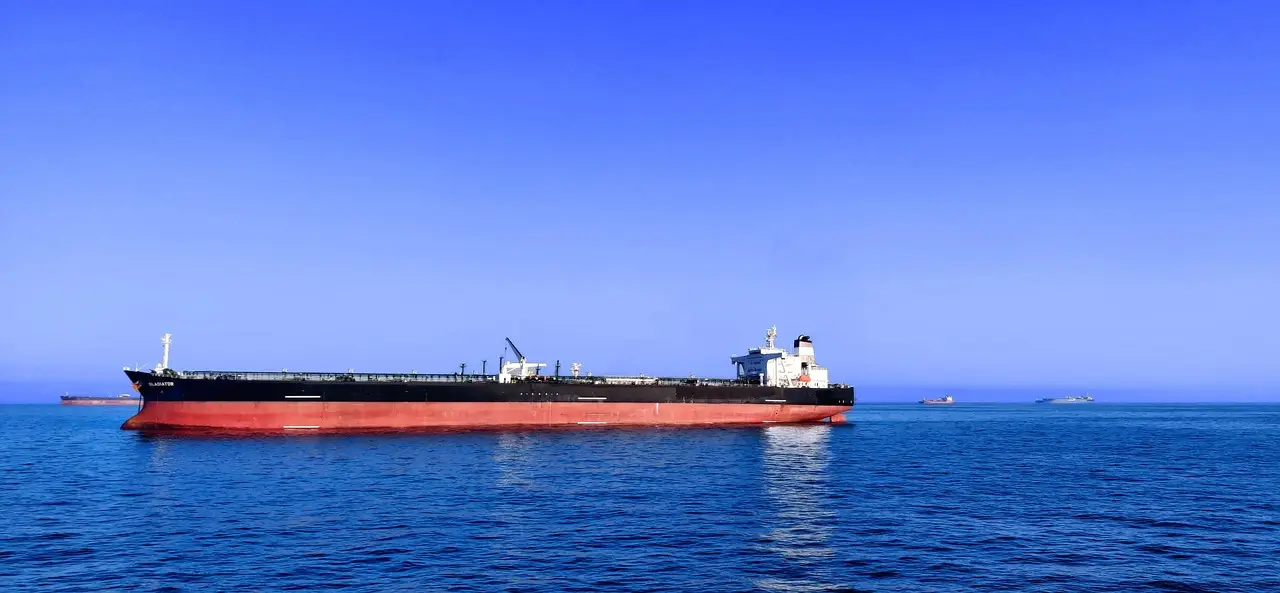
The vessel at the center is the DHT Puma, a 10-year-old supertanker that Mercuria took on time charter from DHT Holdings Inc. until the first quarter of 2027. Evidence heard in court this week showed what happened next.
- Mercuria leased the DHT Puma to Oslo-listed Hunter at a fixed rate of $52,000 a day.
- Hunter leased it straight back to Mercuria at a floating rate linked to TD3C.
- When the war broke out and Hormuz traffic seized, that floating rate soared.
It soared spectacularly. Supertanker day rates climbed to record highs well above $1 million a day as owners shuttled cargoes out of Hormuz under rocket and drone fire. In its second-quarter results, Hunter reported an average time charter margin — the spread between its fixed rate in and the spot-linked rate out — of $401,172 a day.
That spread drove Hunter's second-quarter profit up 13-fold to $47 million from a year earlier. The company, which previously owned and operated supertankers and now focuses on chartering, has seen its shares jump 882% this year, lifting its market value to roughly $255 million.
Hunter hasn't named Mercuria in its exchange filings. But on Oct. 9 it disclosed that an unnamed contractual counterpart owed it $67.8 million as of the end of September — a figure that should have grown as charter rates kept climbing through October.
Back-to-back structures like this are common in tanker markets. Owners lock in long-term fixed revenue, charterers with big oil books get guaranteed vessel access, and traders can re-let ships onward when the math works. Astrup said Mercuria has since hired out the DHT Puma to Sinokor Group, the shipping operation of tycoon Ga-Hyun Chung, which has been influential in driving the TD3C benchmark itself.
Mercuria's shifting legal claims
In court, Mercuria wants a judge to declare the Baltic Exchange breached its obligations. What that means in practice has changed repeatedly since the lawsuit was first filed.
This week, after the case had already begun, Mercuria narrowed its ask. Rather than seeking a retrospective suspension or restatement of the index, it now wants only a declaration that the Baltic shouldn't have kept publishing TD3C from March to July.
Previously, the company had asked the court to declare TD3C values published since March as having no effect, and to order the index retrospectively suspended. Mercuria has also dropped from its pleadings references to losses it claims to have suffered, and it has never sought compensation from the Baltic in this case. The trader has separately accused the Baltic Exchange of pressuring brokers to provide rate assessments.
What does this change for Hunter? Nobody knows yet. It's unclear how the amended claims affect the arbitration Hunter launched to recover the money it says Mercuria owes.
What is clear is the exposure. Hunter's unpaid bill is one slice of the billions of dollars in criss-crossing contracts that hinge on how a London judge rules on a rate index published from a courtroom's throw away — and until that ruling, every TD3C-linked derivative and charter written between March and July sits under a question mark.
Source: gCaptain
More from Tom Whitfield
Show full bio
Market editor covering companies, deals and strategy in Ocean and air freight, container shipping at Waybill Wire.
738 articles
Related05
Whistleblowers Claimed Manipulation of Benchmark Tanker Rate TD3C
Mercuria Challenges Baltic Exchange Over Hormuz Tanker Rate
Sinokor WhatsApp Signals Drive 1,600% VLCC Rate Surge
Hunter Group's VLCC charter arrears near $68m after record monthly gap
Washington May Ease Shadow Tanker Sanctions — and Tanker Rates With Them