WW/AIRCARGO
Malpensa Cargo City Takes Delivery of First Hydrogen Truck
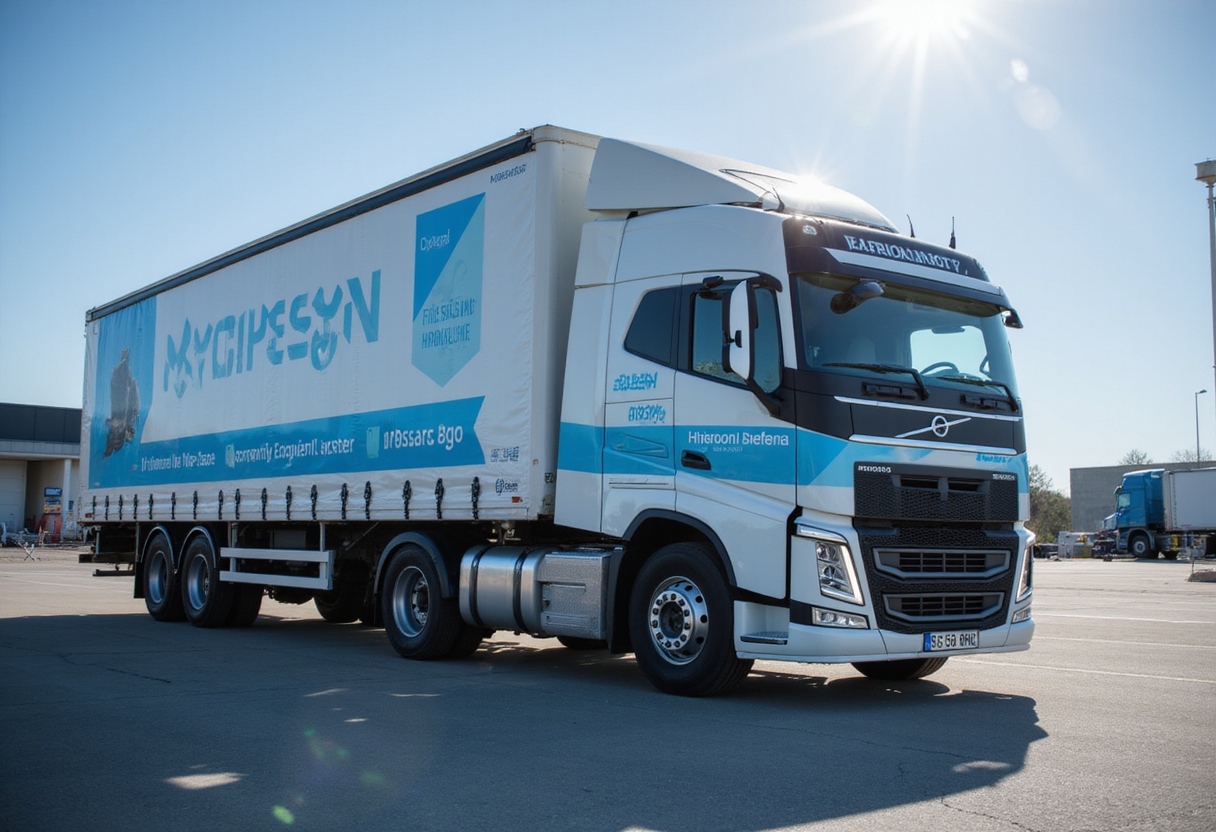
A hydrogen-powered truck has entered service at Milano Malpensa's Cargo City — the first deployment of fuel cell road vehicles at the Italian air cargo gateway.
- Desk
- Air Cargo
- By
- Tom Whitfield
- Filed
- Length
- 566 words
- Read
- 3 min
Key points05
- A hydrogen-powered truck entered service at Milano Malpensa's Cargo City, the first deployment of fuel cell road vehicles at the Italian gateway.
- Malpensa is Italy's second-busiest air cargo airport, handling general cargo, perishables, pharmaceuticals, and e-commerce.
- The initial report did not name the truck manufacturer, fuel cell supplier, operator, hydrogen source, fleet size, or rollout timeline.
- Hydrogen fuel cell trucks retain diesel-like payload and refueling windows while producing only water vapor at the tailpipe.
- Most European airports have prioritized electric ground support equipment over hydrogen road vehicles, placing Malpensa among the early adopters.
A hydrogen-powered truck has entered service at Milano Malpensa's Cargo City — the first deployment of fuel cell road vehicles at the Italian air cargo gateway.
The arrival puts Malpensa alongside a small group of European airports and logistics hubs that have begun substituting diesel road feeders with zero-tailpipe-emission vehicles. Air Cargo Week's initial report did not name the truck model, the operator, or the hydrogen supplier.
What changes for cargo handlers at Malpensa?
Cargo CityMalpensa is the dedicated freight zone at Milano Malpensa airport, Italy's second-busiest cargo gateway. It handles import and export flows for general cargo, perishables, pharmaceuticals, and e-commerce.
Most of that volume moves by truck to and from shippers across northern Italy and onward to Switzerland, Germany, and France.
A hydrogen truck, unlike a battery-electric vehicle, refuels in roughly the same window as a diesel unit and carries comparable payload over longer distances.
That profile matters for air cargo, where handlers run tight turnaround windows between aircraft arrival and onward road dispatch.
The vehicle's arrival suggests one of three operator types is leading the trial: a handling agent working airside, a road feeder operator, or a ground services company moving ULDs between the apron and consolidation centers.
Why hydrogen for airport trucking?
Heavy-duty road vehicles operating in and around airports face constraints familiar to long-distance hauliers: high daily mileage, fixed schedules, and depot-based refueling.
Battery-electric trucks work for short feeder routes but lose payload and range on longer legs. Hydrogen fuel cell vehicles retain the diesel operating profile while producing only water vapor at the tailpipe.
For airports with strict air quality targets — and for Milan, operating under low-emission zone rules — the commercial case is straightforward.
What remains unclear
The initial report did not disclose:
- The truck manufacturer or fuel cell supplier
- The operator deploying the vehicle
- Whether the hydrogen is produced on-site, delivered, or sourced from a green-hydrogen electrolyzer
- The expected fleet size or rollout timeline
- Any cost premium relative to diesel operation
These details will determine whether the deployment remains a single-vehicle pilot or expands into a multi-truck fleet.
How does this fit the wider European picture?
Hydrogen trucking has moved from concept to limited commercial operation across Europe in recent years. Fuel cell trucks have entered fleets in Germany, the Netherlands, and the UK, often backed by public funding under EU programs including the Alternative Fuels Infrastructure Facility and national hydrogen strategies.
Airport adoption has lagged road freight adoption. Most gateways have prioritized electric ground support equipment instead. Malpensa's move places it among the early European airports to test hydrogen in air cargo road operations.
What shippers and forwarders should watch
If the pilot expands, shippers moving air freight through Malpensa will not see direct cost changes. The downstream signal matters more: airports and handlers absorbing capital costs for zero-emission vehicles typically do so under decarbonization commitments to airlines.
Those carriers face rising pressure under schemes including ReFuelEU Aviation and the EU Emissions Trading System. Forwarders relying on Malpensa as a northern Italy gateway should expect further announcements of this type as the airport's cargo community works toward its sustainability targets.
The arrival has been framed as a milestone. The next milestones — fleet size, hydrogen sourcing, and operator identity — will determine whether the deployment is symbolic or structural.
Source: Google News: air cargo
More from Tom Whitfield
Show full bio
Market editor covering consumer brands and retail at Waybill Wire.
283 articles
Related05
Gruber Hydrogen Truck Enters Malpensa Cargo City Operations
WFS opens new cargo terminal at Lyon-Saint Exupéry Airport
WFS opens cargo terminal at Lyon-Saint Exupéry Airport
New road feeder association targets pain points for air cargo truckers
Lufthansa Cargo suspends Mumbai all-cargo flights on congestion