WW/AIRCARGO
Gruber Hydrogen Truck Enters Malpensa Cargo City Operations
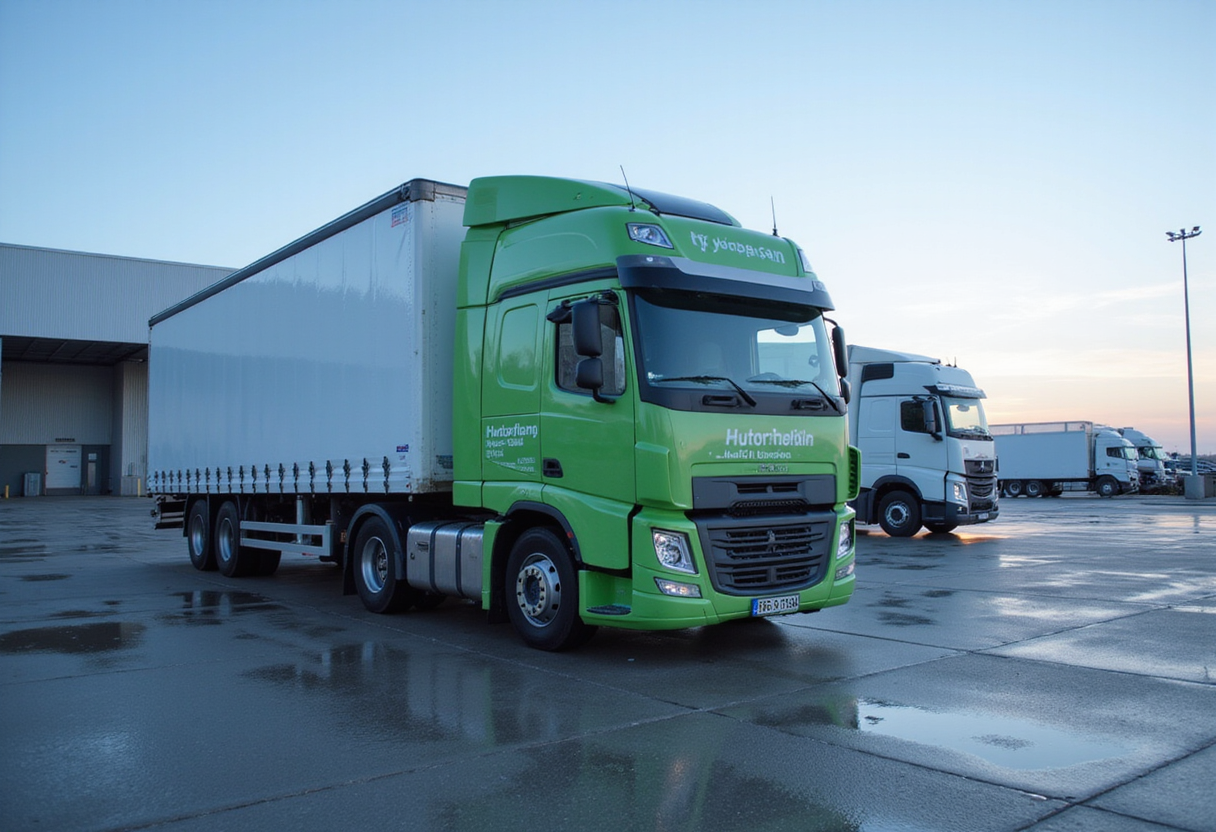
Gruber Logistics has deployed a Scania hydrogen fuel-cell heavy-duty truck inside Milano Malpensa's Cargo City, delivering to BCUBE AIR CARGO and ALHA via Pass4Core in a live-operations trial backed by SEA and Edison.
- Desk
- Air Cargo
- By
- Amara Osei
- Filed
- Length
- 572 words
- Read
- 3 min
Key points04
- Gruber Logistics deployed a Scania hydrogen fuel-cell heavy-duty truck inside Malpensa's Pass4Core facility and delivered goods to BCUBE AIR CARGO and ALHA in Cargo City.
- The trial is supported by SEA Milan Airports and energy partner Edison and forms part of the EU-funded ZEFES and OLGA (Horizon 2020) projects.
- Edison is developing a green hydrogen production and refuelling hub adjacent to the Malpensa Truck SafePark.
- Milano Malpensa Airport is targeting Net Zero emissions by 2030.
A hydrogen fuel-cell heavy-duty truck built by Scania and operated by Gruber Logistics has entered Milano Malpensa Airport's Cargo City, delivering goods to handlers BCUBE AIR CARGO and ALHA inside the secure Pass4Core parking facility in what Italian airport operator SEA Milan Airports described as a live-operations trial rather than a technology showcase.
The vehicle ran inside the Smart City digital workflows that govern cargo movements at Lombardy's primary airfreight gateway, completing deliveries under the same time-window and access constraints as diesel-powered trucks serving Cargo City.
Who is testing what at Malpensa?
Three partners back the deployment:
- Gruber Logistics — operates the Scania fuel-cell tractor and runs deliveries to BCUBE AIR CARGO and ALHA
- SEA Milan Airports — provides airport access, operational integration and access to the OLGA project workstream
- Edison — develops the planned green hydrogen production and refuelling hub adjacent to the Malpensa Truck SafePark
Gruber framed the trial as a stress test of hydrogen traction inside an international air-cargo hub, where delivery slots, ramp access and inter-operator coordination must hold together without disruption.
Which European projects anchor the deployment?
Two EU-funded programmes converge at Malpensa:
- ZEFES (Zero Emission flexible vehicle platforms with modular powertrains serving the long-haul Freight Eco System) — the source programme from which Gruber and Scania's hydrogen fuel-cell tractor originates, originally scoped for long-haul road freight
- OLGA (hOlistic Green Airport) — a Horizon 2020 initiative covering airport energy, sustainable mobility and hydrogen production, refuelling and use, in which SEA is an active participant
The Malpensa run moves the ZEFES hardware out of motorway conditions and into an air-cargo operational envelope, linking decarbonisation road freight pilots with the airport logistics chain.
Why does an air-cargo hub matter for hydrogen road freight?
Cargo City concentrates short-radius, high-frequency truck moves tied to aircraft handling. Replacing diesel tractors in that loop exposes fuel-cell drivetrains to:
- Repeated stop-start cycles at handler drop zones
- Idling at Pass4Core and truck staging areas
- Tight delivery windows synchronised with ULD build-up
- On-site refuelling logistics once Edison's hub is built
The data captured here will feed both ZEFES long-haul performance models and OLGA's airport energy scenarios.
Where does the refuelling infrastructure stand?
Edison is siting the planned hydrogen production and distribution facility next to Malpensa's Truck SafePark, putting generation inside the airport perimeter. That location decision matters: on-site production removes the road haul of compressed or liquid hydrogen and gives airport-tied operators a refuelling node that matches their duty cycles.
The hub is not yet operational, which is precisely why Gruber is running the Cargo City trial now — to build operational experience ahead of infrastructure availability.
What does this change for shippers and forwarders?
For freight forwarders and forwarders' trucking providers working through Malpensa, the immediate operational impact is nil. The single unit runs alongside the existing diesel fleet inside Pass4Core. The medium-term signal is sharper: SEA has placed hydrogen on the same decarbonisation track as its Net Zero 2030 commitment for the airport, and the Cargo City loop is the first controlled environment in which the technology will be benchmarked against conventional tractor performance on airport tonnage.
If Edison's on-site hub reaches commissioning in the next phase of the OLGA timeline, expect Gruber and competing handlers to scale trials toward multi-vehicle deployments inside the Truck SafePark catchment.
Source: Air Cargo Week
More from Amara Osei
Show full bio
Staff writer covering marketplaces and e-commerce at Waybill Wire.
257 articles
Related05
Ports of Genoa and FS Logistix launch green hydrogen pilot at Savona
Port of Savona to Test Green Hydrogen for Rail Freight Operations
Hungary's new government puts €150m Trieste terminal plan under review
Antwerp-Bruges moves autonomous trucks from demo to revenue service
Uber Freight doubles European 4PL wins, plots Krakow control tower