WW/WAREHOUSIN
LX Pantos opens $167m Katowice hub to anchor CEE push
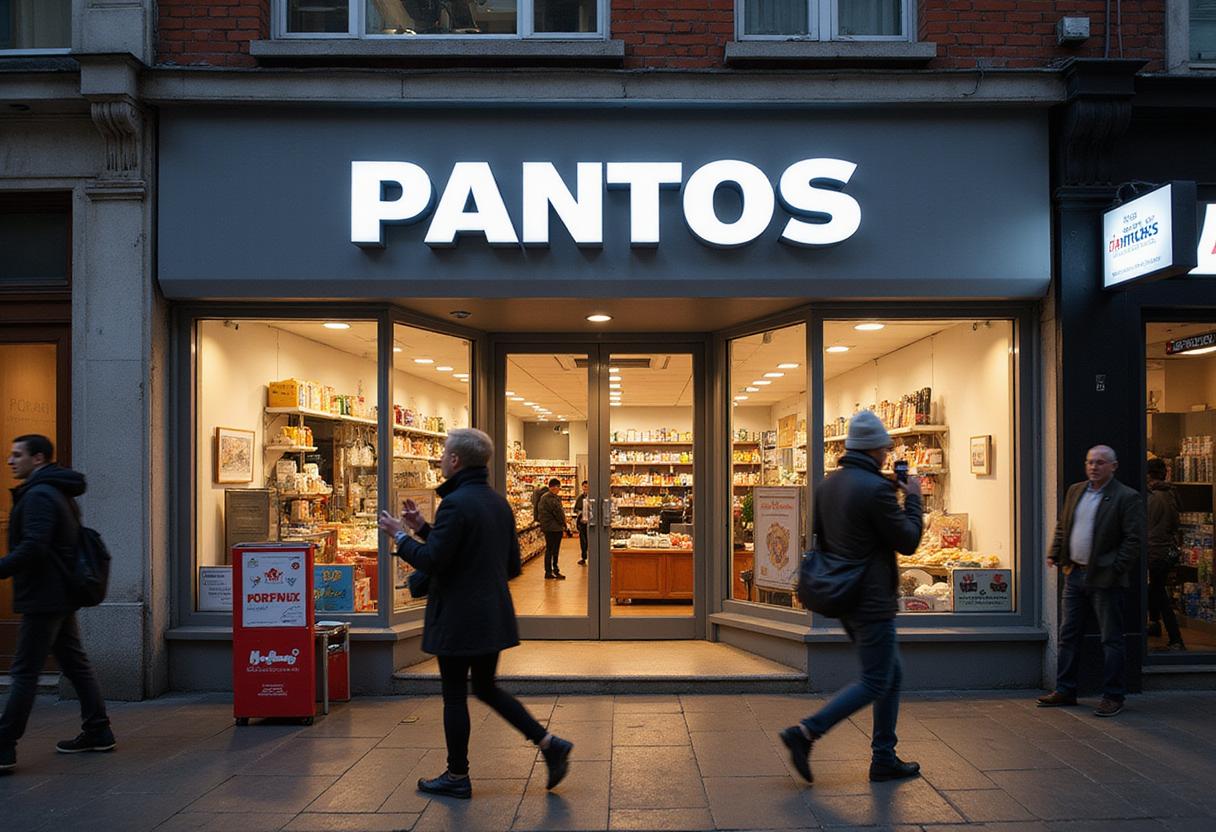
LX Pantos has brought a $167m, 109,000 sqm, five-building logistics complex in Katowice, Poland, into operation alongside KIND and the Korean state-backed PIS No 2 Fund.
- By
- Amara Osei
- Filed
- Length
- 519 words
- Read
- 3 min
Key points05
- LX Pantos has brought a $167m, 109,000 sqm, five-building logistics complex in Katowice, Poland, into operation.
- Co-acquirers are LX Pantos, the Korea Overseas Infrastructure & Urban Development Corp (KIND), and PIS No 2 Fund under Seoul's Ministry of Land, Infrastructure and Transport.
- Korea Ocean Business Corporation provided part of the financing package.
- The complex marks LX Pantos's largest single-site commitment in Central and Eastern Europe to date.
- LX Pantos has framed Poland as the anchor for further CEE expansion, with headroom remaining for additional build-out on the Katowice site.
LX Pantos has brought a $167 million, 109,000 sq metre logistics complex in Katowice, Poland, into operation — the South Korean group's largest single-site play in Central and Eastern Europe to date.
The five-building facility was jointly acquired by LX Pantos, the Korea Overseas Infrastructure & Urban Development Corp (KIND), and PIS No 2 Fund, a vehicle operating under South Korea's Ministry of Land, Infrastructure and Transport. Korea Ocean Business Corporation provided part of the financing.
What is LX Pantos adding in CEE?
The Katowice complex lands a Korean logistics operator at scale into a market that has rapidly absorbed modern warehousing stock over the past decade. Poland sits at the centre of EU east-west road freight flows, with the Silesian corridor around Katowice drawing foreign capital targeting German, Czech, and domestic Polish volumes.
The 109,000 sq metre footprint across five buildings gives LX Pantos room to consolidate warehousing and contract logistics activity in a single location — scale that few other European markets can match at one site. For a Korean operator entering the region, that addresses a central constraint: finding one campus, not five, on which to base a regional operation.
Who paid for it, and on what terms?
Three counterparties share ownership of the complex. LX Pantos acts as the operating partner. KIND brings Korean state-backed infrastructure capital to the deal. PIS No 2 Fund, a public-private vehicle supervised by Seoul's land ministry, holds the third equity stake. Korea Ocean Business Corporation joined on the lender side.
The structure spreads equity exposure across two Korean state-linked vehicles and the operator itself, reducing the balance-sheet weight on LX Pantos of a nine-figure European investment. It also points to continued Korean state interest in underwriting overseas logistics plays by domestic operators — the same public-capital template that has previously supported Korean groups expanding into Southeast Asia and the Middle East.
Why does it matter for shippers and forwarders?
For Korean exporters routing electronics, components, and consumer goods into the EU, a Polish hub operated by a Korean logistics group cuts a layer of handoff to a European 3PL. The Katowice site gives LX Pantos both warehousing and contract logistics capacity under one roof, simplifying the supply chain for cargo that previously staged through German or Dutch distribution centres.
For forwarders already active in Poland, the deal adds CEE warehouse capacity against a backdrop of tightening vacancy and rising prime rents. It also deepens Poland's pull as a consolidation point for East Asian cargo inside the EU, particularly as shippers look to shorten lead times to Central European end markets.
What comes next?
LX Pantos has framed Poland as the anchor of a wider Central and Eastern European expansion, with the Katowice complex the first concrete expression of that strategy. The five-building footprint leaves headroom for further build-out on the same site, and the joint-venture template with Korean state capital suggests the group will pursue additional regional deals alongside its state-aligned partners — Poland first, but with the broader CEE market now formally in play.
Source: The Loadstar
More from Amara Osei
Show full bio
Staff writer covering marketplaces and e-commerce at Waybill Wire.
257 articles