WW/PORTSTERMI
Hong Kong port handles 12.99m teu — barely half its 2008 peak
Hong Kong handled 12.99m teu in 2025, half its 2008 peak, yet ranks fourth among maritime centres. A new report asks whether substance follows the statistics.
- By
- Marcus Bennett
- Filed
- Length
- 737 words
- Read
- 4 min
Key points05
- Hong Kong's container port handled 12.99m teu in 2025, about half its 2008 peak.
- The Hong Kong register fell to 109m gt by June amid geopolitical upheaval.
- Ship leasing enterprises under the preferential tax regime rose from 11 in 2020/21 to 46 in 2022/23.
- Hong Kong ranks fourth in the 2026 Xinhua-Baltic maritime centre index, behind Singapore, Shanghai and London.
- The EU-style block exemption for liner vessel-sharing agreements was extended to 2031.
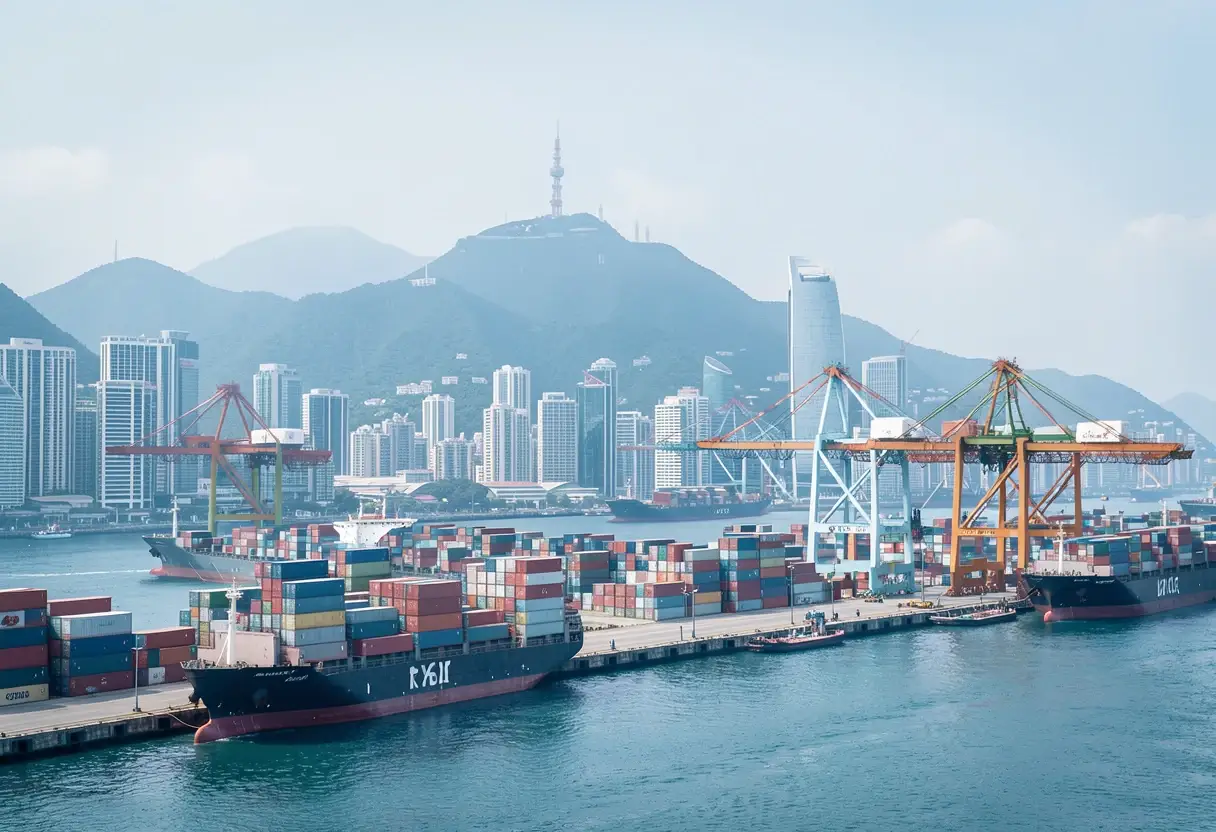
Hong Kong's container throughput fell to 12.99m teu in 2025 — scarcely half its 2008 peak — while the Hong Kong register shed substantial tonnage to 109m gt by June. Those two numbers frame a 48-page Splash report published ahead of Hong Kong Maritime Week, and they frame an uncomfortable question: can the city convert inherited maritime strengths into a business model that survives to 2030?
The headline data cuts both ways. Hong Kong ranks fourth in the 2026 Xinhua-Baltic international maritime centre index, behind Singapore, Shanghai and London. Three of the world's leading shipmanagement companies are headquartered there, along with major P&I clubs and a dense concentration of lawyers, financiers and technical specialists. Yet Shanghai, Shenzhen and Guangzhou have grown into physical port giants whose scale advantages Hong Kong cannot realistically overturn.
Is Hong Kong becoming the mainland's annex?
Richard Hext, chairman of the Hong Kong Shipowners Association, resists that framing. "An 'annex' does not host three of the world's top 10 shipmanagers, 11 of the 12 International Group P&I associations, eight of the top ten ship-finance bookrunners," he said. The inventory reflects decades of investment and trust. It does not, however, settle where credit committees sit, who selects vessels, or where the next expansion will physically land.
Gautam Chellaram, chairman of KC Maritime, is blunter. He sees genuine growth in leasing and mainland-linked finance, but said: "I do not yet see clear evidence that the measures have resulted in substantial headquarters relocation involving decision-makers, fund managers, and independent shipowners physically basing themselves in Hong Kong."
What has tax reform actually delivered?
The numbers show movement, but of a limited kind. Ship leasing enterprises under the preferential regime rose from 11 in 2020/21 to 46 in 2022/23, according to government figures. Qualifying ship lessors pay zero profits tax; ship leasing managers, shipmanagers, agents, brokers and certain marine insurers pay half rate. That is evidence structures respond to incentives. It says little about the location of decision-makers.
"Tax is necessary but not sufficient," Hext said. He wants the next phase judged by "regional headquarters, underwriting authority, credit decisions, trading desks and skilled jobs, and not by company registrations alone."
The competitive benchmark remains Singapore. Jim James, senior consultant at Hill Dickinson, noted: "Singapore continues to offer broader tax incentives and a larger concentration of commodity traders." The second point may matter more — traders bring transactions, and transactions bring the brokers, lenders, insurers and lawyers who serve them. Critical mass of principals is hard to manufacture through concessions alone.
Where does the real business take place?
The report's sharpest formulation comes from Chellaram: as a cargo port, Hong Kong is being functionally subordinated to mainland competitors; as a financial, legal and arbitration centre, it retains a combination unavailable across the border. "On the professional-services side, Hong Kong is the piece Shanghai structurally cannot replicate," he said.
Damien Laracy, head of Hill Dickinson's Hong Kong office, describes a transition "from a cargo-driven port hub to a specialised centre for maritime services" — "the region's high-value maritime services platform". The international test, the report argues, is whether owners and counterparties with no direct mainland connection still choose Hong Kong.
Not everything is intangible. Martyn Huckerby of Hill Dickinson pointed to the extension of the block exemption for liner vessel-sharing agreements to 2031, preserving "legal certainty for operational cooperation between liner shipping companies" — the kind of predictable rule mobile businesses build on. London P&I, which opened a Shanghai office in 2025, now works across Hong Kong, Shanghai, London and Athens, regional director Deborah Yu said.
Growth is visible at the operating level. Dockendale Group is expanding management operations locally; chief executive Vikrant Gusain cited ease of doing business, Asian market access and international talent.
What comes next?
June's tax amendment bill proposes a half-rate concession for qualifying physical commodity trading. September's first five-year plan adds a 'Finance + Maritime' agenda covering ship finance, insurance and trade finance. Neither can be judged successful simply because it exists — their test will be new trading desks, lending decisions and customers free to transact elsewhere.
By 2030, the report concludes, Hong Kong should be judged less by addresses in Central and more by who holds authority to do business from the city. The coming four years will show whether it still can.
Original: issuu.com
More from Marcus Bennett
Show full bio
Senior reporter covering regulation, policy and their impact on Ocean and air freight, container shipping at Waybill Wire.
870 articles
Related05
Hong Kong reviews river trade permit fees as Delta cargo drifts to mainland ports
Fujian Guohang to build 12 Hong Kong shipowning units for $372m newbuild push
ONE folds Hong Kong HQ into Singapore from April 2027
Hong Kong Bets on Pinglu Canal to Reverse Port Cargo Decline
'Data Centers Are the New Ports' – APEC Finance Ministers Weigh Funding Push