WW/PROCUREMEN
Healy generator fire ends 2026 Arctic mission, clouds 2027 return
Procurement records show USCGC Healy’s July generator overspeed and fire ended its 2026 Arctic mission, expanded repairs and left 2027 Arctic service uncertain.
- By
- Tom Whitfield
- Filed
- Length
- 870 words
- Read
- 4 min
Key points05
- A generator overspeed on the 420-foot USCGC Healy triggered a fire and the end of its planned 2026 high-latitude mission.
- USCGC Healy was towed to Seattle on July 13 after a casualty northwest of Port Angeles; a July 24 notice announced major repairs and an investigation.
- Generators No. 1 and No. 3 each exceeded 40,000 operating hours; corrective work was scheduled for Oct. 13-31 with up to $60,000 in optional repairs.
- The Siemens FireFinder XLS overhaul had an Oct. 16 completion deadline at Coast Guard Base Seattle.
- A Nov. 13 sources-sought survey proposed five-year propulsion support from July 2028 through July 2033.
By Tom Whitfield
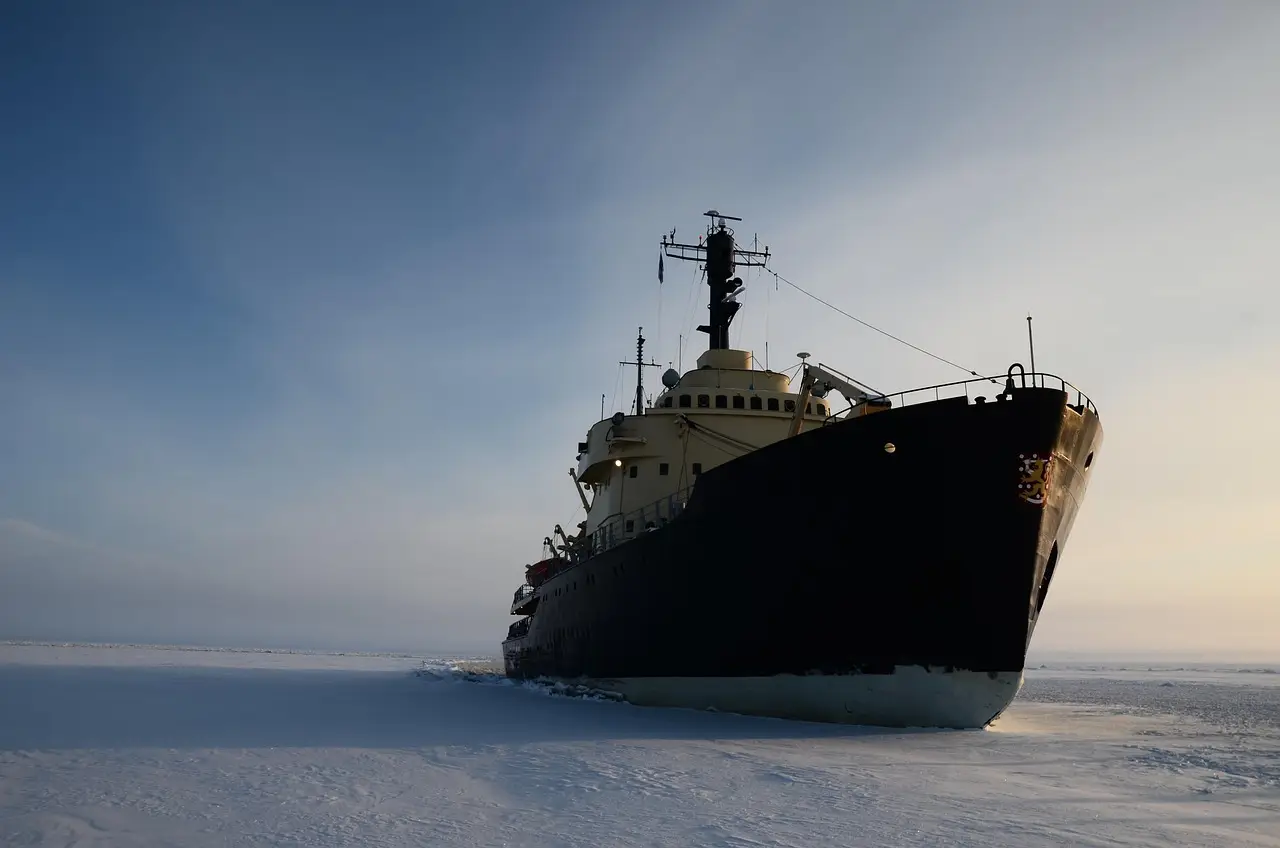
A main propulsion diesel generator on the 420-foot USCGC Healy failed catastrophically in July, triggering a fire in Generator Room No. 2 and forcing the Coast Guard to abandon the icebreaker’s planned 2026 high-latitude summer mission.
USCGC Healy, the Coast Guard’s largest icebreaker, was towed to its Seattle homeport on July 13 after an engineering casualty northwest of Port Angeles, Washington. On July 24, the service said the vessel would need major repairs and an investigation. The vessel subsequently abandoned its planned 2026 high-latitude summer mission.
What does this change for shippers and carriers?
The immediate consequence is a reduction in specialized icebreaker capacity for the 2026 high-latitude season, not a quoted freight-rate move. The withdrawal leaves the Coast Guard leaning more heavily on its newest icebreaker during an increasingly active Arctic season.
For shippers, carriers and forwarders with Arctic interests, the records support a narrow conclusion: routing and government-support assumptions need rechecking because one major icebreaker has left the program. The documents contain no TEU, tonnage, $/FEU adjustment or commercial cargo terms.
What did the failure damage?
An October corrective-maintenance solicitation stated: “CGC HEALY suffered a catastrophic overspeed failure of its #2 MPDG.” It called for immediate work on the overspeed-protection devices and governor equipment serving Generators No. 1 and No. 3, extending the response beyond the failed unit.
A separate September procurement described the fire’s electrical consequences. Fire-detection equipment and wiring exposed to high temperatures developed a ground fault, and all equipment and wiring in the upper section of Generator Room No. 2 will need renewal. The document also recorded numerous detection-system faults.
The Coast Guard sought a contractor to overhaul the Siemens FireFinder XLS system, replacing damaged equipment and wiring. The work was to be performed at Coast Guard Base Seattle alongside the broader repair effort, with an October 16 completion deadline. The Person Machine Interface, or PMI-2, also had memory-retention problems and required replacement.
What repairs do the other generators need?
The October solicitation covered the mechanical and electro-pneumatic overspeed systems on Generators No. 1 and No. 3, together with their Woodward governors and associated equipment. It specified:
- Disassembly, inspection, cleaning, repair, recalibration and bench testing of the mechanical overspeed cutouts and electro-pneumatic limiters.
- Removal and complete disassembly of the governors and boosters, inspection against original-equipment-manufacturer specifications, replacement of seals and bearings, and bench testing.
- Replacement of the A2 cylinder head on Engine No. 3 after damage to the dummy-valve seating surface and dummy-valve body. The removed head and valve were to go to a machine shop for inspection and reconditioning.
The same file said: “The governors and boosters appeared to be operating properly but there is no record of service or overhaul.” Both engines had accumulated more than 40,000 operating hours. The gap in service records matters.
The scheduled outage ran from October 13 through October 31 in Seattle. The contract included an option for up to $60,000 in additional repairs if inspections found further problems, so the initial scope did not rule out more work.
A separate procurement addressed the CO2 fire-suppression system. It called for replacement of manual fire-pull equipment and associated cabling serving Generator Rooms No. 1 and No. 2, extending the repair response beyond propulsion control and detection hardware.
What does the five-year support plan signal?
A procurement notice published November 13 goes further. The Surface Forces Logistics Center is conducting market research for a five-year support requirement covering July 2028 through July 2033. It is a sources-sought survey, not a request for proposals or an awarded contract.
The proposed scope covers maintenance and technical support for Healy’s integrated machinery plant and associated shoreside equipment, including periodic maintenance, troubleshooting, casualty response, engineering analysis, configuration management and replacement of obsolete components.
GE Power Conversion, part of GE Vernova, holds the original-equipment-manufacturer status and proprietary data rights needed to deliver that support. The previous contract went to GE on a sole-source basis.
The requirement also calls for hands-on and classroom training for permanent crew and shore-support personnel. It would assess obsolescence and forecast reliability, maintainability and availability concerns for five years beyond the contract period, then support technical upgrades intended to preserve availability through the vessel’s midlife maintenance period.
The notice does not establish that the five-year support arrangement resulted from July’s casualty. It does point to maintenance and obsolescence risk across the propulsion plant, rather than a one-off generator repair.
Is Healy ready for the 2027 Arctic season?
Not yet, on the available record. The documents do not show that all contracted work has been completed or provide a revised return-to-service date. The Coast Guard has not released the overspeed-failure investigation or a detailed repair timeline, and it did not respond to a request for comment.
Until the agency publishes findings and a firm return-to-service date, shippers, carriers and forwarders planning Arctic work should not count Healy as confirmed 2027 navigation capacity, while the Coast Guard’s reliance on its newest icebreaker is likely to persist.
Source: gCaptain
More from Tom Whitfield
Show full bio
Market editor covering companies, deals and strategy in Ocean and air freight, container shipping at Waybill Wire.
943 articles
Related05
Coast Guard Seeks Commercial Icebreakers to Keep Northeast Ports Open
Shadow-Fleet Traffic on Northern Sea Route Already Exceeds 2025
South Korea completes first Arctic container voyage as commercial challenges surface
EU Arctic strategy puts icebreakers and cable security first
South Korea sets 2030 target for Arctic box service after first ship returns