WW/AIRCARGO
Fukuoka Airport Begins Level 4 Autonomous Cargo Towing
Fukuoka Airport became Japan's third airport to deploy Level 4 autonomous cargo towing on Oct. 26, starting with one tractor over 1.7 km of a 2.5 km route.
- Desk
- Air Cargo
- By
- Marcus Bennett
- Filed
- Length
- 609 words
- Read
- 3 min
Key points05
- Level 4 cargo towing began at Fukuoka Airport on Oct. 26.
- One tractor runs autonomously over 1.7 km of a 2.5 km route, about 68% of the journey.
- The tractor pulls six carts carrying air-cargo containers along a preset route.
- Fukuoka is Japan's third airport to deploy Level 4 driving, after Narita and Haneda.
- The partners plan to expand from one vehicle to four by the end of this year.
By Marcus Bennett
Fukuoka Airport started Level 4 autonomous cargo towing on Oct. 26, with one tractor covering 1.7 km of a 2.5 km route between an air-cargo consolidation area and aircraft parked in the domestic terminal.
Japan Airlines (JAL) and airport operator Fukuoka International Airport launched the service in the airport's cargo-transport section, according to an ITmedia report published Oct. 27 local time. Level 4 means the system controls the towing vehicle within defined operating conditions and areas. The vehicle runs without a driver on designated sections inside the airport.
What is moving through Fukuoka?
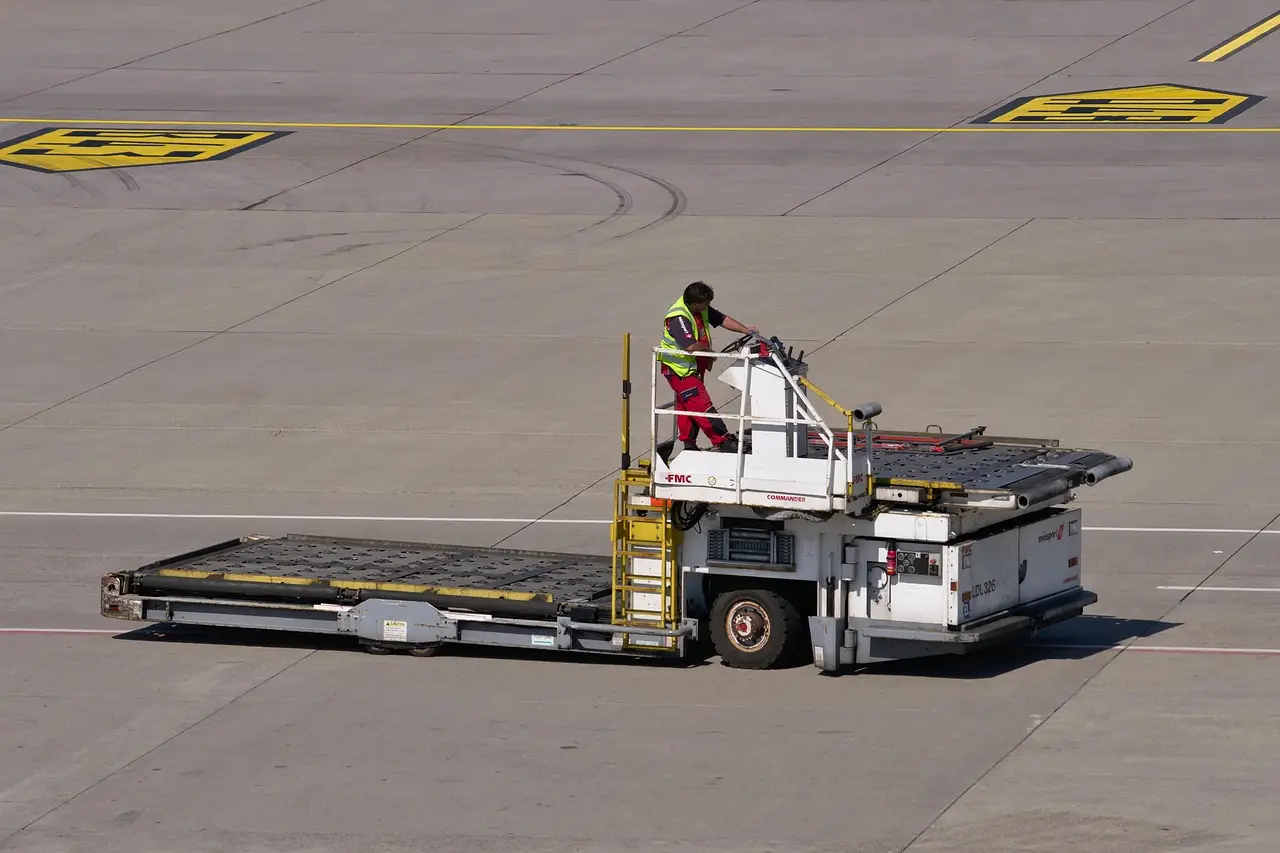
The tractor pulls six carts carrying air-cargo containers along a preset route. Its autonomous segment represents about 68% of the total 2.5 km journey. The full route connects the consolidation area with aircraft stands in the domestic terminal.
Fukuoka is the third Japanese airport to introduce Level 4 autonomous driving, after Narita and Haneda. JAL and Fukuoka International Airport started with one vehicle and aim to expand to four by the end of this year, four times the initial count.
Why automate airport ground handling?
Airport ground handling requires repeated transport of cargo and baggage around aircraft. Routes and work areas at Fukuoka are relatively clear, making the setting suitable for autonomous equipment. When airports cannot secure sufficient staff, automating repetitive transport can put limited manpower to more productive use.
Labor shortages drive the deployment. JAL expects autonomous driving to reduce long hours of outdoor work and allow some staff to move indoors. The stated aim is to optimize workforce allocation, not to announce a quantified reduction in headcount.
Miho Saruwatari, head of Japan Airlines' Kyushu branch, said: “In a situation of labor shortages, it is urgent to support operations through automation and optimize workforce allocation while reducing on-site burdens.”
Etsuya Uchiyama, head of the airport operations headquarters at Fukuoka International Airport, said: “It will contribute to airport safety by boosting work efficiency while reducing human error that can occur in manual driving.”
What can shippers and forwarders expect?
For JAL and airport handlers, the immediate commercial value lies in completing repetitive internal transport with less driver time outdoors while releasing staff for other duties. Fukuoka expects the system to improve efficiency and reduce manual-driving errors, but the report gives no figures for driver hours saved, trips completed, handling-time changes or operating cost per run.
For shippers and freight forwarders using Fukuoka, any benefit remains indirect because the tractor operates between cargo consolidation and aircraft, not on an airport-to-destination leg. The program adds ground vehicles, and neither JAL nor Fukuoka International Airport reports additional flights, routes or cargo capacity.
Neither JAL nor Fukuoka International Airport has disclosed a throughput gain, a safety result, a service-level target or an air-freight rate effect. Consequently, the launch offers no quantified basis for assuming faster cargo handling, lower costs or tighter booking cutoffs. Forwarders should treat the deployment as an operational trial rather than a committed service improvement until performance data appear.
How will expansion be tested?
Fukuoka plans to increase the number of autonomous vehicles gradually through year-end. Any additional rollout depends on confirming three outcomes: stability in real operations, improved work efficiency and measurable effects from workforce reassignment.
The plan does not specify when the three additional tractors will enter service, whether the autonomous section will extend beyond 1.7 km, or how the partners will measure reassignment success. If Fukuoka can confirm all three outcomes as it moves from one vehicle toward four, the project could support wider autonomous ground operations; without that evidence, added cargo capacity remains unproven.
Source: Google News: air cargo
More from Marcus Bennett
Show full bio
Senior reporter covering regulation, policy and their impact on Ocean and air freight, container shipping at Waybill Wire.
725 articles
Related05
JAL and Nippon Express launch new Asia-North America air cargo services
JAL, Nippon Express open weekly transpacific air circuit for AI cargo
Nippon Express Puts a Five-Day Cap on Asia–US Inland Delivery
Nippon Express opens dedicated air freight CFS near Dhaka airport
Nippon Express launches Transpacific air freight service for AI cargo