WW/AIRCARGO
JAL and Nippon Express launch new Asia-North America air cargo services
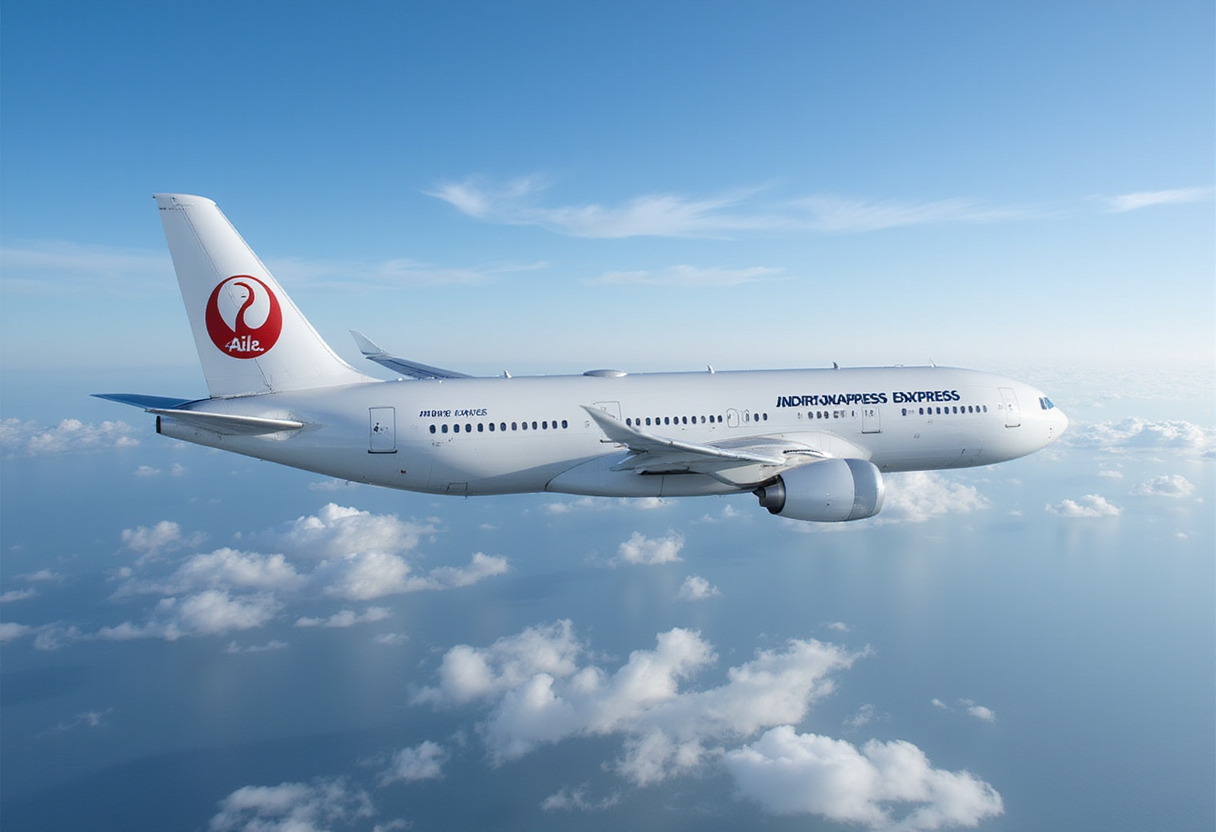
Japan Airlines and Nippon Express have launched new Asia–North America air cargo services, pairing JAL's belly-hold and freighter capacity with Nippon Express's forwarding network to add transpacific options for shippers.
- Desk
- Air Cargo
- By
- Marcus Bennett
- Filed
- Length
- 539 words
- Read
- 3 min
Key points04
- Japan Airlines and Nippon Express have launched Asia–North America air cargo routes, per Air Cargo News.
- The partnership pairs JAL's freighter and 787/777 belly-hold capacity with Nippon Express's forwarding network.
- Air Cargo News did not disclose airports, frequencies or aircraft types in its initial report.
- Transpacific air freight yields have run above pre-2020 baselines supported by elevated ocean rates and West Coast port congestion.
Japan Airlines (JAL) and Nippon Express have begun a new Asia–North America air cargo service, linking Japanese combination-carrier lift with one of Asia's largest forwarders in a bid to add transpacific options for time-sensitive shippers.
The two operators are launching Asia-to-North-America routes in a tie-up that joins JAL's freighter and belly-hold capacity with Nippon Express's forwarding and consolidation network, Air Cargo News reported. Air Cargo News did not specify airports, weekly frequencies or aircraft types in its initial coverage.
What is JAL bringing to the lane?
JAL operates one of the larger Japanese belly-cargo networks, deploying dedicated freighters alongside the cargo holds of its 787 and 777 passenger services. The carrier runs scheduled freighters out of Tokyo Narita to points in Asia, North America and Europe, and feeds international cargo through joint operations with other combination carriers.
Nippon Express, headquartered in Tokyo, ranks among Japan's largest logistics groups and sits inside the top tier of global air freight forwarders by tonnage. The company has been investing in cross-border forwarding, contract logistics and time-definite services in North America and Southeast Asia, with consolidation centres at Narita and Kansai anchoring its international air product.
Why this matters for shippers
A direct Nippon Express tender onto JAL-operated Asia–North America flights gives Japanese and Southeast Asian exporters a single-carriage option. Electronics, semiconductors, automotive parts and pharmaceuticals — the typical transpacific air mix — depend on tight handling chains. Cutting a hub transit removes a handling and a customs touchpoint, compresses transit time and reduces damage risk.
The capacity also lands in a tight market. Transpacific air freight yields have been supported by elevated ocean rates and serial congestion on the U.S. West Coast for much of the past two years. Air demand on Asia–North America typically spikes when ocean-reliability indexes deteriorate or when shippers face inventory exposure on seasonal electronics launches.
What does it change for competitors?
For incumbent freighter operators, the added Japanese capacity is a marginal pressure point. Contract rates negotiated directly with forwarders absorb new lift more cleanly than spot markets, which means the immediate yield impact will depend on whether JAL is committing large freighter volume or only belly capacity.
For other forwarders, Nippon Express's direct capacity with a Japanese carrier adds a competitor with structural cost advantages on consolidation tonnage out of Tokyo, Osaka and Nagoya airports. FedEx, UPS and Cathay Cargo dominate transpacific air freight, but Japanese forwarder-controlled lift out of home airports has been the missing piece in the region's integrator map.
What to watch next
The headline fact — that JAL and Nippon Express have started Asia–North America routes — is now confirmed. The detail layer remains thin: weekly frequencies, departure airports and a launch date have not been disclosed.
Expect JAL and Nippon Express to release route-by-route capacity figures and schedules in the coming weeks, consistent with how Cathay Cargo and Korean Air have announced incremental transpacific additions. Carriers and forwarders will be watching whether the new service absorbs pent-up demand or recycles existing freight, which will dictate its effect on transpacific air yields into the late-year peak season.
Source: Google News: air cargo
More from Marcus Bennett
Show full bio
Senior reporter covering marketplaces and e-commerce at Waybill Wire.
250 articles
Related05
JAL, Nippon Express partner on Asia–North America air cargo
Nippon Express Puts a Five-Day Cap on Asia–US Inland Delivery
Ocean Network Express begins restructuring in key ocean region
SolitAir Adds Uzbekistan Airports to Its Cargo Network
Nippon Express opens dedicated air freight CFS near Dhaka airport