WW/OCEANFREIG
Four Tankers Struck Around Hormuz as Gulf Attacks Hit 181 Since March
A projectile hit the Dominica Prosperity's engine room off the UAE, forcing 22 crew to evacuate. JMIC now counts 181 incidents since March 1 as Hormuz traffic stays depressed.
- Desk
- Ocean Freight
- By
- Tom Whitfield
- Filed
- Length
- 685 words
- Read
- 3 min
Key points05
- A projectile struck the engine room of the Dominica Prosperity at ~1800 UTC on November 11, 14 nm northwest of Ras Al Khaimah; all 22 crew evacuated, 19 of them Indian nationals.
- JMIC documented four tanker attacks in its November 12 advisory — two in the Persian Gulf, two in the Strait of Hormuz.
- JMIC counts 181 maritime security incidents since March 1, attributing the threat to Iranian attacks and harassment.
- Roughly 211 commercial vessels were stationary at anchorages east of Hormuz, including Fujairah, Khor Fakkan, Sohar and Musandam.
- Hormuz transits run at single-digit to low-double digits per day on independent tracking, versus ~34 U.S.-assisted transits daily per NCAGS.
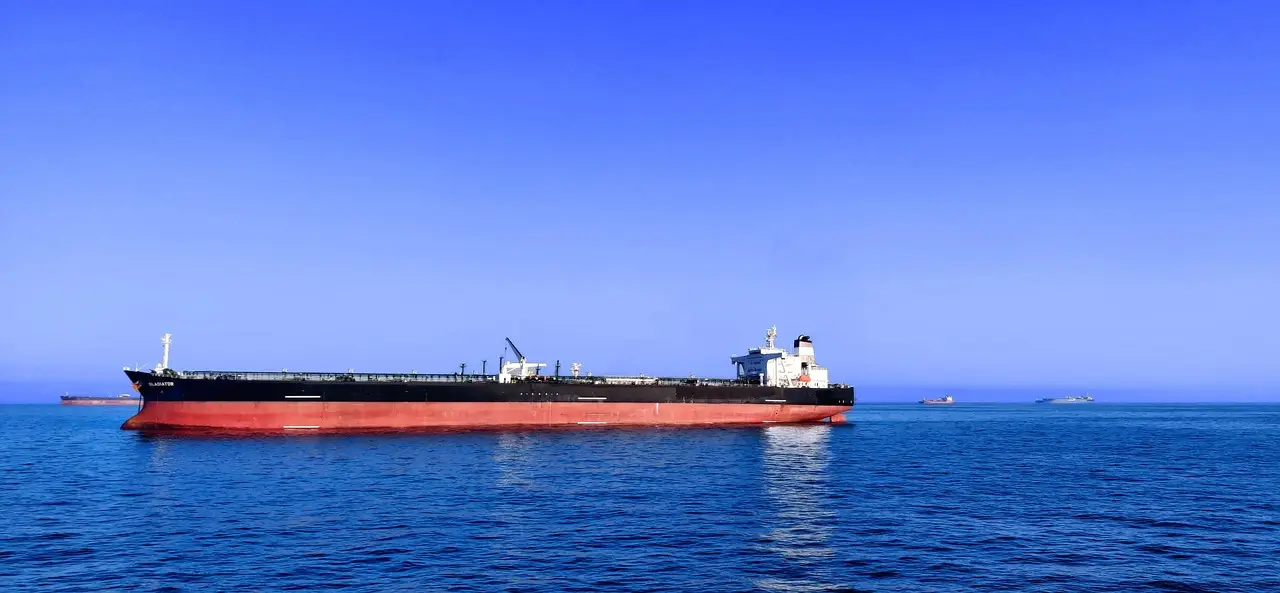
A projectile hit the engine room of the Liberia-flagged crude tanker Dominica Prosperity off the UAE on November 11, forcing the evacuation of all 22 crew as emergency teams fought a fire that was still burning the next day. The strike was one of four tanker attacks documented by the Joint Maritime Information Center (JMIC) in its November 12 advisory, which put recorded maritime security incidents in the region at 181 since March 1.
UK Maritime Trade Operations (UKMTO) said an unidentified projectile struck the Dominica Prosperity at roughly 1800 UTC on November 11, about 14 nautical miles northwest of Ras Al Khaimah, near Mina Saqr. The vessel had been drifting off Mina Saqr when it was targeted, according to India's Minister of Ports, Shipping and Waterways, Sarbananda Sonowal, who confirmed 19 Indian nationals were among the 22 crew rescued by the UAE Coast Guard.
"The entire 22-member crew was swiftly and safely evacuated by the UAE Coast Guard and all 19 of our Indian nationals are completely safe with no injuries," Sonowal wrote on X. He added that Indian authorities stayed in contact with the vessel's management company to coordinate crew support.
Reuters, citing maritime risk provider MARISKS, identified the operator as South Korea's Sinokor Maritime Co. Security firm Ambrey said the tanker was struck near its stern as it exited the Strait of Hormuz. No casualties were reported. The extent of the damage and any environmental impact remains unknown.
What did the other three attacks involve?
JMIC logged four tanker incidents since its previous report — two in the Persian Gulf and two in the Strait of Hormuz. Several were disclosed only after the fact.
- Fujairah Energy, struck by an unknown projectile while traveling eastbound in the Arabian Gulf on November 10. UKMTO said multiple crew members were injured and taken ashore for treatment; the rest were safe and accounted for. No damage assessment was immediately available.
- NCC Fajr, hit by an unknown projectile while transiting the Strait of Hormuz on November 11. Omani authorities reported the attack at approximately 0200 UTC north of Khasab, Oman. UKMTO initially reported the incident without confirming a strike, then reclassified it as an attack after confirmation. All crew were safe.
- An unidentified tanker, struck by an unknown projectile on November 10 about 19 nautical miles northeast of Lima, Oman, in the Strait of Hormuz. The crew was safe and no environmental damage was reported.
How bad is the security picture?
The numbers are blunt. JMIC counts 181 incidents since March 1, and it attributes the continuing threat to Iranian attacks and harassment — drone overflights, surveillance of merchant vessels and radio communications directed at ships. The perpetrators of the four latest projectile strikes have not been individually established in the UKMTO warnings.
Traffic tells its own story. Commercial transits through the Strait of Hormuz remain well below pre-conflict levels. Independent tracking data cited by JMIC shows single-digit to low-double-digit vessel transits per day, while U.S. Naval Cooperation and Guidance for Shipping (NCAGS) figures indicate approximately 34 U.S.-assisted transits per day over the latest 96-hour reporting period. The two datasets use different methods and shouldn't be read as directly comparable.
Congestion compounds the risk. JMIC estimated roughly 211 commercial vessels stationary at major anchorages east of Hormuz — Fujairah, Khor Fakkan, Sohar and Musandam. That's a lot of tonnage sitting exposed while incidents keep accumulating.
What does this change for owners and charterers routing crude through the Gulf? For now, it raises the cost calculus of every Hormuz transit: war-risk exposure, evacuation contingencies and anchorage delays at exactly the chokepoint where one of the world's most important oil shipping routes meets active military operations involving Iran, the United States and Israel.
UKMTO has advised vessels in the region to exercise caution and report suspicious activity while authorities investigate the latest incidents. With 181 attacks logged in just over eight months and no sign of de-escalation, tanker operators should expect the incident count — and the insurance premiums priced off it — to keep climbing.
Source: gCaptain
More from Tom Whitfield
Show full bio
Market editor covering companies, deals and strategy in Ocean and air freight, container shipping at Waybill Wire.
838 articles
Related05
Hormuz Attacks Spread Deeper Into the Gulf as Tankers and LNG Carrier Struck
VLCC struck off UAE as tanker war spreads beyond Hormuz
Nine Hormuz Attacks in a Week: Gulf Shipping Risk Repricing Starts Now
Limpet Mines Disable Tanker in Strait of Hormuz, First Since February
US warplane bombs bulker off Hormuz as tanker attacks multiply