WW/OCEANFREIG
Fake P&I certificates and €100m claims: Greece's tanker insurance problem
Ukraine's intelligence service says the sanctioned tanker DEYNA carried papers from a German insurer that may not exist. Greece's €100m Agia Zoni II claims show what happens when cover meets reality.
- Desk
- Ocean Freight
- By
- Marcus Bennett
- Filed
- Length
- 889 words
- Read
- 4 min
Key points05
- Bloomberg reported on 16 April 2026 that Ukraine's intelligence service identified at least five tankers, including the 111,800-dwt DEYNA, allegedly holding certificates from a non-existent German insurer, Seaguard P&I.
- The 2017 Agia Zoni II spill generated 424 claims worth over €100 million; only about €16.92 million had been paid as of 5 March 2026.
- Greece's tourism sector contributed up to €85.9 billion, or 34.6% of GDP, in 2025 including indirect effects.
- The DEYNA was sanctioned in 2025 by the US, EU and UK; its theoretical CLC liability limit is around 40.8 million SDR.
- Since July 2025, Germany and Sweden have requested insurance information from certain tankers in transit.
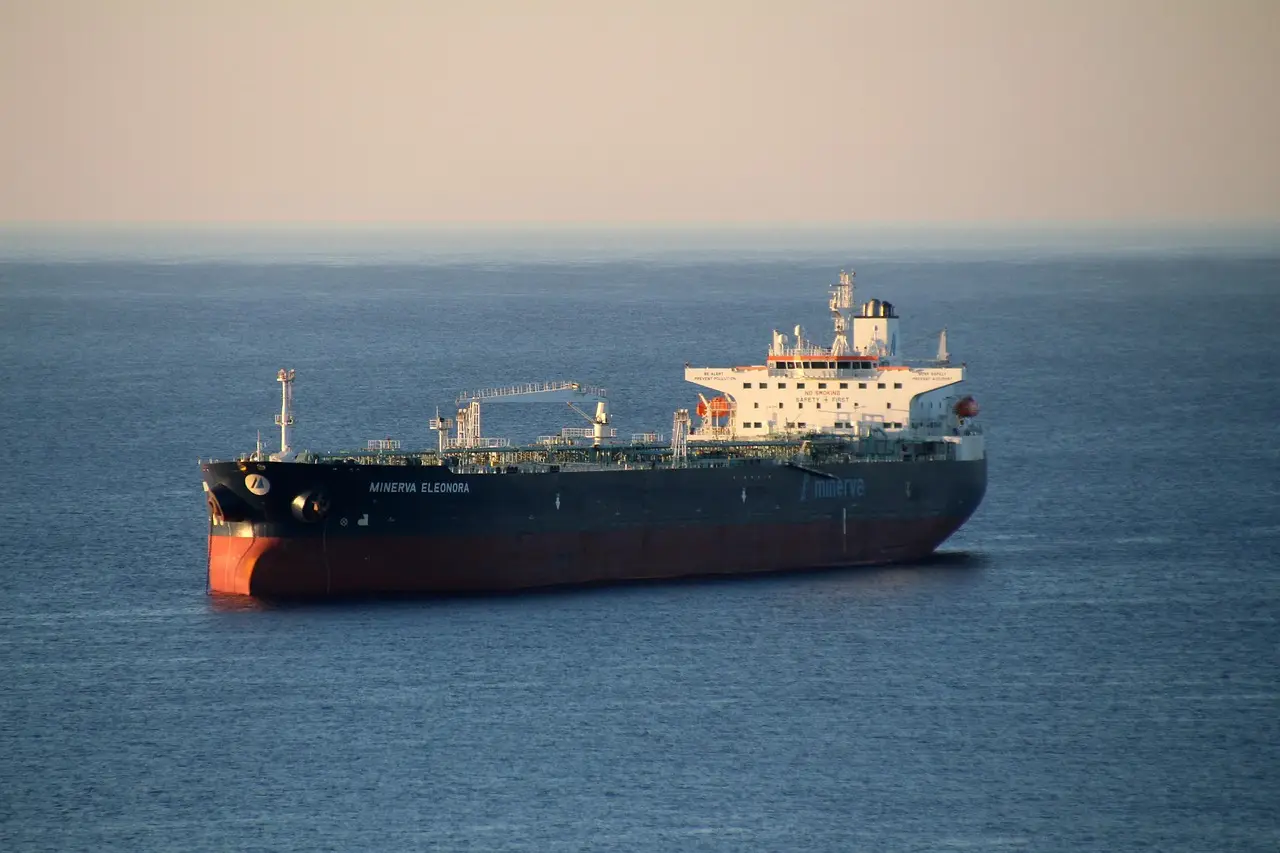
Ukraine's foreign intelligence service has identified at least five tankers — including the 111,800-dwt crude carrier DEYNA (IMO 9299903) — allegedly carrying insurance certificates from a company called Seaguard P&I, presented as German, which reportedly does not exist under the details shown. That finding, reported by Bloomberg on 16 April 2026, lands in a country still processing the aftermath of its last major spill: the Agia Zoni II, which sank in the Saronic Gulf in September 2017 and generated 424 compensation claims worth more than €100 million — of which only about €16.92 million had been paid as of 5 March 2026, according to the International Oil Pollution Compensation Funds (IOPC Funds).
The numbers explain why Greece treats tanker cover as an economic question, not merely an environmental one. Tourism contributed €32.4 billion directly to the Greek economy in 2025 — 13% of GDP, according to INSETE — and between €71.3 billion and €85.9 billion, or 28.7% to 34.6% of GDP, once indirect effects are counted. Island regions alone accounted for 58% of international tourism receipts in 2025, per Bank of Greece data. Fishing adds another exposed layer: ELSTAT counted 11,416 motorised fishing vessels in 2024, landing catches worth €249 million.
What did Agia Zoni II actually cost?
The tanker spilled roughly 500 tonnes of oil in September 2017, polluting 20 to 25 kilometres of coastline south of Piraeus and another 3 to 4 kilometres on Salamina. More than eight years on, compensation proceedings were still running. Claimants include clean-up companies, fishermen, tourism businesses and the Greek State.
The ship had an identifiable insurer — Lodestar Marine Limited — which had provided a bank guarantee of about €5.6 million. Even so, the process proved slow and complex. In 2025, the Piraeus Court of Appeal confirmed the centrality of the 1992 Civil Liability Convention (CLC) regime for claims within its scope, but that ruling did not shorten a timeline now past its eighth year. Not all of the 424 claims correspond to definitively recognised damage; their aggregate size, however, measures the potential economic cost of a single incident.
Why the DEYNA case matters
The DEYNA was built in 2005 and, under its former names Delta Blue and Deep Blue, once sailed under the Greek flag. A Polish shipyard listed the Deep Blue in 2015 among Greek-interest tankers arriving for repairs. Since March 2024, ownership has been attributed to Hedyna Co Ltd, according to the ship database of Ukraine's military intelligence service (GUR). The United States, the European Union and the United Kingdom sanctioned the vessel in 2025.
Bloomberg was careful to flag that it could not definitively confirm the intelligence service's claims about Seaguard P&I — whose listed address reportedly corresponds to an apartment building. That caveat matters: the findings do not prove the DEYNA held a forged certificate or sailed uninsured. But the case exposes a structural gap in the CLC system. For tankers carrying more than 2,000 tonnes of persistent oil in bulk, the 1992 convention mandates insurance against pollution damage and lets claimants pursue the insurer directly. It does not, in itself, provide an easy way to verify that a certificate is genuine or that the insurer can actually pay.
How much protection does the convention really offer?
For a ship of the DEYNA's declared tonnage, the shipowner's theoretical liability limit under the CLC would be around 40.8 million Special Drawing Rights — an international unit of account. That figure is a calculation, not evidence: it does not prove a guarantee of that size is currently in force for the vessel.
The protection chain runs mainly through P&I insurance, which covers third-party liabilities including pollution damage and should not be confused with hull-and-machinery cover for the ship itself. Beyond the shipowner's limit, Greece participates in the 1992 Fund and the Supplementary Fund, which together can provide up to 750 million SDR per incident across all compensation tiers. Those funds step in when amounts exceed the owner's limit, or when the owner cannot pay and the insurance falls short.
Claimants must still prove their losses and meet the conventions' conditions. The existence of the funds does not guarantee automatic or immediate compensation — Agia Zoni II is the working proof.
Are governments already reacting?
Enforcement activity has been tightening for two years. In 2024, the Hellenic Navy issued NAVTEX notices for exercises in the Laconian Gulf, a move widely read as a deterrent to ship-to-ship oil transfers in the area. Since July 2025, Germany and Sweden have been asking certain tankers in transit for information on their insurance cover — a sign that port and coastal states no longer take certificates at face value.
For a country where tourism reaches 34.6% of GDP including indirect effects, the reliability of tanker insurance is a fiscal exposure. Fishermen, hoteliers, ports and municipalities depend on financial guarantees that will actually trigger after an accident, not certificates that dissolve on inspection.
The open question is verification: before the next spill, coastal states will need a workable mechanism to confirm who stands behind each tanker's paper — because the Agia Zoni II file shows that even a known insurer and a functioning international regime can leave claimants waiting the better part of a decade.
Original: bankofgreece.gr
More from Marcus Bennett
Show full bio
Senior reporter covering regulation, policy and their impact on Ocean and air freight, container shipping at Waybill Wire.
777 articles
Related05
Piraeus Profits Fall 24.4% as Pier I Works Bite Into Throughput
Piraeus Port profit falls 21.5% as container and cruise volumes slide
Marinakis targets €200m container ship IPO on Euronext Athens
Capital Tankers locks in up to $82.2m suezmax charter at $180,000 a day
Eurotankers sells 2009-built LR2 for $60m, triples 2018 price