WW/TRADEPOLIC
EU Bought Record 12.18 Million Tonnes of Russian Arctic LNG
EU imports of Yamal LNG hit a record 12.18 million tonnes through September, worth €7.88bn, as the Oct. 18 US sanctions deadline and the 2027 EU ban approach.
- Desk
- Trade & Tariffs
- By
- Tom Whitfield
- Filed
- Length
- 615 words
- Read
- 3 min
Key points05
- EU imported a record 12.18 million tonnes of Yamal LNG in Jan–Sep 2026, worth an estimated €7.88 billion.
- Europe took 167 cargoes — 85% of Yamal's global deliveries by volume — as worldwide shipments fell 1.3%.
- The short-term contract ban in force since April 25 has shown no noticeable impact on deliveries, per Urgewald.
- The full EU ban on eligible long-term contracts takes effect Jan. 1, 2027.
- The US must implement the Graham Act's Russia LNG sanctions provisions by Oct. 18, 2026.
The European Union imported a record 12.18 million tonnes of LNG from Russia’s Yamal Arctic project in the first nine months of 2026 — a bill German NGO Urgewald puts at €7.88 billion. That is the paradox at the centre of Europe’s energy trade: volumes up 9.5% year-on-year, even as the bloc legislates its own exit from Russian gas.
Shipments to Europe rose while Yamal’s global deliveries fell 1.3% over the same period. The bloc absorbed 167 cargoes, or 85% of the project’s recorded deliveries by volume, according to Urgewald’s analysis of Kpler shipping data. In other words, the EU isn’t a residual buyer. It is Yamal’s main market.
The quarterly breakdown shows where the money went: €2.88 billion in Q1, €3.08 billion in Q2, then €1.92 billion in Q3. Third-quarter deliveries fell 13.6% year-on-year to 2.21 million tonnes. September alone, though, brought 792,440 tonnes into European terminals — slightly above September 2025, worth an estimated €818 million.
What does the short-term ban actually change?
Not much, on this evidence. Restrictions on Russian LNG imports under eligible short-term contracts took effect on April 25, and Urgewald says September deliveries showed no noticeable impact.
“The short-term contract ban has done little to disrupt the trade,” said Sebastian Rötters, Urgewald’s sanctions campaigner. He argues the full import ban — scheduled for Jan. 1, 2027, covering eligible long-term contracts — is what will put serious pressure on Russia’s LNG business. Until then, Europe’s purchases hand Russia a substantial nearby market, Rötters said, but they also give European governments leverage over the trade if they choose to use it.
For LNG charterers and terminal operators, the commercial picture is straightforward. Russian Arctic volumes are still flowing into European regasification slots at record pace. Any shipper or trader modelling 2027 capacity should note that roughly 12 million tonnes a year will need a home — or a regulatory waiver — once the long-term ban bites.
Why Yamal can’t simply sail east
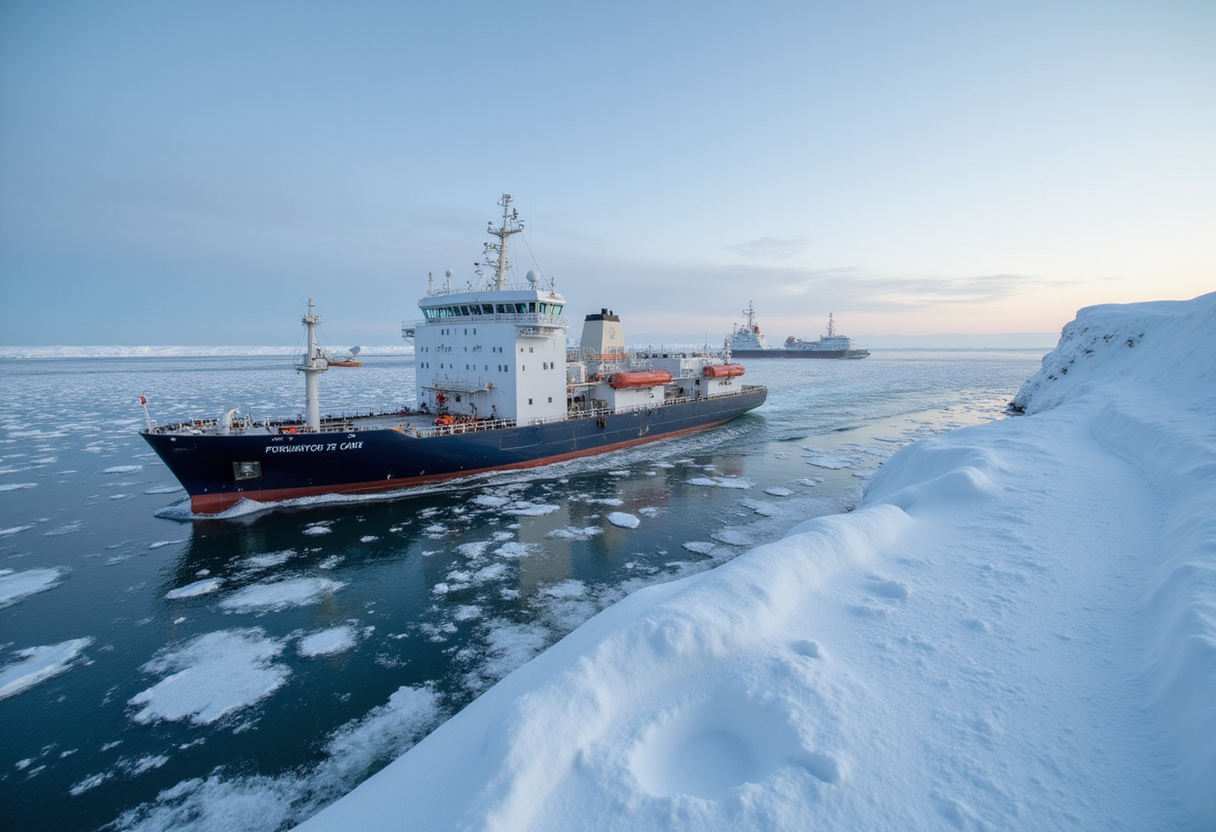
The trade is also a logistics story, and the logistics lock Europe in. Yamal depends on a small fleet of specialised Arc7 ice-class LNG carriers built for Arctic waters. European terminals and shipyards sit close by. A vessel discharges, picks up maintenance, and turns around back to Sabetta fast.
That matters in winter. Eastbound transits via the Northern Sea Route toward Asia get harder as ice thickens, stretching voyages and cutting effective fleet capacity. So proximity isn’t just convenient for Yamal — it’s structural. Europe is the efficient destination, and that cuts both ways for the phaseout timetable.
The Oct. 18 wildcard
The next pressure point isn’t in Brussels but Washington. The Lindsey O. Graham Sanctioning Russia and Iran Act, signed into law on Sept. 18, gives the Trump administration until Oct. 18 to implement its provisions.
The law authorises sanctions against foreign vessels involved in moving Russian energy to evade restrictions, people connected to Russian energy projects including Yamal LNG, and foreign port operators that service US-sanctioned vessels. How broadly Washington applies those powers remains the open question — but any move against the Arc7 fleet or the European terminals receiving it would strike directly at the 85% of Yamal’s volume currently landing in the EU.
For now, the flow continues. But the combination of an Oct. 18 US deadline and the Jan. 1, 2027 EU long-term ban means the record 2026 volumes look more like a peak than a trend — with rates, charter availability and European terminal utilisation all exposed to how aggressively either measure is enforced.
Source: gCaptain
More from Tom Whitfield
Show full bio
Market editor covering companies, deals and strategy in Ocean and air freight, container shipping at Waybill Wire.
414 articles
Related05
Russia ties diesel export lift to removal of Western sanctions
Russian Crude Flows Hit Six-Week High at 3.71m bpd, but Diesel Ban Eats Into Kremlin Windfall
Ksi Lisims LNG Lures SEFE, Uniper as Qatar Outage Tightens Tanker Trades
China-Europe air cargo volumes edge up in September, signalling tentative turnaround
IEA Holds 80% of Strategic Reserves as Europe Faces Diesel Squeeze