Ocean Freight
Durian Clearance Times Cut From 11 Days to Under Six as China-Vietnam Trade Hits $290bn
China-Vietnam trade hit $290bn, up 39.3%, in the first 10 months of 2026. Durian clearance times fell from 8-11 days to under six as China absorbs 96% of Vietnam's $3.45bn durian exports.
- Desk
- Ocean Freight
- By
- Tom Whitfield
- Filed
- Length
- 707 words
- Read
- 4 min
Key points
- China-Vietnam bilateral trade reached $290 billion in the first 10 months of 2026, up 39.3 percent year on year
- Durian clearance times to China dropped from 8-11 days to under six days via green channels and digital tracking
- China bought nearly $3.3 billion of Vietnam's $3.45 billion durian exports in the first nine months of 2026 — close to 96 percent
- Container vessel Beigang Nanning Borun delivered 252 TEUs from Nanning to Can Tho Port after the Pinglu Canal opened September 16
- Vietnam hosts APEC 2027 in Phu Quoc after China hosts the 2026 summit in Shenzhen
China-Vietnam bilateral trade reached $290 billion in the first 10 months of 2026, up 39.3 percent year on year, according to Chinese Consul General Tang Li, who laid out the numbers in an interview with Tuoi Tre conducted in a durian orchard near Can Tho.
The headline figure sits at the centre of a wider logistics story. Tang's consulate in Ho Chi Minh City, where he has served for one year and five months, is translating what he calls high-level consensus between the two parties into three concrete workstreams: trade and investment platforms, infrastructure connectivity, and sci-tech cooperation.
What does the new canal actually change for shippers?
The most tangible capacity move came in September. Following the Pinglu Canal's opening on September 16, the maiden container vessel Beigang Nanning Borun docked at Can Tho Port on September 23 carrying 252 TEUs from Nanning. Tang called it a new river-sea logistics corridor linking southwest China with Vietnam's Mekong Delta.
For Mekong Delta exporters, that matters. The region produces durian, dragon fruit, mango, coconut, pangasius and black tiger shrimp — the commodities driving the corridor's cargo base. It also cuts a path to Chinese hinterland markets that previously ran through longer coastal routings.
Where the fruit numbers land
The agricultural trade is where the growth concentrates. Vietnamese Ministry of Agriculture and Environment data, cited by Tang, shows the following for the first 10 months of 2026:
- Agricultural, forestry and aquatic exports totalled $63.02 billion, up 8 percent year on year
- China took 25.1 percent of that total, with exports to China surging 19 percent — the fastest growth rate among Vietnam's major export markets
- Fruit and vegetable exports reached $8.32 billion, up 17.8 percent, with China absorbing 64.8 percent of them
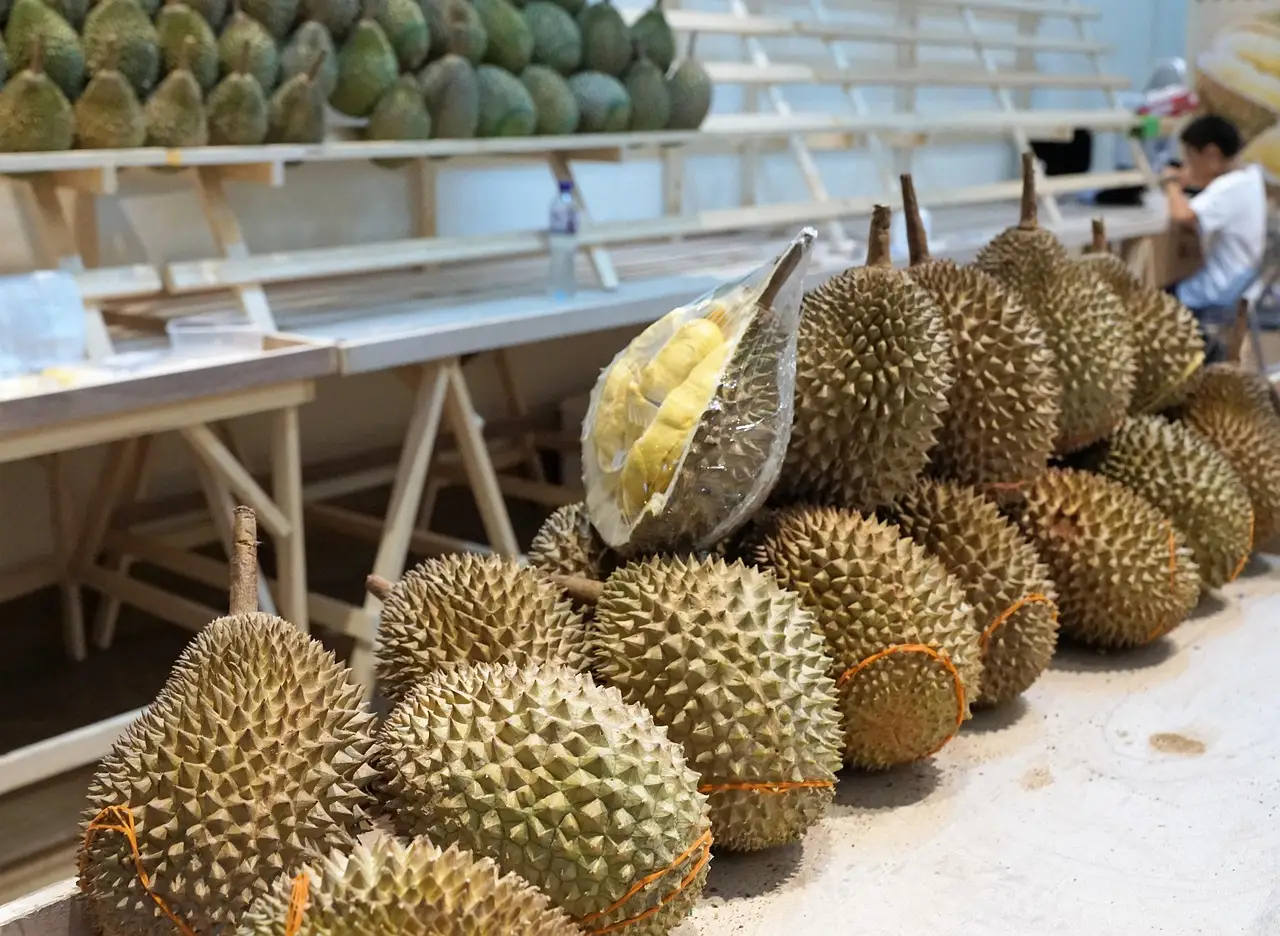
- Durian exports hit more than $3.45 billion in the first nine months, nearly $3.3 billion of it to China — close to 96 percent
More than 20 Vietnamese fruits and vegetables now hold official market access to China. Tang said a recent trip home found Vietnamese durians, coconuts and seafood readily available in Chinese supermarkets.
Customs is the bottleneck being fixed
Tang's most practical disclosure concerned clearance speed. Durian clearance times have already fallen from 8–11 days to under six, achieved through so-called green channels and digital tracking. The consulate is working with Vietnamese authorities to align technical standards, implement signed protocols, and deploy smart customs plus digital traceability.
The second effort targets intermediaries. Tang said the consulate is connecting Vietnamese exporters directly with major Chinese distributors, e-commerce platforms and logistics hubs to cut out middlemen and deliver fresher, higher-value product.
The APEC relay: Shenzhen 2026, Phu Quoc 2027
The interview's timing frames the diplomacy. The 2026 APEC Economic Leaders' Meeting runs in Shenzhen — China's first time hosting in 12 years — under the theme 'Building an Asia-Pacific Community to Prosper Together', with three priority areas: Openness, Innovation and Cooperation. Tang noted that the heads of state of China, Russia and the United States will hold meetings in Shenzhen.
Vietnam then takes the hosting baton for 2027 in Phu Quoc, the island administered by An Giang Province. Tang framed the back-to-back handover as a relay, and drew the line from the Shenzhen Special Economic Zone to the planned Phu Quoc Special Zone.
For Ho Chi Minh City, he pledged support in building an international financial centre and cooperation in artificial intelligence, smart cities and rail transit. He also positioned 2026 as a hinge year: the start of China's 15th Five-Year Plan and Vietnam's implementation of the 14th National Party Congress Resolution.
Tang cited General Secretary and President Xi Jinping's April 2025 visit to Vietnam, and General Secretary To Lam's April visit to China plus his trip to the Shenzhen summit, as the top-level exchanges accelerating a China-Vietnam Community with a Shared Future.
With durian volumes nearly doubling their Chinese market share concentration and customs times compressed by roughly half, the corridor economics — not just the communiqués — will decide whether the remaining 4 percent of durian trade and the wider Mekong cargo base follow the same trajectory in 2027.
Source: news.tuoitre.vn
More from Tom Whitfield
Show full bio
Market editor covering companies, deals and strategy in Ocean and air freight, container shipping at Waybill Wire.
1,019 articles
Related
China opens direct box shipping to Mekong Delta via canal
Nanning and Can Tho Connect via New Direct Container Service
Pinglu Canal opening turns Nanning into river-sea gateway for ASEAN trade
Top Liner to Back Vietnam's Regional Transshipment Hub Bid
U.S. and China Agree to Cut Tariffs on $60 Billion of Goods