WW/OCEANFREIG
DEME lands €50m-€150m turbine job on 1GW Zeevonk
DEME adds €50m-€150m turbine installation for 69 units at Zeevonk, pairing with its July foundation deal as the 1GW Dutch project targets 2029 grid supply.
- Desk
- Ocean Freight
- By
- Amara Osei
- Filed
- Length
- 534 words
- Read
- 3 min
Key points05
- DEME's turbine contract at Zeevonk is valued at €50m-€150m ($56m-$168m) and covers 69 turbines.
- Combined with the July foundation package (€150m-€300m), DEME's Zeevonk scope reaches up to €450m.
- Mobilisation of jackup vessel Norse Energi begins in 2028; completion is scheduled for 2029.
- Zeevonk's first 1GW phase targets Dutch grid supply from 2029, with a second 1GW phase planned for 2032.
- The project remains subject to a final investment decision.
DEME has booked a second bite of the 1GW Zeevonk offshore wind project, this time for turbine installation — a contract the Belgian marine contractor classes as "sizable", its €50m-€150m ($56m-$168m) bracket.
The award covers transport and installation of 69 turbines in the project's first phase. Vattenfall and Copenhagen Infrastructure Partners are developing that phase through the latter's Energy Investment Fund I. Add the foundation package DEME landed in July — worth €150m to €300m — and the Belgian contractor's Zeevonk exposure now stretches to somewhere between €200m and €450m. Not bad for a single Dutch lease area.
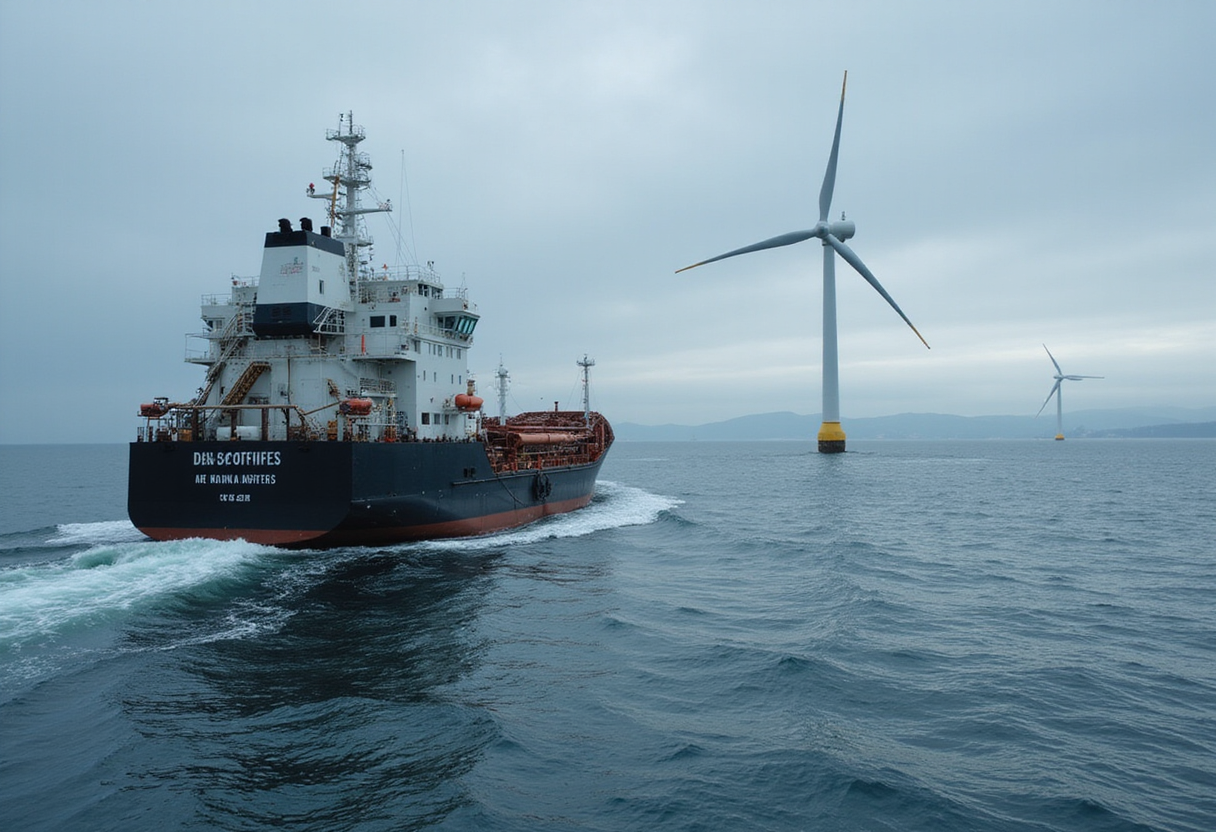
For the turbine campaign, DEME will deploy its next-generation jackup installation vessel Norse Energi. Mobilisation should start in 2028, offshore work follows shortly after, and completion is scheduled for 2029. That timeline matches the grid connection date, which leaves little slack.
What has DEME already committed to?
The July foundation package is the heavier lift, commercially and literally. Under it, DEME handles:
- Intermediate transport of monopiles
- Marshalling of primary and secondary steel
- Installation of 69 monopile foundations
- Placement of a filter layer for scour protection
The fleet plan reflects that spread of tasks. DEME intends to use the floating installation vessel Orion for the monopiles, with a jackup supporting secondary steel work and a fallpipe vessel handling scour protection. In plain terms: one project, at least four vessel classes, and a multi-year charter pipeline for DEME's own tonnage.
What does this change for shippers and forwarders?
Plenty, if you're in the project cargo chain. Sixty-nine turbines plus 69 monopiles means sustained heavy-lift demand into Dutch North Sea marshalling ports from 2028. Secondary steel marshalling is explicitly in DEME's scope, so port-side handlers around the project will see coordinated flows of foundations, towers and nacelles — not a one-off lift but a rolling two-year campaign.
For carriers in the offshore wind segment, the message is starker still. Developers are consolidating foundation and turbine scopes with single contractors who own installation tonnage. DEME pairing its own Orion and Norse Energi across both packages is the model. Third-party jackup owners may find the tender pool shrinking accordingly.
Is Zeevonk actually happening?
Fair question, and the honest answer is: probably, but not yet on paper. Zeevonk sits 63-84 km off Bergen aan Zee and remains subject to a final investment decision. Contracts of this size signed before FID tell you the developers expect to cross that line — you don't mobilise a next-generation jackup on spec.
The prize is real enough. The first 1GW phase is targeted to feed the Dutch grid from 2029. A second 1GW phase follows in 2032, alongside 500MW of system-integration capacity including a green hydrogen electrolyser at the Port of Rotterdam.
That Rotterdam electrolyser is the quiet subplot. If phase two proceeds, the project cargo story extends beyond turbines into hydrogen processing equipment — a different supply chain, different suppliers, same Dutch coastline.
For now, DEME owns the installation narrative at Zeevonk. Whether the €450m upper bound of its combined scope grows further depends on an FID that, on current sequencing, developers need to take before Norse Energi mobilises in 2028.
Source: Splash247
More from Amara Osei
Show full bio
Staff writer covering regulation, policy and their impact on Ocean and air freight, container shipping at Waybill Wire.
482 articles
Related05
Eight Turbines, 42.6 MW: Zeebrugge Starts Wind Build-Out
IWS commits €260m to four more Skywalker CSOVs at Chinese yard
Wallenius Wilhelmsen Raises $300m to Order Up to 12 LNG PCTCs
Rotterdam Lands 500 MW Temporary Transformer to Ease Europoort Grid Squeeze
ENGIE and CMA CGM to fuel Le Havre ships with 7,000 tonnes of biomethane