WW/MARKETANAL
China Merchants moves on Quanzhou yard as global orderbook hits record 226.1m cgt
China Merchants signs to revive Quanzhou Shipyard, its fourth yard takeover in 18 months, as the global orderbook hits a record 226.1m cgt, 68% held by Chinese yards.
- Desk
- Rates & Markets
- By
- James Calloway
- Filed
- Length
- 578 words
- Read
- 3 min
Key points05
- Global orderbook hit a record 226.1m cgt this month, topping the September 2008 peak of 225.5m cgt, per Clarksons Research.
- Chinese yards control 68% of the roughly $700bn outstanding orderbook.
- Quanzhou Shipyard covers 134 hectares with 3.6 km of coastline and two drydocks able to handle 300,000-dwt vessels; newbuilding has been largely idle for over a decade.
- China Merchants has absorbed or reactivated yards in Qingdao, Nanjing and Wuhan in the past 18 months; repair operations at Quanzhou resumed in 2023.
- Clarksons is tracking about 225 shipyard expansion projects worldwide, over three-quarters of them in China.
China Merchants has signed a strategic cooperation agreement with Quanzhou authorities to take control of the long-dormant Quanzhou Shipyard in Fujian province, extending a run of yard revivals that has pushed China's shipbuilding capacity close to a doubling in recent years.
The move lands against a record backdrop. Clarksons Research reported this month that the global orderbook reached 226.1m compensated gross tonnes, overtaking the previous peak of 225.5m cgt set in September 2008. That backlog is worth roughly $700bn, and Chinese yards control 68% of it.
What is actually being revived at Quanzhou?
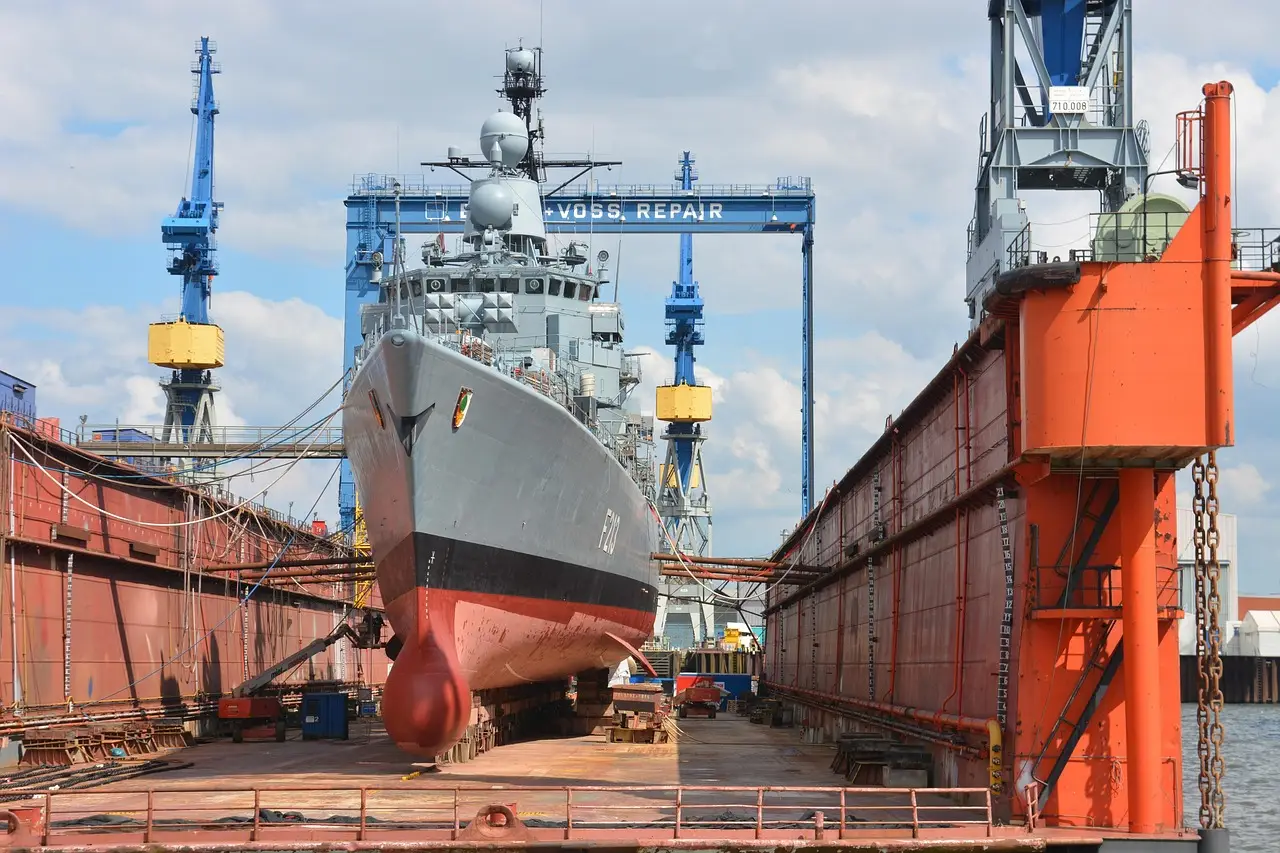
The physical plant is substantial. The yard occupies 134 hectares, fronts 3.6 km of coastline and operates two drydocks capable of handling vessels up to 300,000 dwt. Newbuilding activity at the facility has been largely idle for more than a decade.
Repair operations restarted in 2023. A full return to large-scale shipbuilding, however, would mark a far bigger step than the modest restart in repair work — it would put one of China's larger dormant hull-building assets back into a market already swimming in orders.
Financial terms were not disclosed. The final ownership structure at Quanzhou also remains open, according to the agreement framework signed with local authorities.
A pattern, not a one-off
Quanzhou is the fourth known China Merchants yard intervention in roughly a year and a half. The state-owned conglomerate has absorbed or reactivated yards in Qingdao, Nanjing and Wuhan over the past 18 months.
The pattern is consistent: identify underused or dormant capacity, bring it under group control, and feed it work as slot availability tightens across the Chinese yard system. China's capacity expansion through such revivals has been a central reason national shipbuilding output has nearly doubled in recent years.
Clarksons is currently tracking approximately 225 shipyard expansion projects worldwide. More than three-quarters of them sit in China.
Why does this matter for owners and charterers?
The commercial logic cuts two ways, and both matter for anyone pricing newbuilds.
First, capacity relief. A record orderbook concentrated in one country creates delivery-bottleneck risk, and every reactivated drydock adds slots. A pair of 300,000-dwt-capable docks is not marginal tonnage — it is VLCC- and bulk carrier-scale building infrastructure. If Quanzhou returns to newbuild work, owners negotiating contracts in the very largest size segments gain an additional counterparty and, potentially, keener pricing.
Second, competitive pressure. Non-Chinese yards, already holding barely a third of the outstanding global orderbook by cgt, now face a state-backed operator methodically reopening dormant capacity while they weigh their own greenfield investments. The 225 tracked expansion projects — over 75% of them Chinese — signal where the next tranche of global supply will come from.
For carriers and shipowners, the practical question is delivery timing. A $700bn backlog is only as useful as the docks that can build it, and China Merchants' revival strategy directly addresses that constraint within its own group.
What comes next?
The agreement is a framework, not a completed transaction. Owners and market watchers will watch for three markers: disclosure of financial terms, confirmation of the ownership structure, and the first newbuilding contracts placed at Quanzhou — the signal that the yard's building era, idle for over ten years, has genuinely restarted.
With the global orderbook at an all-time high of 226.1m cgt and China holding 68% of outstanding orders, the trajectory points to further Chinese capacity growth ahead.
Source: Splash247
More from James Calloway
Show full bio
Correspondent covering companies, deals and strategy in Ocean and air freight, container shipping at Waybill Wire.
816 articles
Related05
Yingkou Huayin opens yard with ten-ship, 8,700 dwt orderbook play
Fujian Guohang to build 12 Hong Kong shipowning units for $372m newbuild push
Top Yards Booked at 164% of Capacity for 2028 as $700bn Orderbook Meets Delivery Reality
China Closes In on Korea's LNG Carrier Lead as Order Share Jumps to 38.8%
Hengli grabs 23.4% of global newbuilding orders, jumps fifth to first