WW/OCEANFREIG
Cheniere Cargo Volumes Jump 15% as Iran War Reshapes LNG Trade Flows
Cheniere exported 188 LNG cargoes in Q3, up 15% year on year, and lifted 2026 earnings guidance to $8.75-9.25 billion as Iran war disruptions drive demand for US Gulf Coast supply.
- Desk
- Ocean Freight
- By
- James Calloway
- Filed
- Length
- 710 words
- Read
- 4 min
Key points05
- Cheniere exported 188 LNG cargoes in Q3 2026, up 15% from 163 a year earlier, with volumes up 17% to 684 TBtu.
- Full-year 2026 adjusted earnings guidance was raised to $8.75-9.25 billion from $7.9-8.4 billion.
- October agreements with QatarEnergy cover up to 4 million tons annually from the early 2030s through 2054 on an FOB basis.
- A separate 22-year Petrobras deal supplies 800,000 tons per year.
- Cheniere operates about 56 million tons of annual liquefaction capacity, with 5 million tons under construction and over 40 million tons in permitting.
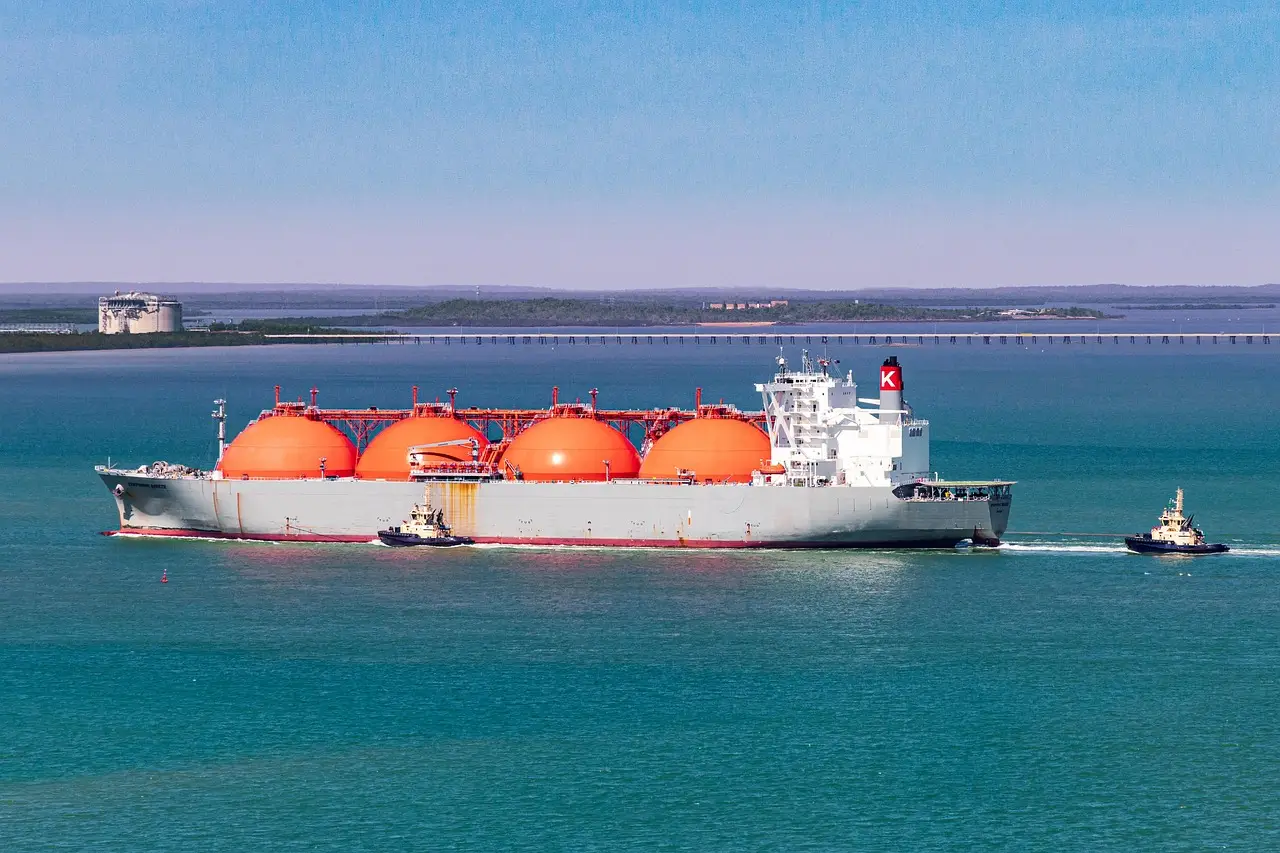
Cheniere Energy exported 188 LNG cargoes in the third quarter, up 15% from 163 a year earlier, as the war with Iran disrupts Middle East energy supply and pushes global buyers toward US Gulf Coast volumes.
Total export volumes rose 17% to 684 trillion British thermal units (TBtu) in the three months ended September 30, the Houston-based company reported Thursday. The conflict in the Persian Gulf has disrupted LNG exports from Qatar, one of the world's largest suppliers, and raised concerns over shipping through the Strait of Hormuz — the narrow waterway connecting Persian Gulf producers to international markets.
The commercial consequences were immediate. Cheniere raised its full-year 2026 adjusted earnings guidance to between $8.75 billion and $9.25 billion, up from the prior forecast of $7.9 billion to $8.4 billion. Third-quarter revenue jumped 39% to $6.17 billion. Net income rose 12% to $1.17 billion, and adjusted EBITDA climbed 18% to $1.9 billion.
For carriers and shipowners, the numbers point one direction: more cargo. Cheniere also noted that the US military has advised vessels with no need to move between ports in the Gulf of Oman and the Strait of Hormuz to stay away from the area — a warning that keeps risk premiums alive on Gulf-linked routes while American export terminals absorb displaced demand.
What does the QatarEnergy deal change?
The most striking commercial move is a supply agreement with the very country whose exports the war has disrupted. Cheniere's Sabine Pass and Corpus Christi operations signed long-term agreements in October to supply QatarEnergy with up to 4 million metric tons of LNG annually, beginning in the early 2030s and running through 2054.
One million tons of that contracted volume remains subject to a positive final investment decision on the first phase of Cheniere's planned Sabine Pass expansion. The contracts provide for delivery on a free-on-board basis, giving QatarEnergy access to US-produced LNG that can be marketed internationally without originating from the Persian Gulf — a workaround to the chokepoint risk now priced into Gulf exports.
Cheniere separately announced a 22-year agreement with Brazil's Petrobras to supply 800,000 metric tons of LNG annually.
How much capacity sits behind the volumes?
The shipment growth follows the August completion of the Corpus Christi Stage 3 expansion in Texas, which added more than 20% to Cheniere's LNG production capacity. The project finished ahead of its guaranteed completion schedule and within budget.
"We achieved key milestones across the Cheniere platform in the third quarter of 2026, highlighted by the substantial completion of the seventh and final train of the CCL Stage 3 Project, the export of our 5,000th LNG cargo, and our continued commercial success in support of future brownfield growth at Sabine Pass and Corpus Christi," said Jack Fusco, Cheniere's Chairman, President and Chief Executive Officer.
The platform's scale is now substantial:
- Approximately 56 million metric tons per year of liquefaction capacity operating across Sabine Pass, Louisiana, and Corpus Christi, Texas
- Another 5 million tons of annual capacity under construction
- More than 40 million tons in various stages of regulatory permitting
- Two new Corpus Christi midscale trains expected to reach substantial completion in the second half of 2028
Is US LNG demand structural or tactical?
The cargo math suggests both. Cheniere exported its 5,000th LNG cargo in August, and by October 23 had loaded roughly 5,120 cargoes totaling more than 350 million metric tons since operations began. In the first nine months of 2026 alone, the company exported 559 cargoes against 485 in the same period last year.
For forwarders and charterers, the expansion of US export capacity represents a growing source of cargo demand as global buyers seek alternatives to Middle East supply — and the long-dated QatarEnergy and Petrobras contracts, running to 2054 and 22 years respectively, signal that displaced demand is being locked in rather than merely rerouted.
With more than 40 million tons of capacity moving through permitting and two Corpus Christi trains due in 2028, Cheniere's build-out — accelerated by the war's exposure of Persian Gulf route vulnerability — points to a sustained shift in LNG trade flows toward the US Gulf Coast.
Original: lngir.cheniere.com
More from James Calloway
Show full bio
Correspondent covering companies, deals and strategy in Ocean and air freight, container shipping at Waybill Wire.
687 articles
Related05
QatarEnergy Locks In 3 Million Tons of US LNG From Woodside
VLCC MEG-China Rates Hit $1.2M/Day as Hormuz Strikes Lift Tankers
QatarEnergy Locks In 7 mtpa of US LNG as a Hormuz Hedge
Qatari LNG Fleet Readies 1.1 Million Tons Near Hormuz
Tanker Owners Bank $400m a Day Above Budget as VLCC Rates Break $1.3m