WW/OCEANFREIG
Russia to run year-round Arctic sailings to Asia from early 2027
Rosatom says NSR cargo has passed last year's 37.2m tonnes, transit volumes will near-double to 7m tonnes, and year-round winter sailings to Asia start in early 2027.
- Desk
- Ocean Freight
- By
- Amara Osei
- Filed
- Length
- 633 words
- Read
- 3 min
Key points05
- Russia targets regular year-round eastbound NSR shipping from early 2027
- NSR cargo volumes have already passed last year's 37.2m tonnes, running ~20% ahead; full-year throughput expected above 40m tonnes
- Transit cargo forecast to almost double to over 7m tonnes; container voyages doubling from 23 to 46
- Arctic oil exports hit ~20m barrels between July and mid-October, nearly 50% above last year's seasonal total
- Nuclear icebreaker Chukotka due early next year, bringing the fleet to nine vessels
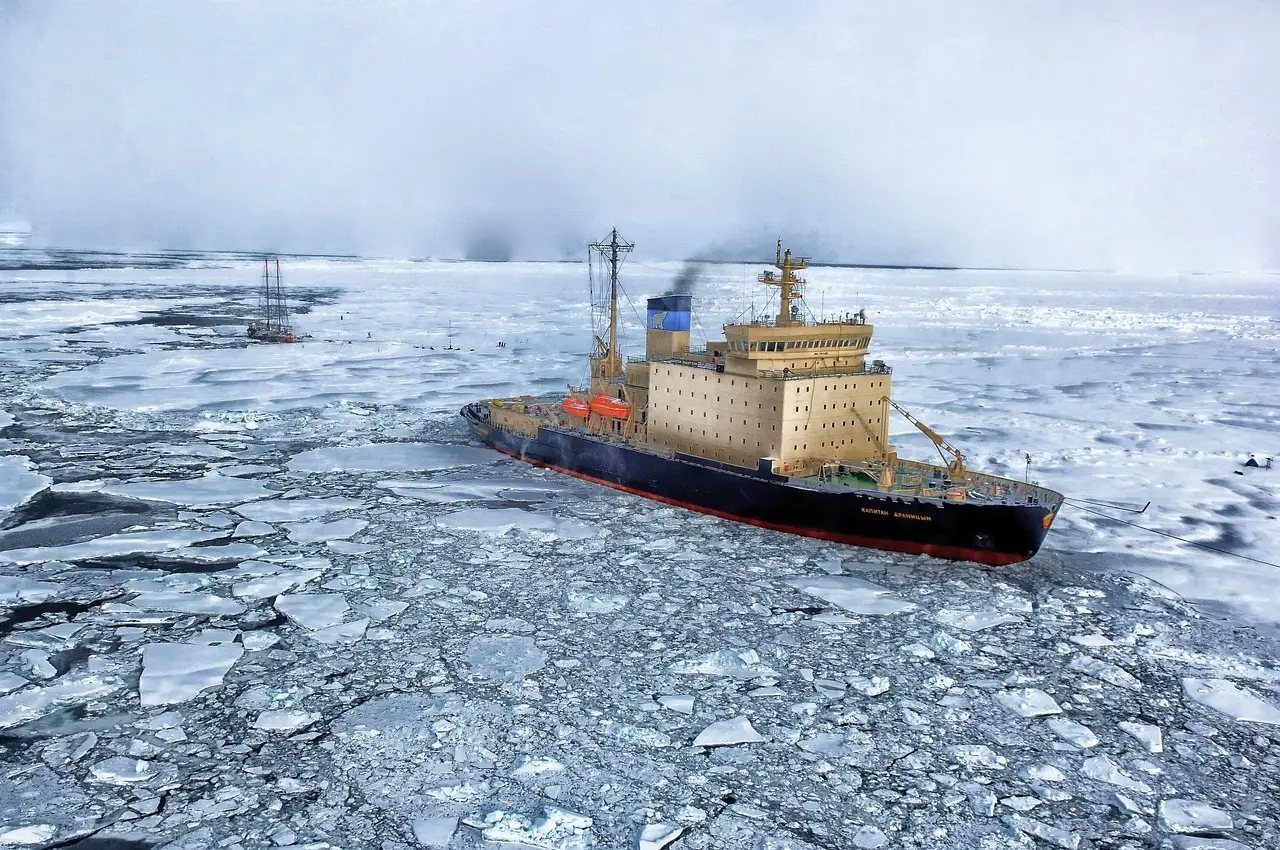
Russia plans to launch regular year-round eastbound shipping on the Northern Sea Route from early 2027, with cargo volumes on the Arctic passage already past last year's 37.2m tonnes and full-year throughput set to clear 40m tonnes.
Vladimir Panov, head of Rosatom's Arctic Directorate, said this week that preparations for regular winter sailings to Asia are nearing completion. One of Russia's largest cargo exporters is expected to begin year-round shipments in early 2027. The company hasn't been named, though Panov pointed to growing exports from Novatek's LNG operations and Rosneft's Vostok Oil project, which has already completed six shipments.
The numbers behind the announcement are unusually concrete. Rosatom says NSR traffic is running roughly 20% ahead of the same period in 2025. Panov expects transit cargo — freight moving the full length of the passage rather than loading or unloading along it — to almost double this year, to more than 7m tonnes. Container voyages are set to double from 23 to 46.
What's driving the surge?
Tankers, mostly. Russian oil exports through the Arctic reached roughly 20m barrels between July and mid-October — nearly 50% above last year's seasonal total. That's the equivalent of about 600,000 barrels a day moving through one of the planet's most remote waterways.
Capacity is coming to match. Russia expects to commission the nuclear icebreaker Chukotka early next year, taking the operational nuclear icebreaker fleet to nine vessels. Zvezda shipyard has also delivered two new Arctic-class LNG carriers. Rosatom, it should be remembered, runs both the icebreakers and much of the NSR's administration — the state utility has a commercial interest in the route's growth.
What does this change for shippers?
For Asian-bound cargo, a reliable winter NSR cuts the voyage from northern Europe or northwest Russia by several thousand miles versus Suez. For carriers and forwarders, though, the near-term effect is limited: 46 container voyages a year is a rounding error against established trade lanes, and the cargo mix remains dominated by hydrocarbons rather than manufactured goods.
The disruption to conventional routes — Panov's stated rationale — has pushed traffic toward the Arctic, but year-round navigation remains technically demanding. Panov himself acknowledged that convoy speeds must improve and that further investment is needed in emergency response, communications and medical infrastructure before winter sailings become routine.
The environmental bill
The accelerating traffic is drawing warnings from scientists and NGOs. Dr Sian Prior, lead advisor to the Clean Arctic Alliance, cautioned earlier this year that growing commercial shipping would bring "increased climate impacts, increased pollution and increased loss of biodiversity."
The alliance's particular concern is black carbon — soot from ships burning fossil fuels. When the particles settle on snow and ice, they darken the surface, cut the sunlight reflected away and speed up melting.
Swiss researchers have now quantified a second-order effect. Scientists at Lausanne's Swiss Federal Institute of Technology used exhaust from their own research ship as a natural experiment and found that a single vessel's emissions can alter Arctic cloud formation. Their preliminary estimates suggest that when polluted clouds form above ice, the changed cloud properties cause roughly 1mm of additional melting per day within about 100m.
A millimetre a day sounds trivial. Compounded across a season, across dozens of ships, it isn't.
The other risk is spillage. Greater tanker activity raises the odds of an oil spill in remote Arctic waters, where harsh conditions and thin emergency response infrastructure would make any pollution extremely hard to contain.
The trajectory, in any case, is set. If Rosatom hits 40m tonnes this year and the icebreaker fleet reaches nine vessels, the 2027 year-round target looks less like an aspiration and more like a schedule.
Source: Splash247
More from Amara Osei
Show full bio
Staff writer covering regulation, policy and their impact on Ocean and air freight, container shipping at Waybill Wire.
723 articles
Related05
Northern Sea Route Hits 104 Transits by September, Beating 2025 Total
Russia Sets 2027 Target for Year-Round Northern Sea Route Shipping
Russia Expects Over 7 Million Tonnes on Northern Sea Route in 2026
Northern Sea Route Logs Record 104 Transits and First Arctic Liner Service
Russian Arctic Oil Flows Up Nearly 50% as Freight Crisis Bites