WW/PORTSTERMI
APM Terminals adds 1.4m teu at Maasvlakte II in Gemini hub push
APM Terminals plans 1.4m teu of extra capacity at Maasvlakte II — 711 metres of quay and 25 hectares — to anchor Gemini's twin-hub strategy, with construction set for October 2027.
- By
- Tom Whitfield
- Filed
- Length
- 680 words
- Read
- 3 min
Key points
- APM Terminals plans a 1.4m teu second-phase expansion at Maasvlakte II, adding 711m of quay and 25ha of yard.
- Unanimous shareholder approval (Rotterdam municipality 70%, Dutch state 30%) is expected in February 2027.
- Construction runs October 2027 to January 2030, with dredging of some 1.3m cu metres of sand for the access channel.
- Rotterdam handled 10.7m teu in the first nine months, up 0.1% year on year, with transhipment down 20%.
- Gemini's AL1 transatlantic loop moved from Hutchison Delta to APMT in October.
APM Terminals and the Port of Rotterdam Authority have unveiled plans to add 1.4m teu of capacity to the operator's flagship Maasvlakte II terminal — a build that doubles as the physical backbone of the Gemini alliance's twin-hub strategy in North Europe.
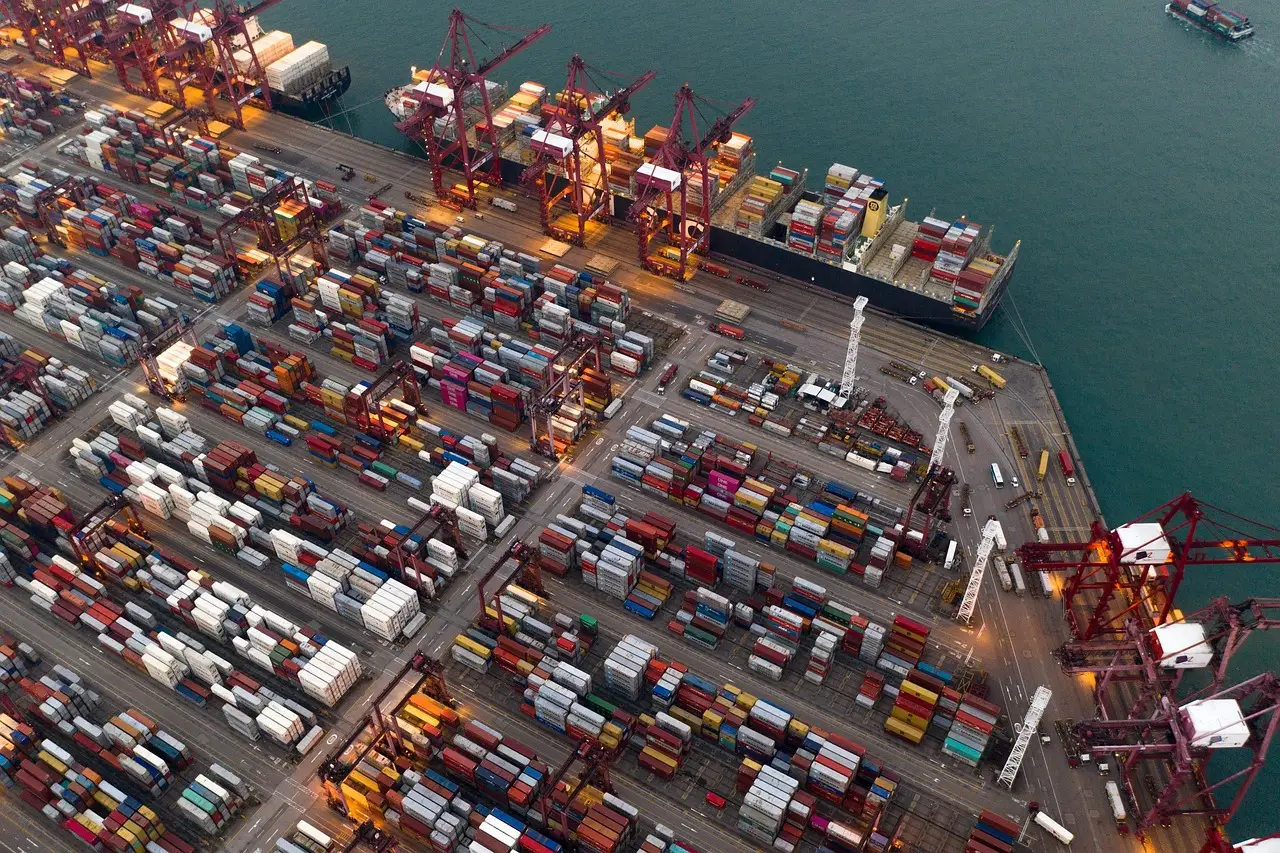
The second phase of expansion will deliver 711 metres of additional quay and 25 hectares of extra terminal yard at the Maasvlakte II site, which has just completed its first phase of growth.
"This expansion marks the next step in the long-term development of our terminal," said Harold Kunst, managing director of APM Terminals Maasvlakte II. "We are creating space for future growth while continuing to develop a terminal that can serve our customers safely, reliably, and efficiently over the long term."
Kunst added that the collaboration with the Port of Rotterdam Authority is "essential" to the plan. "Together, we are laying the foundations for the next phase of Maasvlakte II," he said.
What stands between plan and quay wall?
Money and votes. Under the landlord port model, the Rotterdam authority funds and builds the quay walls plus dredging of the access channel — work expected to shift some 1.3m cubic metres of sand.
But before a euro is spent, the authority's shareholders must vote unanimously in favour. Rotterdam municipality holds 70%, the Dutch national government holds 30%. Approval is currently expected in February 2027.
If that vote lands, construction starts in October 2027 and wraps by January 2030.
Boudewijn Siemons, CEO of the Port of Rotterdam Authority, framed the investment as strategic rather than incremental. "The further development of APM Terminals Maasvlakte II marks an important step in our shared ambition to prepare the Port of Rotterdam for the future," he said. "By investing in additional capacity and modern infrastructure, we are strengthening Rotterdam's position as Europe's leading container port."
Siemons added that the project increases the resilience of logistics chains, contributes to security of supply for businesses and consumers, and strengthens the competitiveness of the Dutch economy.
Why Gemini wants the space
Maasvlakte II is one of the key nodes in Gemini's hub-and-spoke network, and that's the mechanism behind the expansion. The terminal currently hosts four of the partnership's Asia-North Europe loops, but capacity constraints have limited what else it could take.
That is changing. With phase one now open, the terminal has only recently begun serving other Gemini trades. In October, the first of Gemini's four North Europe-North America transatlantic services — the AL1 — shifted from Hutchison's nearby Delta terminal to APMT.
Phase two clearly lets the Gemini partners consolidate more of their calls at Maasvlakte II. For the carriers, that means tighter hub control. For Rotterdam, it means keeping alliance volume on Dutch quays rather than watching it drift to rival ports.
Capacity versus demand
The new area likely lifts Rotterdam's overall capacity toward 25m teu a year. According to Xeneta's eeSea platform, other terminal improvements in the port will already push combined capacity to 23.3m teu a year by 2030, before the extra APMT volume is counted.
The demand picture is more complicated. In the first nine months of this year, total container throughput at Rotterdam reached 10.7m teu — just 0.1% up on the same period in 2025. Laden imports rose 8.9% and laden exports grew 1%, but transhipment boxes fell 20%.
"Due to long-standing capacity restraints at deep-sea terminals in Rotterdam, more cargo is being handled via other ports," the port authority noted.
So the expansion is part capacity relief, part contingency — an emergency Plan B for cargo that has already leaked elsewhere, and future-proofing for Gemini's network as alliance volumes concentrate on fewer, bigger hubs.
What does this change for shippers? Not much before 2030. The near-term gains sit with the Gemini carriers, which gain room to consolidate transatlantic and Asia-Europe calls at a single deep-sea node. The real test comes after February 2027, when the shareholders vote and the dredgers move in.
Source: The Loadstar
More from Tom Whitfield
Show full bio
Market editor covering companies, deals and strategy in Ocean and air freight, container shipping at Waybill Wire.
1,009 articles
Related
Hapag-Lloyd Completes 25% Stake in Rotterdam's Maasvlakte II Terminal
APM Terminals chief: ports must sweat assets, not just buy cranes
Hutchison and MSC reopen Omega talks as Rotterdam sets January 2027 cutoff
APM Terminals Suape handles first vessel, lifts complex capacity 55%
Maersk's Two-Track Port Play: Euroports Bulk, Vietnam Rail