WW/PORTSTERMI
Antwerp-Bruges taps tidal power at Kallo Lock in EU-backed green push
A tidal hydro turbine at Antwerp-Bruges' Kallo Lock will supply up to 75% of the lock's electricity, with six more lock sites holding similar untapped potential across the port.
- By
- Marcus Bennett
- Filed
- Length
- 586 words
- Read
- 3 min
Key points03
- The hydro turbine at Kallo Lock will supply up to 75% of the electricity needed to operate the lock's bridges, gates and building heating and cooling.
- Seven locks across the Port of Antwerp have discharge channels that could host similar tidal generation.
- The project partners — Port of Antwerp-Bruges, Omexom and De Meyer — are working under the EU-funded PIONEERS emissions-reduction programme.
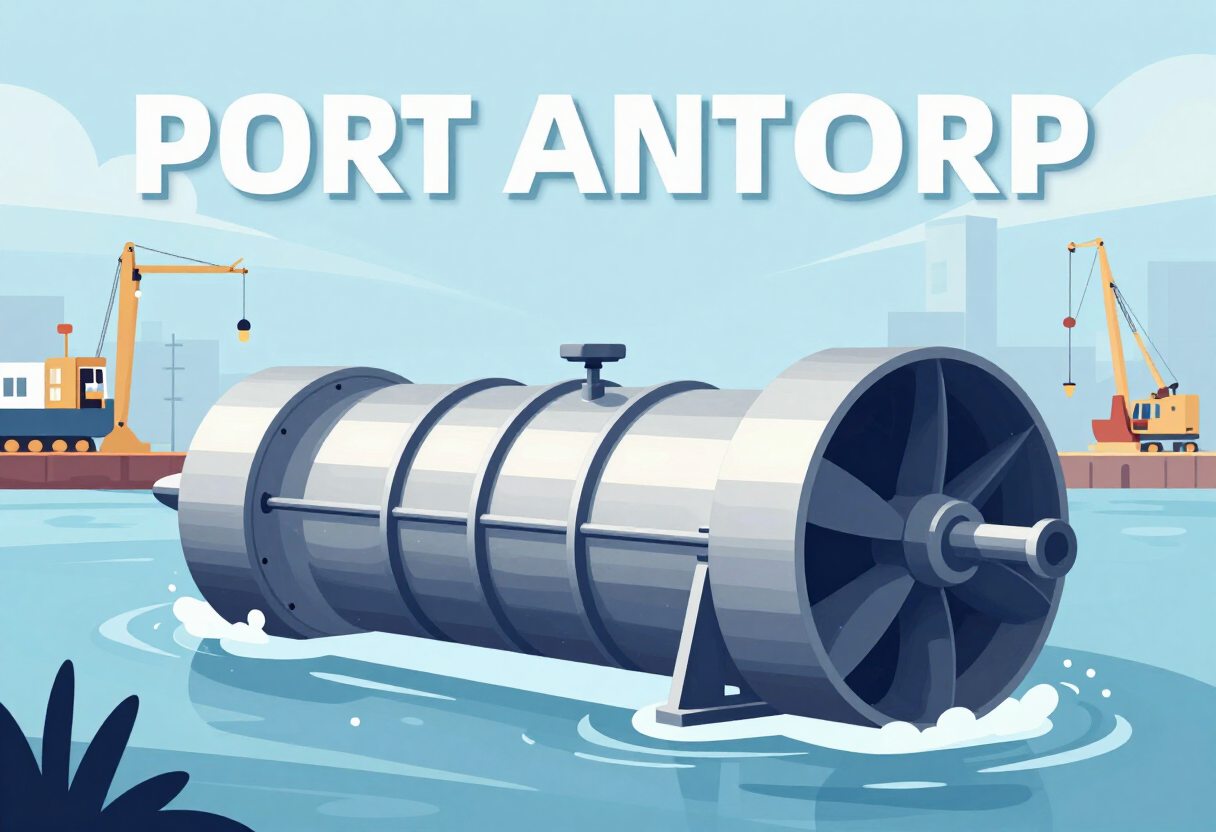
Port of Antwerp-Bruges is installing a hydro turbine at the Kallo Lock that will convert tidal flows between the River Scheldt and the port's docks into electricity, covering up to 75% of the power needed to run the lock's bridges, gates and building systems.
The figure matters because it turns infrastructure the port already operates — discharge channels at its locks — into a generation asset. Seven locks across the Port of Antwerp carry such channels, and until now the water moving through them with every tide has represented an untapped hydropower resource. The Kallo installation is the first concrete step toward exploiting it.
The turbine works on the same principle as an underwater wind turbine. As water flows through the existing discharge channels at each high and low tide, the kinetic energy drives the rotor and produces electricity. Because tides can be forecast with precision, the port can calculate expected output exactly — a predictability advantage that wind and solar generation cannot match.
Port of Antwerp-Bruges is delivering the project with two partners: Omexom, which is handling the grid connection, and De Meyer. The work sits under the European-funded PIONEERS programme, which focuses on cutting greenhouse gas emissions in ports.
The commercial logic is straightforward. The electricity generated will operate the bridges and lock gates around the Kallo Lock and provide heating and cooling for the lock building. Any surplus will be fed back into the grid rather than lost during periods when generation exceeds immediate consumption — meaning the asset produces value even when the lock's own demand is low.
For a port handling Europe's largest concentrations of container and breakbulk traffic, energy self-sufficiency at lock level is a small but replicable cost hedge. Locks and bridges run continuously, and their electricity demand is fixed overhead. Replacing up to three-quarters of that demand with predictable, zero-fuel generation reduces exposure to grid prices at a site where tidal flows are guaranteed twice daily.
Matthias Lootens, project manager at Port of Antwerp-Bruges, framed the installation as part of a broader effort to find smart ways to make port infrastructure more sustainable. He also pointed to the replication potential: solutions proven at Antwerp can be rolled out by other European ports through the PIONEERS network.
Carl Bosteels, CEO of De Meyer, highlighted tidal energy's reliability and the minimal equipment required to convert water movement into electricity as the technology's key advantages.
The scalability question will decide whether this stays a pilot or becomes standard practice. One turbine at one lock is a modest start. But with six further lock sites in Antwerp already equipped with discharge channels, and ports across the PIONEERS network facing the same EU decarbonisation pressure, the technical template being tested at Kallo could spread quickly if the 75% figure holds up in operation.
The installation also signals where port energy strategy is heading: toward generation embedded in existing infrastructure rather than dedicated renewable plots competing for scarce terminal land. For shippers and carriers tracking scope 3 pressure from customers, ports that cut their own operational emissions — and eventually offer greener shore power and lock operations — strengthen their position in sustainability-scored procurement decisions.
Port of Antwerp-Bruges has not yet published output projections beyond the 75% coverage figure, nor a timeline for evaluating whether the remaining six lock sites will follow. The PIONEERS programme's next phases will determine whether tidal generation moves from single-site demonstration to network-wide deployment across European ports.
Source: Container News
More from Marcus Bennett
Show full bio
Senior reporter covering marketplaces and e-commerce at Waybill Wire.
145 articles
Related05
Valenciaport Awards Contracts for Floating Solar and Wave Power
Antwerp-Bruges Starts Quay Renewal at Hansa Dock, Running to 2028
Rotterdam Lands 500 MW Temporary Transformer to Ease Europoort Grid Squeeze
València Completes 1 MW Floating Solar demonstrator, Starts Marine Testing
Antwerp-Bruges moves autonomous trucks from demo to revenue service