WW/AIRCARGO
Airbus A350F Flies for First Time, Aiming at Boeing's Cargo Grip
Airbus completed the first test flight of its A350 freighter in Toulouse, opening a nine-month campaign toward late-2027 delivery with 103 orders from 14 customers and a 111-tonne payload.
- Desk
- Air Cargo
- By
- Marcus Bennett
- Filed
- Length
- 788 words
- Read
- 4 min
Key points03
- The A350F prototype flew four hours and 10 minutes from Toulouse, reaching 25,000 feet, with certification testing set to run nine months before EASA type approval.
- Airbus holds 103 orders from 14 customers for the freighter, which offers a 111-tonne payload and the industry's widest cargo door at 175 inches.
- The FAA granted Boeing an exemption to sell up to 35 777 freighters past the Jan. 1, 2028 ICAO emissions deadline, tempering the A350F's competitive opening.
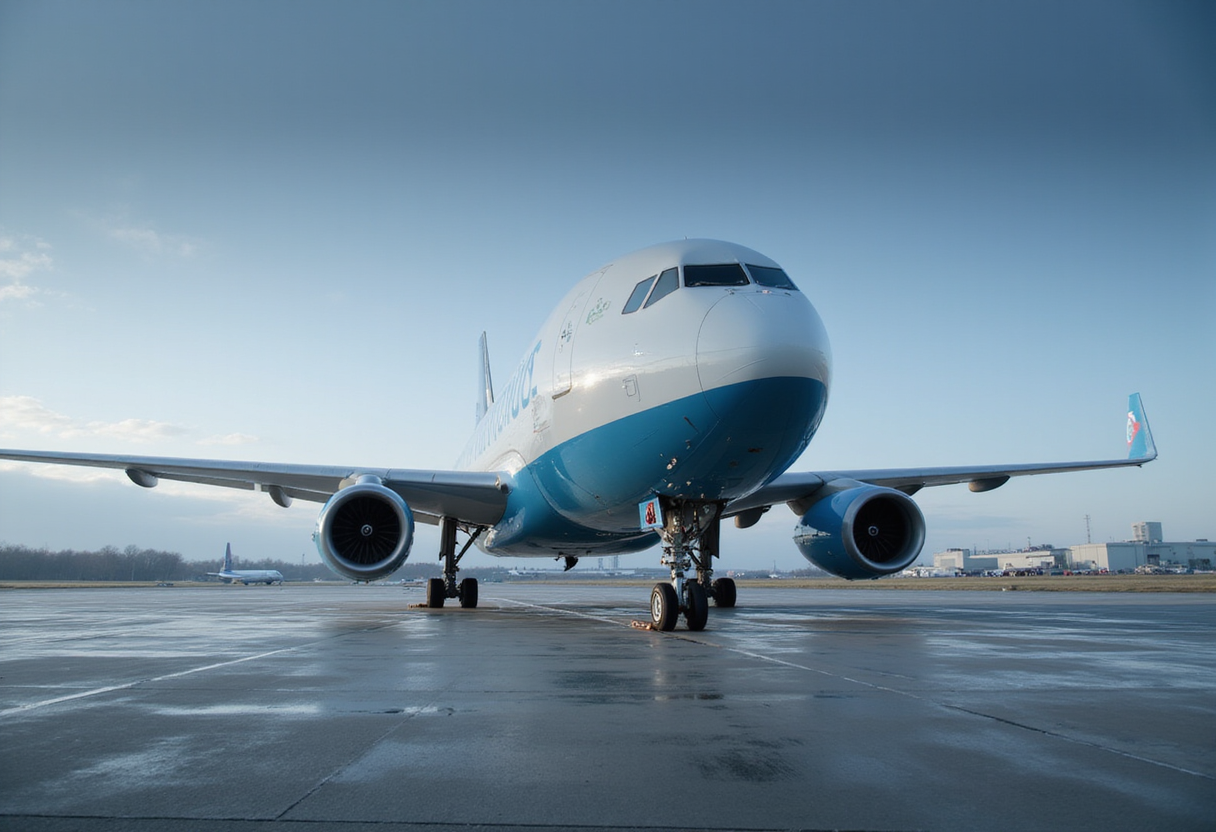
Airbus flew its new A350 freighter for the first time on Tuesday, kicking off a nine-month flight-test campaign that puts the European manufacturer on track for a first commercial delivery in late 2027 — and gives cargo operators a second option in the large widebody freighter segment for the first time in years.
The prototype lifted off from Airbus' production site in Toulouse, France, climbed to 25,000 feet and stayed airborne for four hours and 10 minutes with a five-person crew that included three test engineers. Airbus live-streamed the sortie. The crew tested basic airworthiness, fundamental flying qualities and initial systems performance against prediction. Once flight testing wraps up, Airbus will pursue type certification for commercial operations from the European Union Aviation Safety Agency. A second A350F prototype is in final assembly and enters the paint shop within weeks.
The stakes for the air cargo market are considerable. Airbus has booked 103 firm orders from 14 customers for the A350F — the airframer's first production aircraft with a credible shot at challenging Boeing's long-standing dominance in the dedicated freighter market. Cathay Pacific and Air China Cargo are among the operators that have topped up orders.
What shippers and carriers get
The A350F is derived from the A350-1000 passenger jet, which carries commercial advantages of its own. Because of the commonality with the passenger platform, airlines already flying the A350 can transition pilots to the freighter with minimal training expense — a meaningful cost lever for combination carriers weighing dedicated cargo capacity.
Engineering changes focus on cargo productivity. Airbus shortened the forward fuselage and moved the main deck cargo door behind the wing, a placement that lets ground crews work the main deck and both lower holds simultaneously without risking damage to the airframe. The main deck features a reinforced metallic floor, replacing the metal-composite structure used in passenger variants, to handle concentrated pallet loads.
The numbers matter to freight forwarders sizing future capacity. The A350F offers a payload of 111 metric tons and the largest cargo door in the industry at 175 inches wide — a dimension that eases loading of outsized freight. A digitally controlled cargo loading system maneuvers pallets into position on the main deck, and separate ventilation systems serve the crew and the cargo hold respectively.
Extensive use of composite materials makes the aircraft lighter than comparable freighters. Airbus claims fuel consumption and carbon emissions will drop by up to 40% compared with some older freighters still in service — an operating-cost and sustainability argument aimed squarely at fleet renewal decisions in the express and general cargo segments.
Built to a market signal
Airbus based many of the design choices on direct input from cargo airlines. Sarah McLaren, head of widebody and freighter marketing, framed the program bluntly during the live broadcast.
"We can say it has been built by Airbus, but really it has been designed by the market. The market was sending us a very strong signal. Operators were coming to us to say they wanted choice. They didn't want just one option in terms of what they could buy for a large freighter," McLaren said.
Regulation supplied the second impetus. International Civil Aviation Organization standards require manufacturers to halt production of legacy aircraft that fail to meet 2028 fuel-efficiency and carbon-emissions standards. That deadline threatened to force Boeing's older freighter designs off the line — until this month, when the Federal Aviation Administration granted Boeing an exemption to sell up to 35 777 freighter jets beyond the Jan. 1, 2028 ICAO cutoff.
The FAA's move softens the competitive pressure the A350F might otherwise have exploited at Boeing's expense, but it does not erase the underlying fleet-replacement demand: cargo operators flying fuel-hungry legacy freighters face mounting emissions costs regardless of production exemptions. Airbus began designing the A350F last decade precisely for that replacement cycle.
Commercial read-through
For carriers, the A350F introduces genuine duopoly competition into large freighter procurement for the first time, which should sharpen pricing and delivery-slot negotiations on both sides of the Atlantic. For forwarders and shippers, the arrival of a more fuel-efficient 111-tonne platform from late 2027 supports capacity renewal on long-haul trade lanes just as older freighters face carbon-compliance pressure — potentially stabilizing capacity costs on routes where express and e-commerce demand keeps gobbling belly and freighter space alike.
For now, the program's credibility rests on the next nine months of test flying and EASA certification. Airbus has the order book — 103 aircraft from 14 customers — to justify it; delivery performance from Toulouse starting in late 2027 will determine whether Boeing's cargo dominance finally faces a sustained challenger.
Original: live.freightwaves.com
More from Marcus Bennett
Show full bio
Senior reporter covering marketplaces and e-commerce at Waybill Wire.
145 articles
Related05
Airbus A350F Takes Flight: 17,000 Track Freighter's Test Debut
Airbus A350F Freighter Takes Flight From Toulouse After Five-Year Build-Up
Airbus sets 29 September for A350F first flight
A350F First Flight Kicks Off Nine-Month Push to Break Boeing's Grip
A350F First Flight Opens Airbus Assault on Boeing Freighter Duopoly