WW/AIRCARGO
A350F First Flight Kicks Off Nine-Month Push to Break Boeing's Grip
Airbus flew the A350F on 29 September, opening a 400-flight-hour certification push toward first deliveries in H2 next year, with 115 orders already booked.
- Desk
- Air Cargo
- By
- Tom Whitfield
- Filed
- Length
- 1,012 words
- Read
- 5 min
Key points03
- MSN700 flew 4h10min from Toulouse on 29 September, reaching 25,000 ft
- A350F offers 111-tonne payload, 8,700 km range, 46-tonne MTOW advantage and up to 40% lower fuel burn and CO2
- Order book stands at 115 aircraft from 14 customers, up to 59% of large-freighter orders; Atlas Air is largest customer with 20 aircraft
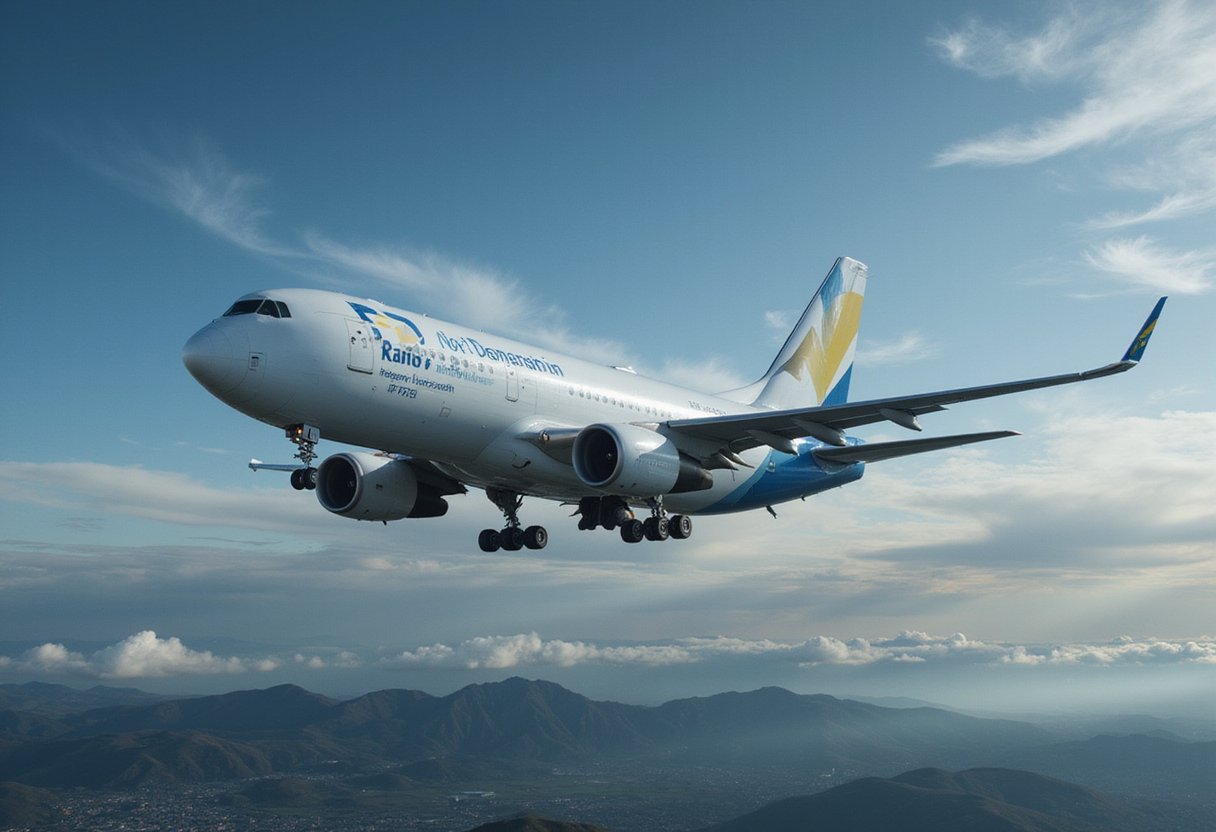
Airbus flew the A350F for the first time on 29 September, launching a certification campaign of roughly 400 flight hours that the manufacturer expects will put the freighter into customers' hands in the second half of next year.
MSN700, the first test aircraft, spent 4 hours 10 minutes airborne after departing Toulouse, reaching 25,000 ft with a five-person Airbus flight-test crew at the controls of a heavily instrumented airframe. The campaign will run more than nine months, according to Lars Wagner, CEO of Airbus Commercial Aircraft Business.
"We are now entering into a phase of more or less nine months of certification of flight test until certification. So we are very confident that we are going to deliver the aircraft to the first customers in the second half of next year," Wagner said. "It's 400 hours of test flight. So we're going to test the aircraft from the bottom to the top because it's a freighter, it's not the same like a passenger aircraft that takes time."
The commercial pitch
The A350F is Airbus's attempt to establish a substantial position in the large-freighter market, a segment historically dominated by Boeing, while offering operators a new-production alternative at a time when much of the existing freighter fleet is ageing. The order book suggests the proposition has traction: 115 orders from 14 disclosed customers by the end of August, which Airbus says represents up to 59 percent of the large-freighter market by orders.
The customer base spans combination carriers, dedicated cargo airlines and lessors — a diversity that gives Airbus a broad operational footprint from the outset.
"What we're seeing is combination carriers... we've got Korean, we've got Cathay, we've got Singapore. We've got all cargo carriers, Silk Way, Atlas, who are our biggest customer at the moment with 20 aircraft, CMA CGM, MNG. We've got a really diverse base there," said Crawford Hamilton, Airbus's Head of Freighter Marketing.
The specification Airbus is selling is concrete. The A350F carries up to 111 tonnes over a range of up to 8,700 km. Airbus puts the maximum take-off weight advantage at 46 tonnes against competing aircraft and claims fuel-burn and CO₂ reductions of up to 40 percent on comparable payload-range missions. Propulsion comes from Trent XWB-97 engines already established on the A350-1000, and the airframe's extensive use of advanced materials provides the principal structural advantage.
"Customers want to maximize revenue. They want to get the most lucrative loads on board, and the flexibility to be able to react to get those lucrative loads, and then also make sure that they can boost their service levels by having a reliable airplane," Hamilton said, adding that range flexibility matters because "there are lots going on now where there are no-fly zones for various aircraft."
Built around the cargo
Airbus shortened the forward fuselage by removing five frames to hit what it considers the correct centre-of-gravity position for a fully loaded freighter. Engineers developed a new main-deck floor for dense cargo, and the rear-mounted main-deck door is sized around exceptionally large loads.
"We have reinforced the main deck to be able to carry heavy loads, dense loads... the key is the density of the pallets that the operators can load. And of course, when you are around the wings, you can have heavier pallets. When you are at the two extremities, you need slightly lighter pallets or less heavy," said Julien Puyou, Head of Widebody Programmes at Airbus.
The floor is watertight with drainage, making it easier to clean the cargo compartment after live animals, food or other loads where spills occur. The main-deck loading system has been redesigned around heavy cargo and maintenance requirements, with larger power-drive units intended to address servicing demands associated with converted freighters.
The cargo door is a defining feature. At 4.3 metres wide, it is the largest in commercial aviation, with geometry that allows very large aircraft engines to enter and move forward in a single loading operation.
"We actually took the front section from the A350-900 and the rear one from the 1000. So we actually designed a brand new fuselage, 100% fit for cargo operations," said Rémi Maillard, Airbus EVP Engineering and Head of Technology.
Digital cargo systems
Airbus's SmartCargo architecture tracks pallet positions and environmental parameters, letting operators compare the actual loading configuration against the intended load plan. The aircraft has eight temperature-control zones designed for shipments from fresh produce to live animals, with sensors generating a digital record of conditions in transit — relevant to cargo revenue, which depends not simply on how much an aircraft carries but on what it can carry and how reliably.
"We incorporated some systemic equipment, what we call the smart cargo, which is a way to help automated operation, data-based operation for freight operators that would simplify further their operation in terms of knowing their payload and how the loading of the aircraft is performing," said Philippe Mhun, EVP Programmes and Services at Airbus Commercial Aircraft.
Testing ahead
The programme draws on more than 10,000 hours of ground testing using around 600 dedicated sensors, with approximately 60 km of additional wiring generating as much as 220 GB of data per flight. The first aircraft will focus on aerodynamics, performance and handling; a second test aircraft will address systems and cargo-specific functionality. Upcoming phases include flutter, handling, anemometry, autopilot and performance testing, plus cargo-system maturity work and hot- and cold-weather campaigns. Airbus has prepared 75 dedicated ULDs representing more than 200 tonnes of test installations.
An ageing large-freighter fleet, tightening emissions requirements and demand for new capacity create the market opening. If certification stays on schedule, the first A350F deliveries in the second half of next year will begin to show whether Airbus's weight advantage and fuel-burn claims translate into operating economics that can challenge Boeing's hold on the segment.
Source: Air Cargo Week
More from Tom Whitfield
Show full bio
Market editor covering consumer brands and retail at Waybill Wire.
129 articles
Related05
A350F First Flight Opens Airbus Assault on Boeing Freighter Duopoly
Airbus A350F Takes Flight: 17,000 Track Freighter's Test Debut
Airbus A350F Flies for First Time, Aiming at Boeing's Cargo Grip
Airbus A350F Freighter Takes Flight From Toulouse After Five-Year Build-Up
Airbus A350F Prototype Takes Maiden Flight From Toulouse