WW/AIRCARGO
ACIA Delivers First ATR 72-600 Freighter Conversion to FedEx
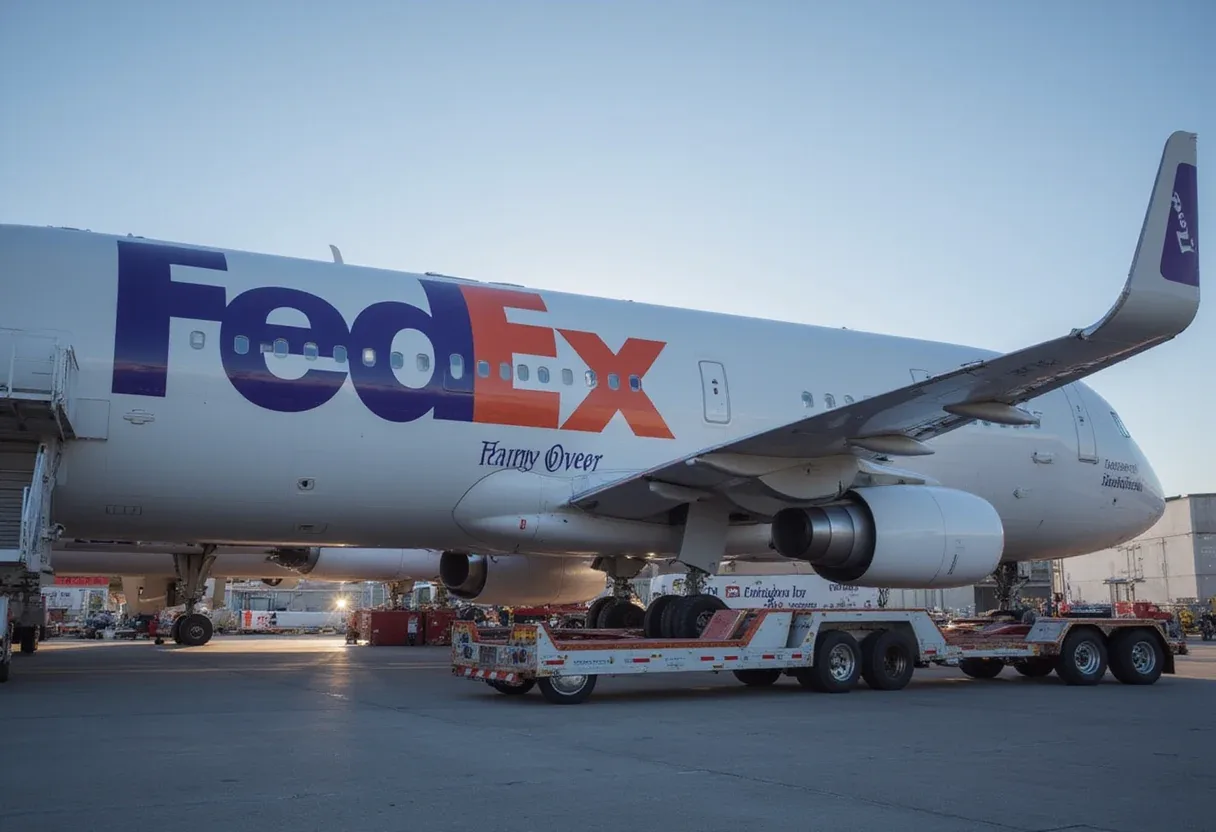
ACIA has handed the first ATR 72-600 large cargo door freighter conversion to FedEx, moving the regional feeder program from certification to revenue-service reality.
- Desk
- Air Cargo
- By
- Marcus Bennett
- Filed
- Length
- 644 words
- Read
- 3 min
Key points04
- ACIA handed over its first ATR 72-600 LCD freighter conversion to FedEx
- The delivery marks the transition from conversion program development to an operating aircraft for the world's largest integrator
- The ATR 72-600 turboprop targets short regional feeder routes within express hub-and-spoke networks
- No payload figures, delivery schedule or order quantities were disclosed in the report
ACIA has handed over the first ATR 72-600 large cargo door (LCD) freighter conversion to FedEx, marking the delivery milestone of a program aimed squarely at the regional feeder segment of express networks.
The handover, reported by IndexBox, confirms that the conversion line has moved from development and certification work to an operating aircraft in the fleet of the world's largest integrator. That distinction matters: in the freighter-conversion business, a first delivery to a launch customer of FedEx's scale is the point at which a program either proves itself or stalls.
What does the delivery change for FedEx?
The ATR 72-600 is a turboprop, and turboprop freighters do not compete with widebody lift on long-haul lanes. Their economics live in short, thin sectors — feeding volume into hubs, serving secondary airports, and flying routes where a jet's fuel burn and runway requirements do not pay.
For an integrator running a hub-and-spoke express network, a converted ATR 72 freighter adds palletized capacity on exactly those spokes. The freighter variant replaces aging types in the same size class that are steadily leaving fleets, so the practical effect of this delivery is fleet renewal rather than net capacity expansion — at least until conversion output scales.
One caveat belongs here: the source confirms the handover itself, not delivery schedule, conversion slot count, or unit economics. Whether ACIA can convert at a rate that matters to FedEx's feeder planning is the open question, and first deliveries answer none of it.
Why the launch customer is the story
A first-article delivery to an integrator is a two-sided signal. On one side, it indicates the aircraft has cleared the airworthiness and acceptance hurdles an operator of FedEx's standards applies before putting a converted airframe into revenue service. On the other, integrators are demanding customers: acceptance of unit one does not guarantee the follow-on orders that conversion programs need to break even.
For ACIA, the commercial logic is straightforward. Passenger ATR 72s trade at a discount to jets in the feedstock market, and conversion shops monetize that spread. The model only works at volume, and volume only comes with a repeat customer. FedEx, as launch operator, is that customer in principle — but the source carries no commitment numbers, so the size of the opportunity remains unquantified.
What is not in the announcement
Readers should note what the report does not say. There is no delivery date beyond the handover itself, no serial number or aircraft age, no freight capacity figure for the LCD variant, and no indication of how many feedstock airframes FedEx or ACIA have lined up.
Each of those gaps is material. Payload determines which routes the aircraft can serve profitably. Feedstock supply determines whether the conversion line stays full. And the age of the converted airframe sets the remaining service life over which FedEx amortizes the investment.
The competitive backdrop
The regional turboprop freighter field is narrow. Operators flying feeder lift for integrators have relied on converted types in this class for years, and replacement candidates are few. A modernized ATR 72-600 freighter with a large cargo door positions ACIA to capture demand from airlines refreshing feeder fleets across Europe, Asia and the Americas — regions where secondary-airport express volumes have outgrown older turboprop freighters.
That opportunity is real but unproven. One delivery establishes capability; it does not establish throughput, cost per conversion, or aftermarket support. Those are the metrics that decide whether this program scales beyond its launch customer.
For now, the fact on the table is simple and concrete: ACIA has delivered its first ATR 72-600 LCD freighter, and FedEx has taken it. Watch the second and third deliveries — and any order disclosure that follows — for the first hard evidence of whether this conversion line becomes a program or a one-off.
Source: Google News: air cargo
More from Marcus Bennett
Show full bio
Senior reporter covering regulation, policy and their impact on Ocean and air freight, container shipping at Waybill Wire.
527 articles
Related05
FedEx takes first ATR 72-600P2F fitted with large cargo door
Airbus A350F Freighter Completes First Flight
Boeing's 777 freighter line keeps rolling on orders and deliveries
My Freighter expands fleet with another Boeing 767 freighter
Airbus A350F Takes to the Air in Toulouse as Certification Campaign Begins