WW/MARKETANAL
59m garments shift from Bangladesh as production losses hit $428m
Buyers shifted 59 million garments worth $254 million after Bangladesh unrest halted 317 factories, with production losses estimated at $428 million and exporters turning to airfreight.
- Desk
- Rates & Markets
- By
- Marcus Bennett
- Filed
- Length
- 826 words
- Read
- 4 min
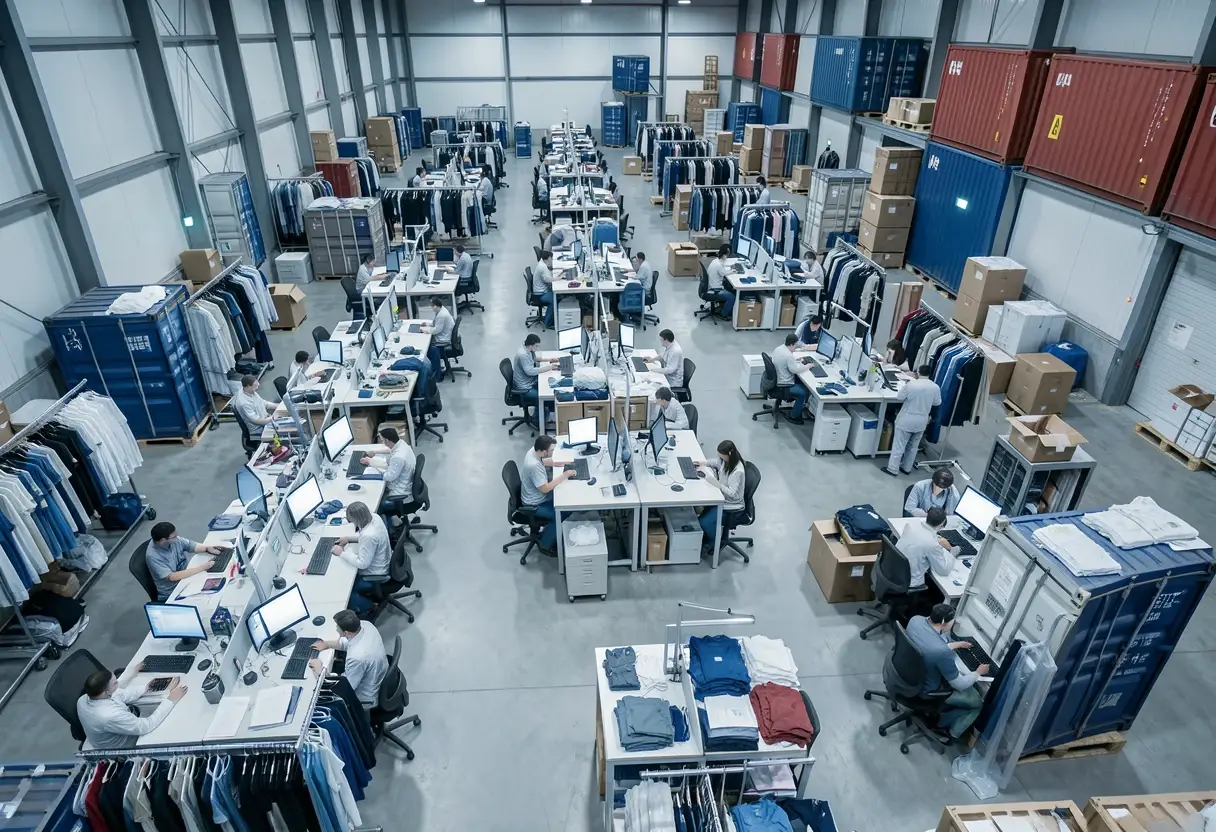
Buyers have shifted confirmed orders for 59 million garments worth $254 million away from Bangladesh, the Bangladesh Garment Manufacturers and Exporters Association (BGMEA) said on Sunday, while a preliminary survey put production losses at $428 million on a free-on-board basis.
The disruption has put export schedules at risk. The loss survey covered 317 factories halted for one to 16 days this month, while more than 600 member factories were affected. The association said most export orders faced serious risk because factories struggled to meet delivery deadlines, and losses could rise sharply if unrest continued.
What costs are exporters absorbing?
Shahedul Islam, BGMEA secretary general, said: “In an effort to retain export orders, factories are being forced to resort to expensive air shipments, offer substantial price discounts, and even face the difficult prospect of outright order cancellations.”
The wording identifies three commercial responses:
- Expedite orders by air.
- Offer substantial price discounts.
- Face the prospect of outright order cancellation.
The report gives no airfreight rate, cargo weight, destination lane or carrier, so it cannot quantify the cost increase or show how many of the 59 million shifted units factories might still fulfil.
The reported $254 million value across 59 million units implies about $4.31 per garment, though the figures provide no product mix or destination breakdown. They also omit the airfreight premium against that average, leaving the margin effect unresolved.
Do the protest-loss estimates measure the same thing?
Protests over the minimum wage began in late October. Work stoppages, damage to factories and road blockades have disrupted production and transport. On Thursday, the Bangladesh Garment Buying House Association estimated Tk30bn–Tk40bn ($240m–$320m) in economic losses.
That estimate is below the BGMEA's $428 million production-loss figure, but the report gives no reconciliation and no comparable survey detail for the buying-house estimate. Treating both as one total would therefore overstate what the two reports establish.
Islam also said the immediate financial numbers cannot capture damage to Bangladesh's garment industry's global reputation, reliability and future prospects. He called for the unrest to end quickly, citing the national economy and the livelihoods of millions of workers; the report attaches no separate value to that wider risk.
Can Chittagong absorb more cargo?
Storage plans around Chittagong port will give importers more nearby options. MJL Bangladesh will add five warehouses in South Patenga, each measuring 13,500 square feet. With its existing 20,000-square-foot unit, the company will have 87,500 square feet of covered storage on a two-hectare site.
That is extra warehouse space, not evidence that congestion has eased: the report provides no vessel queue, berth utilization, throughput or dwell-time figures. For forwarders, the measurable change is storage supply, while its effect on port flow remains unmeasured.
What is the status of the US cotton plan?
AmeriBangla has delayed its planned US cotton warehouse in Chittagong. Once operating, it would let Bangladesh mills buy US cotton from local stock. The company would use the facility as larger consignments arrive, but the report gives no opening date or committed inbound schedule.
Aswar Rahman, AmeriBangla chief executive, said one batch of US cotton had already sold while still at sea and would move directly to buyers' factories. He said: “Our cotton is in huge demand as its cost is lower than West African product and nearly beats Brazil’s.”
Rahman's comparison contains no delivered-price numbers or quality specifications, and it does not break costs down by origin or route. It therefore supports a directional sourcing claim, not a quantified saving, and leaves the warehouse's commercial timetable untested.
AmeriBangla is in talks with US growers to import 423 containers and aims to lift shipments from the United States to 1,600 containers, or 32,000 tonnes, a month over the next two years.
At that rate, 38,400 containers, or 768,000 tonnes, would move over two years, but the report states no contracts, sailing frequency or port calls behind the target.
What is being done at Dhaka airport?
The government has assessed sites for two cargo warehouses at Dhaka's Hazrat Shahjalal International Airport, one temporary and one permanent, to ease cargo handling bottlenecks. The report gives no floor area, construction cost, completion date or handling capacity for either facility, so neither can yet be tied to a quantified fall in delays.
The immediate commercial damage is measurable: 59 million confirmed garments worth $254 million have shifted abroad, and the BGMEA's preliminary production-loss estimate reaches $428 million. The response is split between expensive airfreight, more Chittagong storage and planned airport capacity, while a delayed cotton warehouse shows how far one infrastructure plan remains from execution.
Unless the stoppages ease, the association's warning points to further losses and continued pressure on export reliability; the report offers no basis for fixing a recovery date for orders, air-cargo handling or US cotton imports.
Source: The Loadstar
More from Marcus Bennett
Show full bio
Senior reporter covering regulation, policy and their impact on Ocean and air freight, container shipping at Waybill Wire.
1,026 articles
Related
Bangladesh asks UK for tourism investment and air cargo relief
Bangladesh's Millat seeks UK help to lift EU cargo restriction
Bangladesh factory closures put Chittagong export sailings at risk
Bangladesh strike closes nearly 150 garment factories
US-China Trade Board Opens Path to Tariff Relief on $60B of Goods