WW/AIRCARGO
Windracers ULTRA flies 1,000 km with anti-doping blood samples
The 10-metre autonomous UAV flew from Nenana, Alaska on 19 August in the first North American BVLOS mission of its type, testing blood-sample integrity over 1,000 km.
- Desk
- Air Cargo
- By
- Marcus Bennett
- Filed
- Length
- 727 words
- Read
- 4 min
Key points03
- Windracers ULTRA completed a 1,000 km BVLOS flight from Nenana Municipal Airport, Alaska, on 19 August 2026 — its first beyond-visual-line-of-sight mission in North America.
- The ITA-led project, supported by Sysmex and operated by ACUASI, will compare pre- and post-flight blood cell data to assess sample integrity under the Athlete Biological Passport framework.
- 82 percent of Alaska's communities are not connected to the road network, making autonomous heavy-lift UAVs a potential closed-loop solution for remote diagnostics and medical delivery.
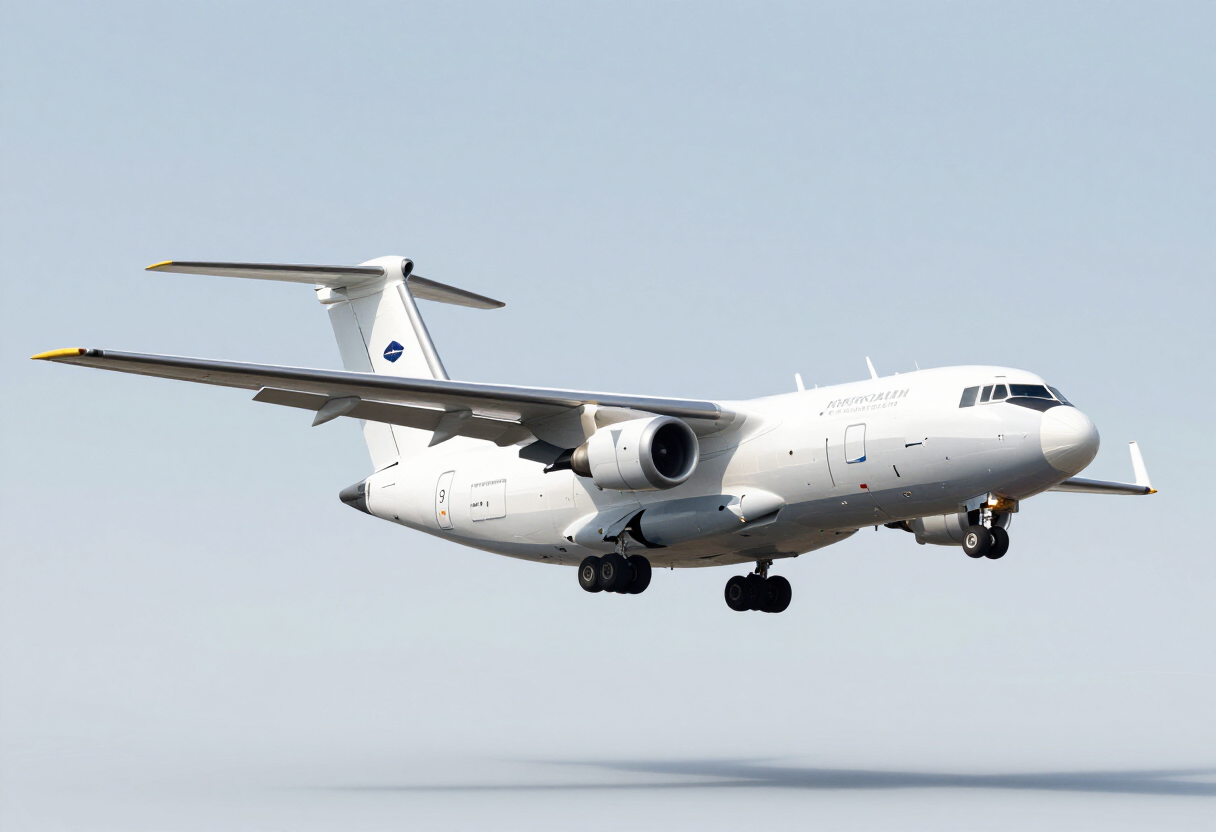
A 10-metre autonomous fixed-wing aircraft has completed a 1,000 km flight carrying anti-doping blood samples, in a proof-of-concept mission that could open a new transport option for time-critical medical logistics and major sporting events.
The Windracers ULTRA, an aluminium-built heavy-lift UAV, flew from Nenana Municipal Airport near Fairbanks, Alaska, on 19 August 2026. The multi-hour sortie was the aircraft's first beyond visual line of sight (BVLOS) operation in North America. Operators at the Alaska Center for Unmanned Aircraft Systems Integration (ACUASI), part of the University of Alaska Fairbanks, planned and executed the flight, with Windracers Operations personnel providing on-site support.
The International Testing Agency (ITA), a leading provider of independent anti-doping programs, led the project, with support from Sysmex, a global supplier of clinical laboratory diagnostic and haematology systems. The objective was direct: establish whether anti-doping blood samples can travel long distances by autonomous aircraft while preserving the integrity required for analysis under the Athlete Biological Passport framework.
For the ITA, the stakes are operational. The agency has spent several years examining whether autonomous air cargo can supplement conventional transport when delivery is slow, unpredictable or hard to organise — conditions common at major events such as the Olympic Games, where timely sample delivery underpins both anti-doping efficiency and the integrity of competition itself.
Alaska as the test case
The choice of Alaska was deliberate. Cathy Cahill, Director of ACUASI, framed the mission in blunt logistical terms: 82 percent of the state's communities sit outside the road network, making conventional medical supply lines slow and expensive.
"Looking at the efficacy of autonomous air cargo for medical test samples is incredibly important for Alaska because 82 percent of our communities are not on the road system," Cahill said. "If we can have nurses go into the community and take samples, send them back by UAV for analysis, determine what medications are needed and then send medications back by UAV before the nurses leave, that is a huge benefit in giving people the care they need, where they live and in a timely manner."
That use case extends well beyond sport. A closed-loop model — sample out, diagnosis back, medication delivered — is precisely the kind of scheduled, medium-density payload that autonomous heavy-lift aircraft are positioned to serve in regions where road and scheduled air freight fall short.
Commercial signal for cargo operators
Windracers CEO Simon Muderack cast the flight as a performance benchmark for the ULTRA platform and pointed toward event logistics as a target market.
"The mission of Windracers is to push the boundaries of autonomous aviation in service completing our customers missions. This flight, expertly managed by Cathy Cahill and the ACUASI team, did exactly that and created a new benchmark of ULTRA performance while delivering a result for our partners ITA and Sysmex," Muderack said. "I look forward to a time when Windracers ULTRA is a standard option for sample delivery at major [sporting] events."
Andy Hay, Chairman of the Board of Directors at Sysmex America, echoed the broader market logic: "The same technology that can move a blood sample across 1,000 kilometres of Alaskan wilderness could one day bring timely diagnostics to patients in the world's most remote communities."
ITA Director General Benjamin Cohen stressed that the technology must clear a scientific bar before it enters service. "Innovation is essential to addressing practical challenges in anti-doping, but it must always be underpinned by robust science and the highest standards of sample integrity and chain of custody," Cohen said. "Through this research, we are assessing whether drone technology can become a reliable additional option for transporting samples over long distances or across difficult terrain. The findings may also have applications beyond anti-doping, particularly in helping remote communities access laboratory and medical services more quickly and efficiently."
What happens next
The ITA will now compare pre- and post-flight results to determine whether the journey had any discernible impact on white and red blood cell populations and the indices relevant to the Athlete Biological Passport. If sample integrity held over 1,000 km, the findings could support new transport options for anti-doping organisations and major event organisers — and strengthen the case for autonomous heavy-lift aircraft as a scheduled option in remote medical supply chains.
Source: Air Cargo Week
More from Marcus Bennett
Show full bio
Senior reporter covering marketplaces and e-commerce at Waybill Wire.
145 articles
Related05
Washington Dulles joins Pharma.Aero as VEDP signs strategic membership
NTSB: Amazon freighter crew had no wind data before Miami crash
Washington Dulles joins Pharma.Aero as VEDP takes strategic seat
Amazon Cargo Flight Crew Unaware of Wind Conditions Before Crash
Crashed Amazon Cargo Jet Crew Had No Wind Data, Probe Finds