WW/PORTSTERMI
Wenzhou launches direct West Africa call as inland China ports scale up
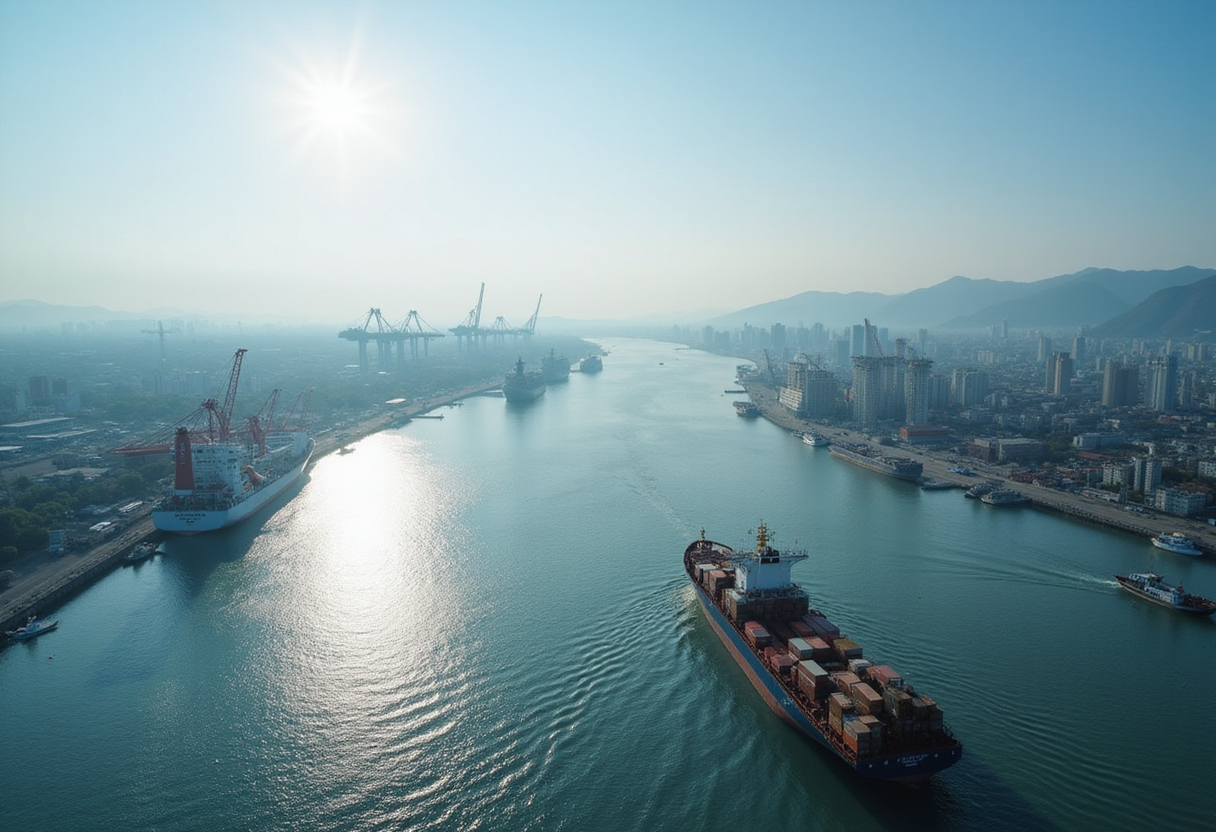
Wenzhou launched a direct container service to West Africa yesterday, opening a long-haul ocean call for manufacturers in southern Zhejiang and northern Fujian and underlining China's shift of port investment from mega-hubs toward inland river facilities.
- By
- Marcus Bennett
- Filed
- Length
- 628 words
- Read
- 3 min
Key points05
- Wenzhou launched a direct container shipping service to West Africa on the day of publication, running via the Oujiang river into the East China Sea.
- The call targets manufacturers in southern Zhejiang and northern Fujian who previously trucked boxes to coastal hubs.
- Ningbo-Zhoushan sits roughly 200 kilometers north of Wenzhou along the Zhejiang coast.
- The West Africa lane carries Chinese consumer goods, vehicles, machinery components and electronics into Lagos, Tema, Lomé, Abidjan and Douala.
- The launch reflects investment flowing into China's river ports as channel depth, berth length and yard-handling capacity improve.
Wenzhou launched a direct container shipping service to West Africa yesterday, extending ocean capability to a Zhejiang river port long treated as a feeder for the deep-water hubs of Ningbo-Zhoushan and Shanghai.
The new loop runs from Wenzhou — sited on the Oujiang river in Zhejiang province where the channel meets the East China Sea — to West African destinations. It opens a long-haul ocean call for manufacturers in southern Zhejiang and northern Fujian whose export flows have, until now, required road movement to coastal terminals before joining international strings.
What changes for inland shippers?
Shippers in Wenzhou's catchment can now load boxes onto an ocean vessel at the inland point rather than trucking cargo roughly 200 kilometers north to Ningbo-Zhoushan, or further along the coast to Shanghai. The arrangement removes one inland leg from the door-to-port journey and tightens the export-side transit window.
The change matters most for time-sensitive cargo — apparel seasons, electronics launches, components feeding West African assembly operations — where drayage scheduling has historically added variability to sailing cut-offs. Consolidation closer to factory gate also reduces handlings on the export side, with knock-on benefits for damage rates and cargo documentation.
Why inland ports are catching up
Wenzhou joins a string of secondary Chinese ports that have added or expanded ocean calls as investment flows inland. Upgrades in channel depth, berth length and yard handling at river ports such as Wenzhou have raised what these facilities can take in a single ocean call, narrowing the operational gap with the coastal mega-hubs.
Improved river-port infrastructure combined with rising demand from inland manufacturing erodes the long-standing operational division between river ports and ocean terminals. The traditional feeder model — boxes moving downriver to deep-water hubs before joining trans-ocean strings — gives way to a structure in which direct ocean calls can originate well inland.
That shift carries cost implications for inland trucking flows that have fed Ningbo-Zhoushan and Shanghai for years. It also expands the origin base for carriers willing to call smaller Chinese ports on long-haul rotations.
Trade lane implications for West Africa
West Africa-bound cargo from China moves in substantial volume. Consumer goods, vehicles, machinery components and electronics flow into Lagos, Tema, Lomé, Abidjan and Douala. Demand on the lane has held despite softer global trade conditions, supported by ongoing Chinese investment in African infrastructure and continued appetite for finished goods at destination.
A Wenzhou origin does not shorten the ocean transit on the West Africa leg itself. It removes the inland handling step and consolidates cargo closer to factory gate, reducing both cost and variability for shippers.
Who gains, who loses
Carriers gain access to inland-origin cargo that trucking capacity and terminal congestion at the mega-hubs had previously shaped. Forwarders gain a one-load West Africa option for southern Zhejiang and northern Fujian clients, with scope to reshape quote structures around tighter transit-time guarantees.
Trucking operators lose some of the drayage flows that historically fed the bigger coastal hubs. Terminal operators in Wenzhou gain a higher-value call and a foothold on a long-haul lane that previously bypassed them.
For shippers, the practical question is straightforward: does the inland saving offset any reduction in sailing frequency and bunker cost compared with the established deep-water routings?
What to watch next?
Early volumes through Wenzhou will remain modest, reflecting the limited number of ocean services the river port can support and the maturity of Ningbo-Zhoushan and Shanghai on the West Africa trade. Whether the inaugural service scales into a regular string, and whether other Chinese river ports add direct deep-sea calls of their own, will signal how fast the river-ocean split narrows for inland shippers.
Source: The Loadstar
More from Marcus Bennett
Show full bio
Senior reporter covering marketplaces and e-commerce at Waybill Wire.
320 articles