WW/PROCUREMEN
Volkswagen starts Africa-focused Tengo SUV output in South Africa
Volkswagen launches Tengo SUV production at Kariega with R4bn invested and 45% local content, as 50,000 global job cuts and Chinese rivals pressure its key African market.
- By
- Elena Vasquez
- Filed
- Length
- 561 words
- Read
- 3 min
Key points05
- Volkswagen invested R4 billion ($241 million) announced in 2024 in the Kariega plant for Tengo production.
- The Tengo is the first SUV built at the Eastern Cape factory, joining the Polo and Polo Vivo for a 2027 debut.
- About 45% of Tengo components will be sourced locally in South Africa.
- Kariega produced a record 167,084 vehicles in 2024, also supplying export markets beyond Africa.
- Volkswagen plans roughly 50,000 job cuts worldwide in its biggest-ever restructuring.
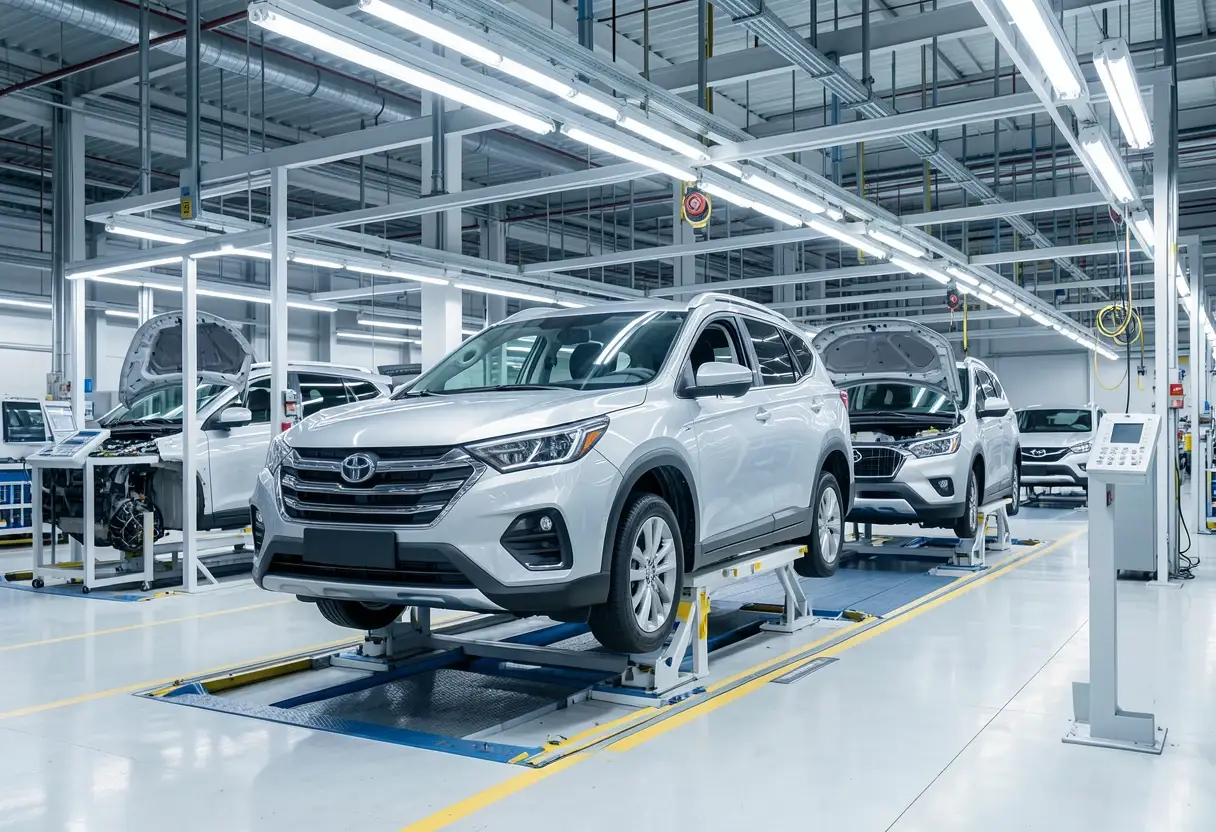
Volkswagen has started full-scale production of its new Tengo compact SUV in South Africa, backed by a 4 billion rand ($241 million) investment in the Kariega plant — the factory's most significant shift in 75 years of operation. The launch lands at a moment when the German carmaker is cutting roughly 50,000 jobs worldwide and fighting a surge of affordable Chinese brands in its most important African market.
The Tengo is the first SUV ever built at the Eastern Cape facility, where it becomes the third model alongside the Polo and Polo Vivo. A debut is planned for 2027. Volkswagen Group Africa and Volkswagen do Brasil developed the vehicle jointly, basing it on the Brazil-built Tera and tailoring it specifically for African buyers, according to Reuters.
The investment, announced in 2024, funds new body-shop equipment, production tooling and manufacturing technology needed to add the extra model to the line. Kariega built a record 167,084 vehicles in 2024 — a volume that also feeds export markets beyond Africa.
How deep does the localisation go?
About 45% of the Tengo's components will be sourced inside South Africa, a figure Volkswagen frames as direct support for the country's automotive supply chain and domestic manufacturing base. For a plant that has assembled small cars for three-quarters of a century, adding a high-body SUV with nearly half its parts locally produced marks a deliberate industrial-policy alignment.
The localisation push matters beyond one factory. South Africa's automotive sector depends heavily on component makers clustered around plants like Kariega, and every percentage point of local content shifts procurement spend from import lanes — largely Asia-Europe ocean freight — to domestic trucking and regional suppliers. For carriers and forwarders serving the Eastern Cape, an expanded, multi-model plant with rising output volumes means steadier inbound flows of tooling, steel and parts.
Why is Volkswagen rushing now?
The commercial driver is blunt: lower-priced Chinese automakers are winning share in South Africa, the continent's biggest car market and Volkswagen's manufacturing base in the region. The Tengo is positioned as an affordable SUV aimed squarely at the demand segment where Chinese brands have gained ground fastest.
Leadership has changed to match the moment. Porsche executive Christiane Zorn has taken charge of Volkswagen's African business as the carmaker confronts the shifting competitive landscape. The regional unit, for its part, is signalling expansion rather than retreat — it has dismissed reports that it plans to leave Rwanda and reaffirmed its long-term commitment there while announcing an expansion of local operations.
What does this mean against the global job cuts?
The contrast is stark. While Kariega gains a new model and a R4 billion upgrade, the Volkswagen Group globally is executing its biggest-ever overhaul, with roughly 50,000 job cuts planned worldwide. South Africa is one of the few places where the company is adding product rather than subtracting it.
That divergence defines the commercial stakes. If the Tengo hits its 2027 debut with competitive pricing and holds the line against Chinese entrants, Kariega's record 167,084-unit year becomes a floor rather than a peak — sustaining export volumes and a deepening local supplier network. If Chinese brands keep undercutting on price, Volkswagen's African bet, and the freight flows that ride on it, will face a far harder test.
Source: africa.businessinsider.com
More from Elena Vasquez
Show full bio
News editor covering people, launches and day-to-day practice in Ocean and air freight, container shipping at Waybill Wire.
858 articles