WW/TRUCKINGRA
Venti Runs 60 Driverless Trucks in US Intermodal Yards Today
Venti Technologies says ~60 autonomous container trucks already run 24/7 in California and Texas intermodal yards, cutting yard transport costs 40-70%.
- Desk
- Trucking & Rail
- By
- James Calloway
- Filed
- Length
- 560 words
- Read
- 3 min
Key points05
- ~60 autonomous container trucks run 24/7 in California and Texas intermodal yards with a clean safety record
- Venti claims 40-70% savings on transportation costs for yard operations
- 85-90% of core software reuses across applications; port-to-rail adaptation took about 2 months
- CEO Heidi Wyle projects significant rail-yard volume within 2 years; urban autonomy is 7-10 years out
- A second Singapore fleet of 30 vehicles launches this year, after nearly 3 years of port operations
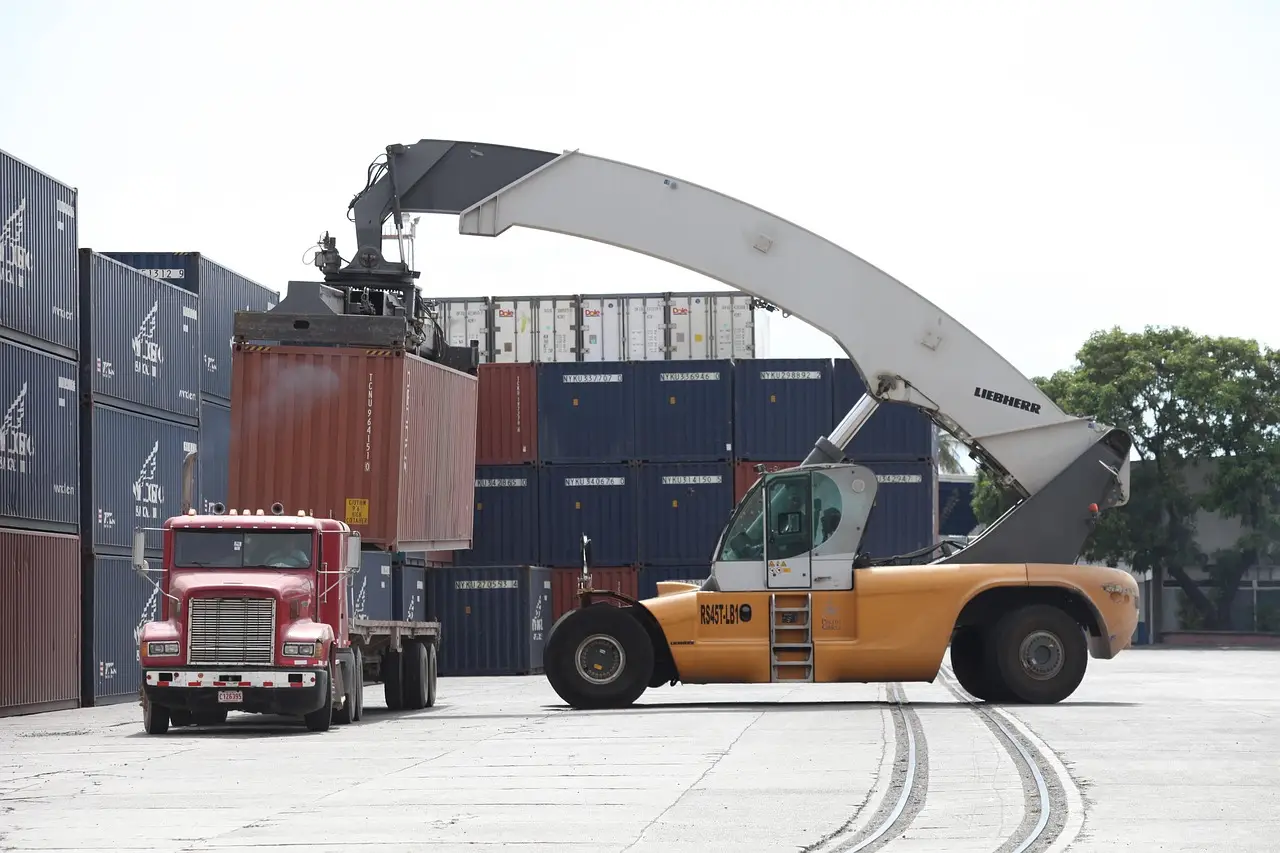
Roughly 60 large container trucks are running fully autonomous, around-the-clock operations in intermodal yards across California and Texas right now — with a clean safety record and productivity that beats human drivers.
That's the claim from Venti Technologies, the MIT-founded software company whose CEO, Heidi Wyle, laid out the fleet's status in an interview with FreightWaves. The deployment is not a pilot. Venti says it's one of the first documented, full-scale autonomous yard operations running in live production environments in the United States.
"We are running, every day, 24/7, in full production operations, exceeding human productivity," Wyle said.
Who's behind the wheel — or rather, who isn't?
Venti describes itself primarily as a software platform, not a truck maker. The system behind it is a roughly $70 million to $80 million software stack deployed on customer-owned vehicles. Customers buy and own the trucks; Venti supplies the end-to-end autonomy package, including yard mapping and mission-specific functionality.
The platform is sensor-agnostic. LiDAR forms the foundation, but the system also uses cameras and, in some applications, ultrasound.
What does this mean for rail operators?
Wyle said Venti already has agreements with several Class I railroads and is in talks with the rest of the industry. She expects significant rail-yard volume across the sector to materialize "in 2 years" as the technology scales.
The commercial pitch is blunt. Venti projects savings of 40% to 70% on transportation costs for yard operations.
"It's anywhere from 40% to 70% of transportation costs — and we think that that's a big win in the right environments," Wyle said.
For carriers and shippers, that math targets one of the most persistent cost centers in freight: drayage and yard moves inside fenced, controlled facilities where autonomy faces fewer regulatory and safety hurdles than public roads.
How portable is the software?
Venti cut its teeth in Singapore, which Wyle called home to the world's second-largest container port. The company launched its first fleet there and has operated for nearly three years. A second Singapore fleet of 30 vehicles is set to launch this year.
The code base travels well. Wyle said roughly 85% to 90% of the core software carries over across applications, meaning the jump from port operations to rail yards required only about two months of additional development — mainly train detection, signal recognition, and rail-specific functions.
That portability is the strategic asset. Each new environment — port, rail yard, warehouse campus — demands a fraction of the original engineering investment.
When do driverless trucks hit public roads?
Not soon, by Wyle's own account. She drew a sharp line between enclosed logistics environments and urban last-mile delivery, calling inner-city autonomous trucking "probably 7 to 10 years out."
Yard and port applications are different, she argued. They're a direct cost calculation against mission-critical trucking needs in controlled spaces. No mixed traffic, no pedestrians, no regulatory gray zone.
In the meantime, Venti is targeting the supply chain yard segment — a market Wyle said moves $55 billion of goods every day.
What happens next?
The two-year window Wyle projects for broad U.S. rail-yard deployment puts autonomous intermodal moves on shippers' planning horizon for 2026-2027, with Class I agreements already signed and the remaining railroads in active discussions.
Original: getfreightdata.com
More from James Calloway
Show full bio
Correspondent covering companies, deals and strategy in Ocean and air freight, container shipping at Waybill Wire.
788 articles
Related05
Venti to Put 100+ Autonomous Yard Trucks Into US Rail Terminals by 2027
Venti to Put 130+ Driverless Yard Trucks Across Eight US Rail Sites by 2027
Texas Emerges as the Proving Ground for Driverless Semi Trucks
ISEE Taps Investor Holman to Lease, Retrofit and Maintain Autonomous Yard Trucks
Aurora tells Evercore forum driverless trucking is moving to scale