WW/TRUCKINGRA
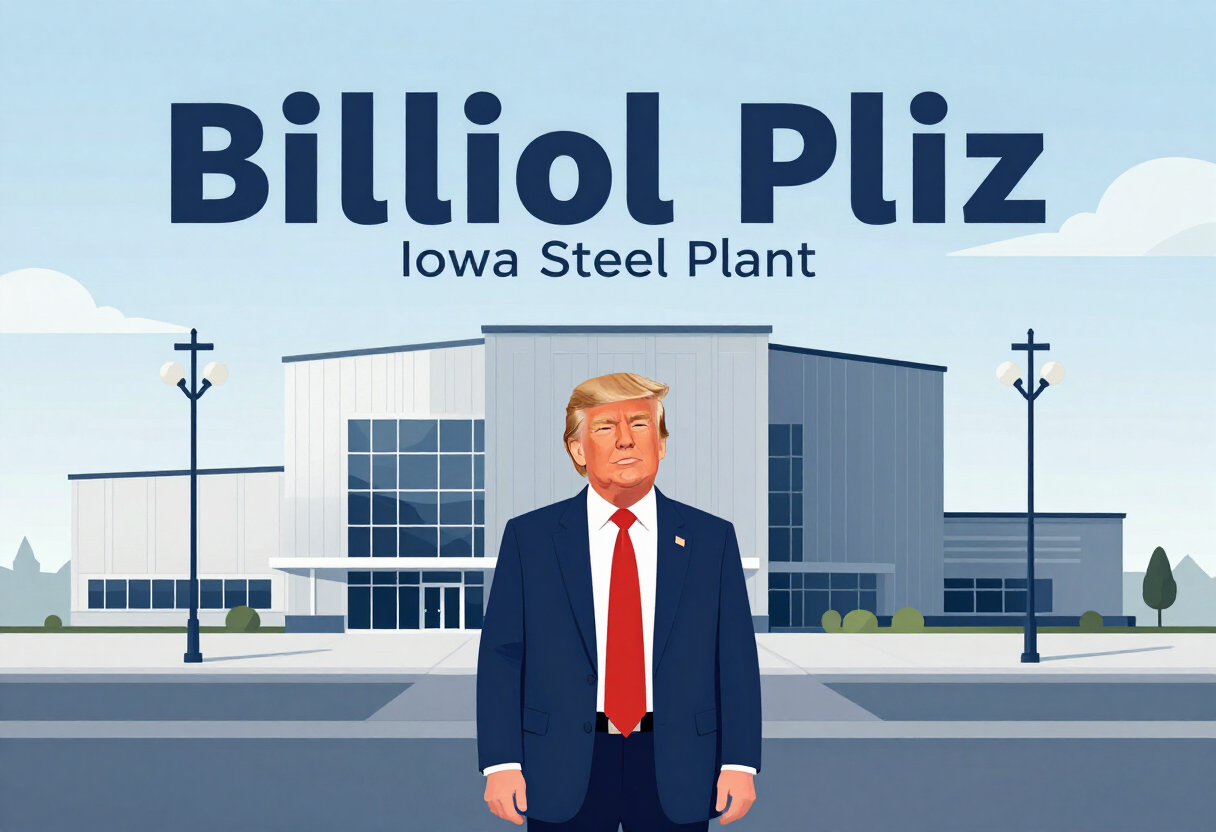
Trump Unveils $15 Billion Steel Plant for Iowa
Trump announces a $15 billion steel plant in Iowa, a mine-to-mill project with major implications for US bulk, rail and trucking freight demand.
- Desk
- Trucking & Rail
- By
- James Calloway
- Filed
- Length
- 622 words
- Read
- 3 min
Key points03
- President Trump announced a $15 billion steel plant to be built in Iowa.
- The project is designed as a mine-to-mill integrated domestic supply chain.
- The announcement aligns with the administration's tariff and onshoring agenda, though capacity, timeline and product details were not specified.
A $15 billion steel plant is headed to Iowa, and President Donald Trump says it will do more than add mill capacity — it will stitch together a domestic supply chain running from mine to finished steel on American soil.
The announcement, made through a report carried by KATU, puts a hard number on the White House's push to onshore industrial inputs: fifteen billion dollars of committed investment in a single state. For freight markets, that figure matters. Steel is one of the heaviest, most logistics-intensive cargo categories in the US economy, and a greenfield plant of this scale implies sustained demand for railcars, flatbed trucking, bulk ore movements and outbound finished-steel distribution across the Midwest.
The framing of the project — "from mine to mill" — signals the ambition. Rather than importing raw materials or semi-finished slab and finishing it domestically, the Iowa complex is positioned to integrate upstream extraction with downstream production. That structure cuts against a decades-long pattern in which US mills have relied on imported inputs, a flow that has moved through ports on the Gulf, East and West coasts in bulk vessels and containerized steel products alike.
For shippers and carriers, the commercial logic cuts both ways. Construction alone represents a multi-year freight event: heavy-lift components, structural steel, machinery and construction materials will need to move to the site. Once operational, the plant would generate inbound ore and scrap traffic and outbound steel shipments to manufacturers, fabricators and construction customers — cargo that today is partially satisfied by imports.
The timing aligns with the administration's broader trade posture. Trump has pursued tariff regimes and industrial policy designed to pull manufacturing and its material inputs back inside US borders. A flagship steel investment in Iowa, an agricultural and industrial heartland state, gives that policy a concrete symbol. It also answers critics who argue that trade barriers alone raise costs without building capacity: here, the White House can point to new domestic supply rather than just restricted foreign supply.
Forwarders and importers of steel products will watch the project closely. If the plant's output displaces imported steel on key product lines, ocean volumes on lanes serving US steel-import gateways could soften over time, while domestic trucking and rail corridors through the central US would gain. The magnitude of that shift depends on the plant's product mix and ramp-up timeline, details that the announcement did not specify.
Steel buyers, meanwhile, face a market in transition. Domestic capacity additions tend to pressure prices over the long run, but the capital cycle is slow. In the near term, tariffs, strong construction demand and limited immediate new supply keep the pricing environment firm. A $15 billion commitment adds a credible supply response — but one measured in years, not quarters.
The Iowa announcement also lands amid fierce global competition in steel, where overcapacity in Asia has kept world prices suppressed and US producers have leaned on trade protection to defend margins. Building integrated domestic capacity is the industry's structural answer to that pressure, and the federal government is now explicitly backing it with presidential-level promotion.
What remains undefined in the announcement are the operational specifics shippers care most about: the plant's capacity in tons, its construction schedule, its workforce plans and its target end markets. Those details will determine whether the $15 billion translates into a genuine rebalancing of steel freight flows or a more incremental addition to national capacity.
Either way, the direction of travel is clear. The administration intends to keep stacking domestic industrial capacity — mines, mills and the freight demand they generate — onto US soil, and the Iowa project now stands as the largest single proof point of that intent.
Source: Google News: tariffs and supply chain
More from James Calloway
Show full bio
Correspondent covering consumer brands and retail at Waybill Wire.
130 articles
Related05
Trump Unveils $15 Billion Iowa Steel Plant in Mine-to-Mill Push
US Steel Imports Collapse 30% in 2026 as Tariffs Reshore Production
Trump Courts Trucking Vote at Denton Factory, Touts Manufacturing Rebound
Iran Conflict Pushes Diesel Prices Up, Squeezing Minnesota Truckers
Ohio Trucking Slips Into What Industry Calls a Historic Recession