WW/OCEANFREIG
Three More Tanker Attacks Surface in Delayed Hormuz Reports
Three tanker attacks in the Strait of Hormuz surfaced a day late in UKMTO warnings, lifting time-late incidents to at least four and blurring the real-time security picture.
- Desk
- Ocean Freight
- By
- James Calloway
- Filed
- Length
- 570 words
- Read
- 3 min
Key points03
- UKMTO warnings 144-26, 145-26 and 146-26 covered attacks reported Sept. 29 but published Sept. 30.
- The three new warnings bring disclosed time-late incidents in the strait to at least four.
- UKMTO identified no vessels and listed incident times as 'TBC'; the reporting system is voluntary.
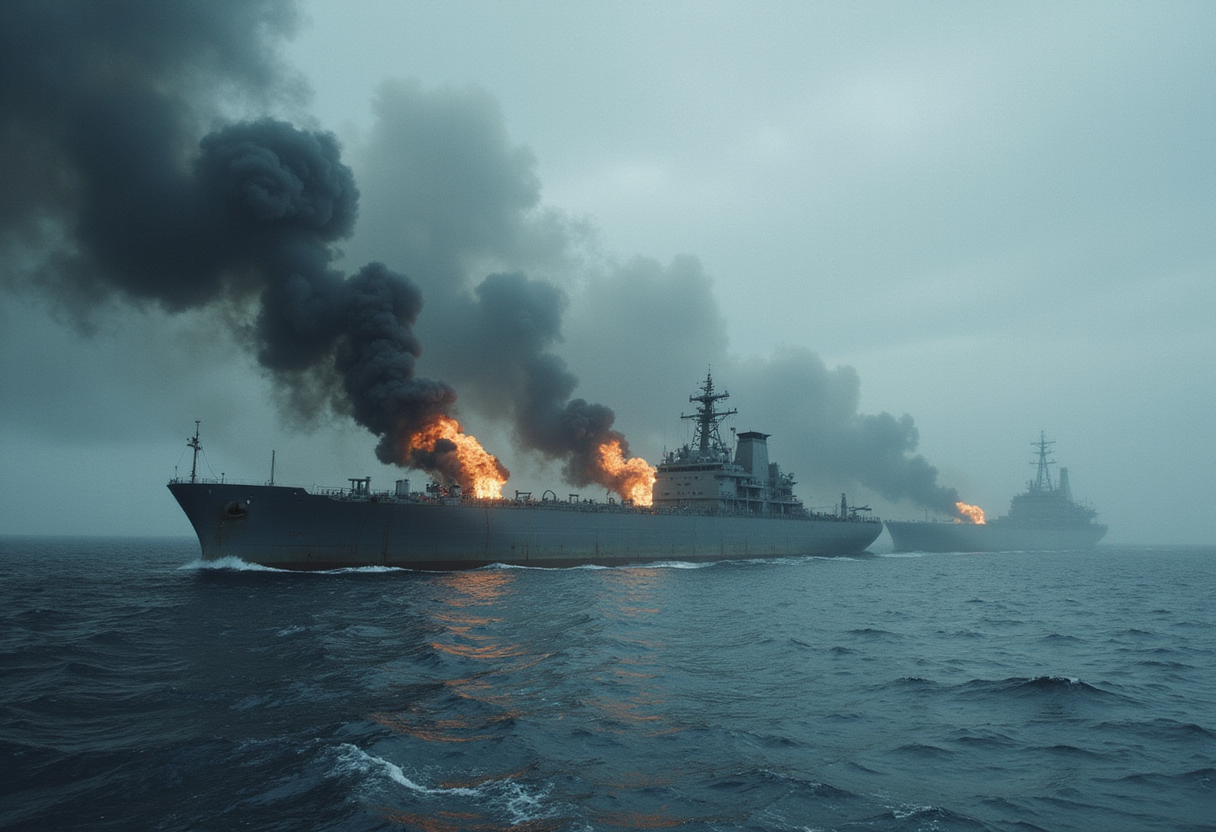
Three more attacks on tankers in the Strait of Hormuz surfaced Wednesday through delayed UK Maritime Trade Operations warnings, pushing the number of recently disclosed time-late incidents in the waterway to at least four and exposing a growing gap between events at sea and the public record.
UKMTO issued three separate warnings — numbered 144-26, 145-26 and 146-26 — covering incidents reported on Sept. 29 but not published until Sept. 30. All three carried an attack classification and were attributed to verified sources.
The first warning said a crude oil tanker was struck on its port side by an unknown projectile. A second said a tanker transiting inbound through the strait had also been hit by an unknown projectile. The third offered even less: a tanker had been struck, nothing more.
UKMTO identified none of the vessels and provided no information on damage, casualties or pollution. The time of each incident was listed as "TBC."
A pattern of late disclosure
The three warnings landed a day after gCaptain examined the widening information gap around attacks in the Strait of Hormuz, where some incidents have only become public hours or days after they occurred.
That earlier report followed a separate UKMTO warning involving a vessel struck by a suspected projectile on Sept. 28. The impact caused a fire, though the crew was reported safe and the vessel remained underway. Unlike the three new warnings, that incident was initially classified as "suspicious activity" before details emerged.
The pattern matters commercially. For shipowners, crews and underwriters pricing war-risk exposure in the strait, a record that fills in after the fact distorts the security picture in real time. A tanker operator deciding on routing, speed or armed protection this week cannot rely on a public incident log that lags events by a day or more.
Competing claims, incomplete data
The stakes sharpen as competing claims emerge over how many ships have actually been targeted. Iran has said its forces struck multiple vessels in recent days, while publicly available incident reports have shown a smaller number. The new UKMTO warnings do not identify who fired the projectiles and do not confirm Iran's broader claims.
What they do show is that incidents are being added to the record after the fact. The delay means the public tally of attacks in the strait could continue to rise as delayed reports clear the pipeline, complicating any attempt by charterers, insurers and regulators to pin down the true frequency of strikes on tonnage moving through the chokepoint.
The structural weakness sits with the reporting system itself. UKMTO operates a voluntary scheme for merchant shipping across the region. Masters and operators are encouraged to report security incidents, but the system depends on information being passed along by vessels, companies or other authorities. Nothing obliges an owner to file a report promptly, and nothing guarantees UKMTO receives details on damage, crew status or the nature of the projectile.
For crews transiting inbound and outbound through Hormuz, the practical consequence is stark: an incident count that reads as manageable on any given morning may already be understated. For insurers, the same lag makes an already difficult security assessment harder still — the record keeps growing, but only backwards.
Expect the disclosed tally to keep shifting as delayed warnings surface, with the true rate of attacks in the strait remaining uncertain until reporting catches up with events on the water.
Source: gCaptain
More from James Calloway
Show full bio
Correspondent covering consumer brands and retail at Waybill Wire.
130 articles
Related05
Tanker Ablaze in Strait of Hormuz as Attack Count Outpaces Reporting
Hormuz Incident Record Is Falling Apart as Attacks Surface Days Late
Second KOTC VLCC struck in Hormuz as Yanbu hit again
80 nations demand full reopening of the Strait of Hormuz
BIMCO committees flag Hormuz security and fuel transition as top shipping risks