WW/SUPPLYCHAI
The Orchestration Tax: Why Supply Chain Management Favors Giants
Stockouts stuck near 8% since the 1990s despite 920m TEU throughput: researchers argue SCM's orchestrator model taxes SMEs and propose choreography instead.
- By
- Marcus Bennett
- Filed
- Length
- 952 words
- Read
- 5 min
Key points05
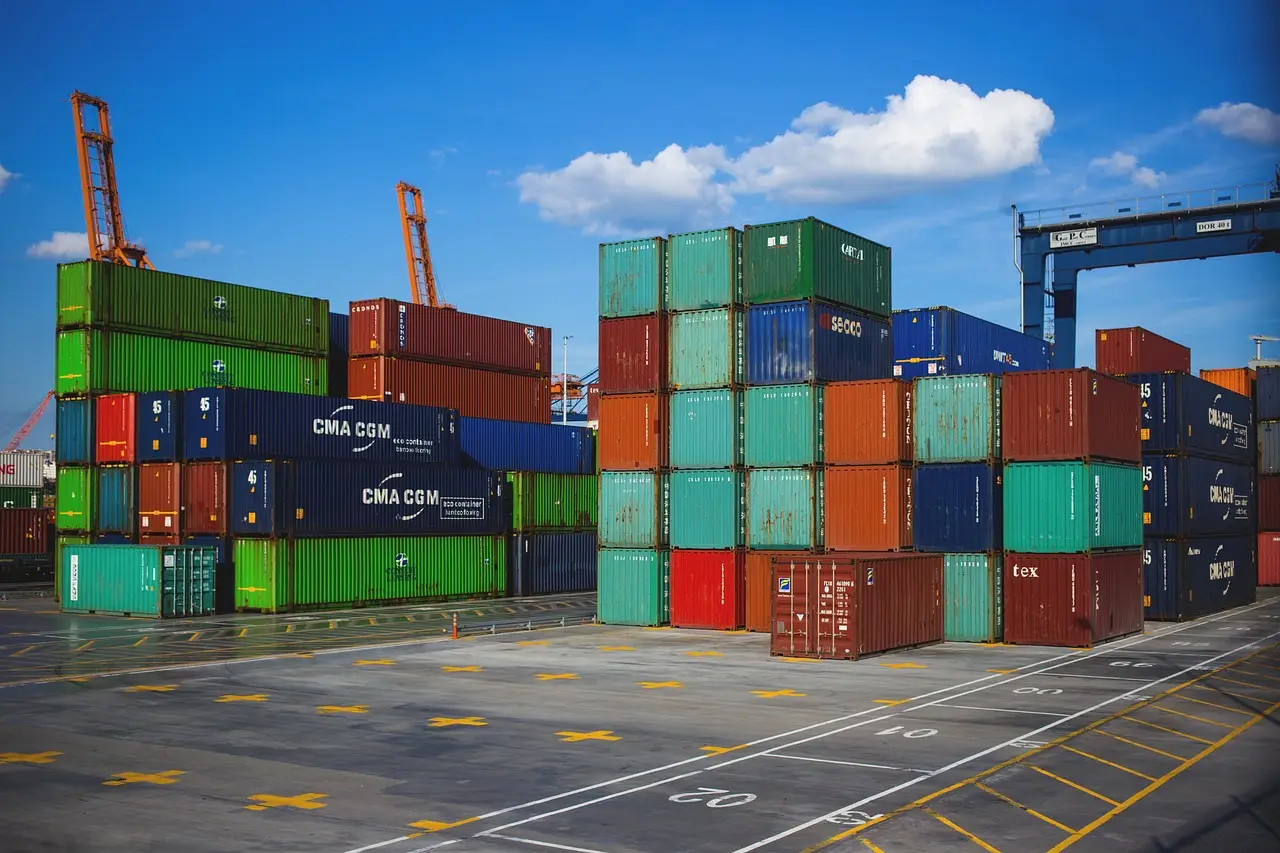
- Global container throughput grew from 237 million TEU in 2000 to 920 million TEU in 2024 while stockout rates stayed near 8% since the mid-1990s
- Only 15% of organizations show standout collaboration maturity; 98% of suppliers want better communication
- Conductors earn 20x the average musician's salary — the model for the authors' 'orchestration tax'
- 96 academic supply chain-orchestration publications appeared from 2012 through 2024, up 78% from 2021 to 2022
- SME customer-dependent manufacturers averaged 28.6% gross margins versus 34.4% for low-dependence firms
Stockout rates have hovered near 8% since the mid-1990s, even as global container throughput nearly quadrupled from 237 million TEU in 2000 to 920 million TEU in 2024. That stagnation sits at the center of a new argument from researchers Sebastian Brockhaus of Cleveland State University and Alina Marculetiu of Youngstown State: modern supply chain management, built around the idea of a dominant "orchestrator," has systematically rewarded corporate giants while leaving smaller firms to follow someone else's score.
Who gets counted as supply chain excellence?
Recognition for supply chain prowess goes overwhelmingly to corporate behemoths, the authors note. Most companies in the Top 25 rankings employ well over 100,000 people, and candidates must be Fortune Global 500 members reporting at least $15 billion in revenue. The authors argue these criteria privilege scale, visibility, formal reporting systems, and market power — a bias mirrored in Supply Chain Digital's Top 100, the Alcott Global Leaders in Supply Chain Awards, and the CSCMP Supply Chain Hall of Fame.
The roots run deep. Consultant Keith Oliver coined supply chain management in the late 1970s — the term entered business jargon via a 1982 Financial Times article — and the concept fused naturally with Taiichi Ohno and Eiji Toyoda's lean and just-in-time ideas at Toyota, whose TPS booklet was formally published only in 1992. Conceptually, the authors write, SCM works best when one organization leads and others follow, and that conductor role "almost by default" falls to the largest, most powerful player — the prototypical automotive OEMs.
What did centralization cost?
The historical warning is stark. The 19th-century Chicago meatpackers — Armour, Swift, Morris, and Hammond — integrated livestock purchasing, slaughter, refrigeration, rail transport, distribution, and by-products into a ruthlessly efficient system. By the early 20th century, the resulting Big Five controlled an estimated 50% to 75% of the industry and stood accused of depressing livestock prices and crushing competitors. Vertical integration solved the coordination problem but concentrated pricing power, the authors write, producing the excesses Upton Sinclair immortalized in The Jungle.
Keith Oliver himself warned in 2001 that SCM's ideal of total end-to-end control paralleled socialist central planning — and was similarly doomed. He and co-authors identified three flaws: companies would not share profits and data for a vague greater good; chains of thousands of partners were messy webs, too complex for central planning; and centralized push planning could produce goods nobody wanted.
Has technology fixed anything?
The numbers say no. World data output reached 181 zettabytes in 2025 versus 1.5 zettabytes in 2000. U.S. logistics costs fell from about 10% of GDP before 2000 to around 8% in 2025. Inventory-to-sales ratios moved only from 1.4 in 2000 to about 1.3 in 2026. Inventory carrying costs fell from 60% of transportation costs in the 1990s to 45% by 2024 — less in the warehouse, more on the road. E-commerce grew from 0.9% of U.S. retail sales in 2000 to 16.4% in 2025, yet 83.6% of retail still happens offline.
Collaboration remains rare. Stan Fawcett and colleagues put the rate of "synergistic working relationships" at 5% or less in 2005, and recent data show little progress:
- Only 15% of organizations show standout collaboration maturity
- 90% receive supplier feedback too late to shape product designs
- 59% of suppliers say major customers prevent their best work
- 98% want better communication
What is the orchestration tax?
Orchestration persists as the dominant theme: a recent review counted 96 academic supply chain-orchestration publications from 2012 through 2024, with output up 78% from 2021 to 2022. A 2026 IDC study found end-to-end orchestration has replaced visibility as the top C-level strategic priority. The authors frame the cost via music: conductors today earn 20 times the average musician's salary — the "orchestration tax." The evidence on who pays it is concrete. In a study of 166 buyers and suppliers, buyers captured "the great majority" of value created. Among 218 manufacturers, firms dependent on one customer averaged gross margins of 28.6% versus 34.4% for those with low dependence — a gap widening to nearly 11 points in competitive industries. SMEs reflect the imbalance: only 25% of small firms have a formal SCM program, just 9% employ a dedicated supply chain manager, and only 17% prioritized digital supply chain adoption in 2024 versus 33% of large firms.
Is choreography the answer?
The authors propose "supply chain choreography" — a term they credit Fawcett et al. with using first in 2020 in an analysis of Cirque du Soleil. Drawing on interviews with nine professional choreographers, they define it as distributed coordination among autonomous partners aligned on shared purpose, common cues, and guardrails, without surrendering decision authority. One interviewee defined choreography as building "an environment, so that all can do their best"; a ballet choreographer added: "A good choreographer always gives freedom to the dancers."
The practical parallel is Oliver's own 2001 alternative, "federated planning" — iterative, rule-based negotiations ensuring no partner feels fleeced. Their prescription for SMEs: pick two or three trusted peers, one shared customer problem, one measurable outcome, rehearse a disruption scenario, and review after 90 days. A meta-analysis of 51 studies and 11,420 observations found extensive supplier involvement improved both product-development efficiency and effectiveness.
The stakes, in their telling, rise with AI: giants may soon centrally plan entire networks through virtual vertical integration without committing acquisition capital. SMEs that choreograph now, the authors conclude, can become easier to work with, harder to replace, and less dependent on any single customer or platform — though whether distributed coordination can scale against billion-dollar platform spending remains, as ever with SCM promises, unproven.
Source: scmr.com
More from Marcus Bennett
Show full bio
Senior reporter covering regulation, policy and their impact on Ocean and air freight, container shipping at Waybill Wire.
798 articles