WW/PORTSTERMI
SITC CJV6 makes first international liner call at Nansha Phase IV terminal
SITC YIHE's call launches CJV6 at Nansha Phase IV, the world's first fully automated river-sea-rail container terminal, linking Nansha with Japan and Vietnam.
- By
- James Calloway
- Filed
- Length
- 538 words
- Read
- 3 min
Key points05
- SITC YIHE made the first international liner call at Nansha Phase IV, launching the CJV6 service.
- CJV6 connects Nansha with Tokyo, Yokohama, Kawasaki, Nagoya, Da Nang and Hai Phong.
- Nansha Phase IV is described as the world's first fully automated container terminal integrating river, sea and rail transport.
- The terminal uses 5G, BeiDou navigation, unmanned guided vehicles and remotely controlled equipment.
- Guangzhou's port authority plans to expand cooperation with international shipping companies.
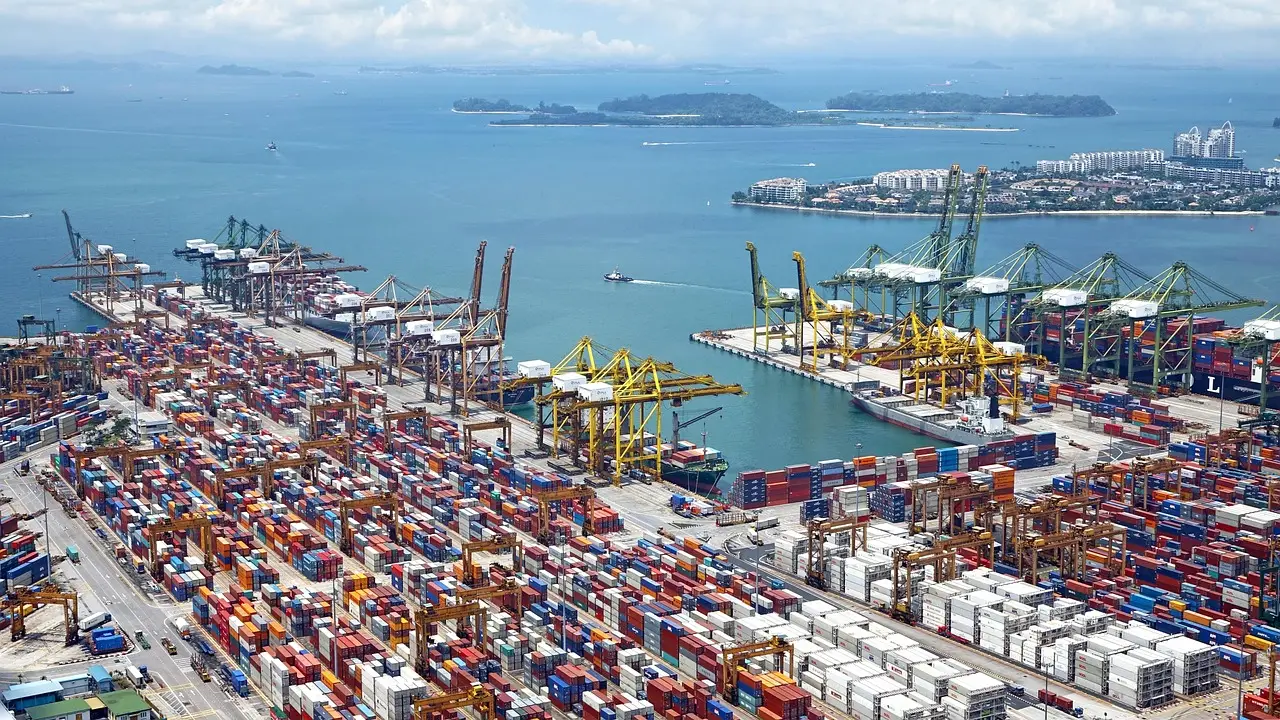
The container ship SITC YIHE has completed the first international liner call at Guangzhou Port's Nansha Phase IV, launching SITC's CJV6 service and kicking off regular international liner operations at the fully automated terminal, according to the Guangzhou Municipal Port Authority.
The milestone matters for shippers moving cargo between South China, Japan and Vietnam. It adds a new, technology-heavy gateway to the intra-Asia short-sea network and gives forwarders an automated-terminal option in one of the Pearl River Delta's largest port complexes.
What does CJV6 connect?
The CJV6 service links Nansha with four Japanese ports — Tokyo, Yokohama, Kawasaki and Nagoya — plus Da Nang and Hai Phong in Vietnam. That is a dense China-Japan-Vietnam rotation aimed squarely at regional manufacturing supply chains.
The port authority expects the service to strengthen short-sea connectivity between South China, Japan and Vietnam. It also anticipates more reliable cargo flows and more dependable shipping schedules across the regional network — a direct pitch to importers and exporters frustrated by schedule variance on intra-Asia lanes.
For SITC, one of Asia's most active intra-regional carriers, the call extends its footprint into a terminal that until now had handled no international liner traffic.
Why the terminal itself is the story?
Nansha Phase IV is not a conventional box terminal. The Guangzhou Municipal Port Authority describes it as the world's first fully automated container terminal integrating river, sea and rail transport in a single operation.
The technical stack is extensive. The terminal runs on:
- 5G connectivity
- China's BeiDou satellite navigation system
- Unmanned intelligent guided vehicles
- Remotely controlled handling equipment
- Optical character recognition technology
Together, these systems automate container handling across three stages of the terminal workflow: vessel operations, terminal transfers and yard storage. In practice, that means boxes move from ship to stack with minimal manual intervention, a setup ports increasingly promote as a way to cut dwell times and lift handling consistency.
How did the first call go?
Smoothly, by the port authority's account. The authority said it coordinated with the relevant port and border agencies to optimize operating arrangements for the inaugural call, and that the terminal's automated systems ran without disruption throughout the SITC YIHE's visit.
That first-call execution matters commercially. Automated terminals live or die on integration — customs, border checks and vessel operations have to sync with unmanned equipment and remote-controlled cranes. A clean debut for an international service signals to other carriers that the terminal can handle cross-border box flows, not just domestic moves.
What comes next for Guangzhou Port?
The authority plans to keep building cooperation between Guangzhou Port and international shipping companies while expanding the port's container logistics network. Translation: more carrier recruitment and more services are on the agenda for Nansha Phase IV.
For carriers, an automated terminal with river, sea and rail links offers multimodal reach into South China's manufacturing hinterland. For shippers on the China-Japan-Vietnam trade, CJV6's arrival adds capacity and a schedule option anchored at a facility built around handling reliability. Expect the port authority to court additional intra-Asia and, eventually, long-haul operators as it scales international volumes at the terminal.
Source: Container News
More from James Calloway
Show full bio
Correspondent covering companies, deals and strategy in Ocean and air freight, container shipping at Waybill Wire.
816 articles
Related05
Top Liner to Back Vietnam's Regional Transshipment Hub Bid
OOCL to launch CIS4 service linking China and Indonesia from 22 November
Nanning and Can Tho Connect via New Direct Container Service
CU Lines exits CNC's Japan–Thailand Express slot charter
Mariana Express Lines adds Xiamen and Nansha calls to MXS service