WW/OCEANFREIG
Singapore Registry Takes Its First Ammonia Dual-Fuel Newbuild
EPS's 93,000 cbm Terra Clove, first ammonia dual-fuelled newbuild on the Singapore Registry, was christened in Ulsan with delivery set for November 2026.
- Desk
- Ocean Freight
- By
- Amara Osei
- Filed
- Length
- 521 words
- Read
- 3 min
Key points04
- Terra Clove is a 93,000 cbm VLAC, the first ammonia dual-fuelled commercial newbuild on the Singapore Registry of Ships
- It carries Everllence's first commercial ammonia dual-fuelled two-stroke engine, factory-tested in April 2026
- Delivery is expected November 2026 after sea trials; a sister ship is also under construction at HHI
- The EPS–MPA–HHI–ABS collaboration behind the vessel began in June 2022
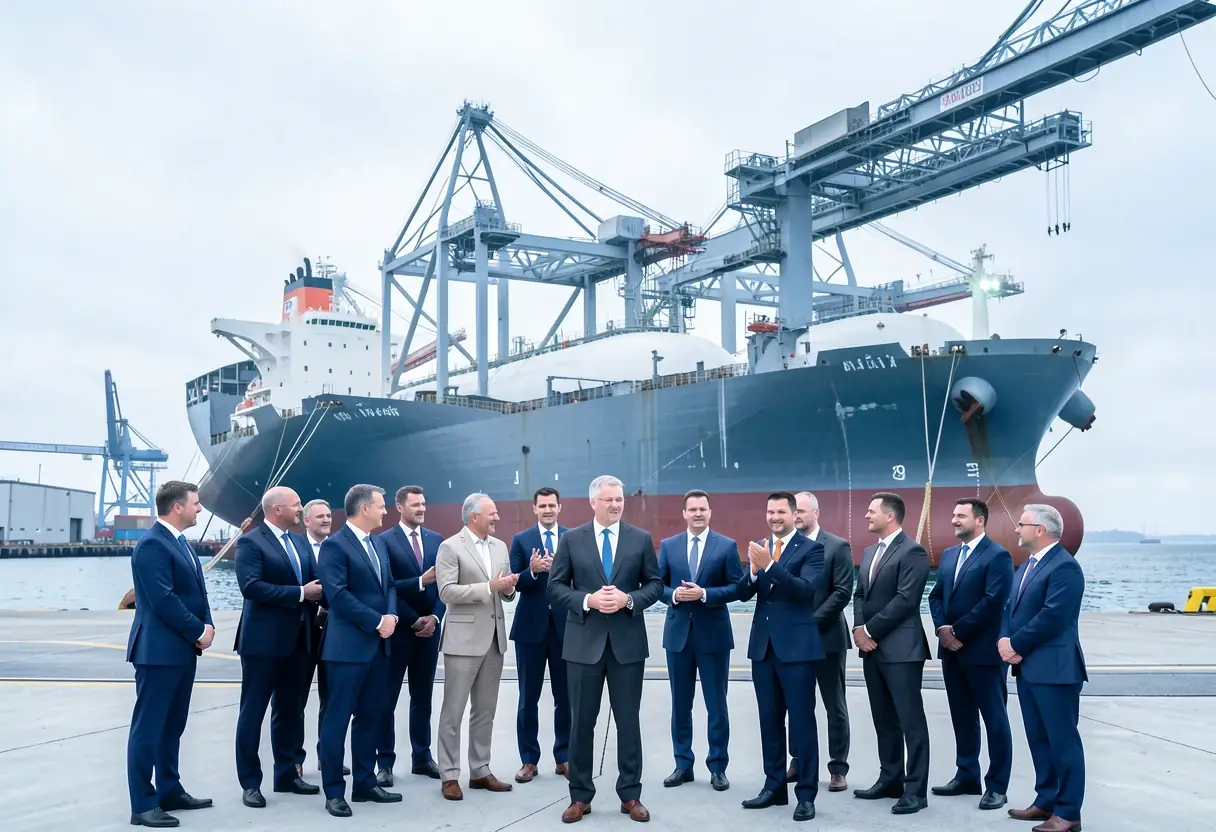
A 93,000 cubic metre Very Large Ammonia Carrier named Terra Clove has become the first ammonia dual-fuelled commercial newbuild registered under the Singapore Registry of Ships. The Maritime and Port Authority of Singapore (MPA) and Eastern Pacific Shipping (EPS) marked the vessel's christening at HD Hyundai Heavy Industries in Ulsan, South Korea.
The timing matters as much as the flag. Terra Clove carries Everllence's first commercial ammonia dual-fuelled two-stroke marine engine, which passed factory acceptance testing in April 2026. Sea trials are next, with delivery expected in November 2026. For a fuel that spent years stuck on whiteboards, that's a firm date on a real hull.
What does this change for ammonia shipping?
Terra Clove is the first of two ammonia dual-fuelled gas carriers HHI is building for EPS, and both will fly the Singapore flag. The vessel carries ammonia as cargo and burns it as propulsion fuel, which requires specialised fuel handling, containment and safety systems — the parts of ammonia propulsion that have made owners nervous.
The project started in June 2022 as a collaboration between MPA, EPS, HHI and the American Bureau of Shipping (ABS), with a mandate to develop an ammonia dual-fuelled gas carrier under the Singapore flag. Four years from agreement to christening is brisk by alternative-fuel standards.
MPA's role went beyond paperwork. As flag administration, it:
- reviewed the vessel's design against IMO guidelines;
- participated in hazard identification and operability studies;
- provided regulatory guidance on ammonia detection, fuel system safety and emissions management;
- shared experience from earlier ammonia trials to shape onboard safety procedures and crew preparedness.
That last point is the quiet headline. Ammonia's toxicity means crew training and safety protocols, not engine specs, will decide whether the fuel scales. A flag state contributing operational trial experience to crew procedures is rarer than it sounds.
What the operators said
Ang Wee Keong, Chief Executive of MPA, said Terra Clove demonstrates that combining expertise from across the maritime value chain can address the uncertainties and investment risks inherent in new technology development. He added that he hopes the vessel's successful development gives the wider industry greater confidence in ammonia as a marine fuel.
Cyril Ducau, CEO of EPS, called the naming an important milestone toward making ammonia a viable marine fuel. Safe and practical operation, he stressed, remains the priority alongside technology development.
Why it counts commercially
One vessel doesn't make a fuel chain. But a delivered, Singapore-flagged, dual-fuel VLAC gives charterers and lenders a working reference point — something ammonia has lacked. The second sister ship at HHI doubles the sample, and Singapore's registry now holds the compliance playbook for any owner weighing the same move.
Bunkering infrastructure, port handling rules and green ammonia supply still lag well behind hull availability. Those gaps, not engine orders, set the real pace of ammonia adoption. With Terra Clove's November 2026 delivery and sea trials before it, the market will soon have operating data on the first commercial ammonia dual-fuel engine — the number future cargo economics will be built on.
Source: Container News
More from Amara Osei
Show full bio
Staff writer covering regulation, policy and their impact on Ocean and air freight, container shipping at Waybill Wire.
635 articles
Related05
Singapore Rolls Out Ammonia Bunkering Standard and SGD 250,000 Electric Craft Grants
China Completes First Commercial Green Ammonia Ship-to-Ship Bunkering
World's First Ammonia-Powered Bulker Clears Sea Trials
First ammonia-powered bulker hits the water — 20 more coming
Nakilat takes delivery of dual-fuel LPG/ammonia carrier from HD Hyundai Samho