WW/TRADEPOLIC
Section 232 Drone Tariffs of 25%–100% Hit Imports Sept 3
Trump's August 13 proclamation adds 25%–100% Section 232 tariffs on imported drones and components from September 3, 2026, with 15% caps for allied supply chains.
- Desk
- Trade & Tariffs
- By
- Marcus Bennett
- Filed
- Length
- 740 words
- Read
- 4 min
Key points03
- Section 232 tariffs of 25% to 100% on imported drones and components take effect September 3, 2026; certain component duties follow February 9, 2027.
- The 100% rate applies to drones over 25 kg, all thermal-equipped drones regardless of weight, docking stations and certain covered components.
- Qualifying products from Japan, South Korea, Taiwan, Switzerland, Liechtenstein and the EU face rates no higher than 15%; UK products no higher than 10%, provided substantially all critical components come from the U.S. or designated countries.
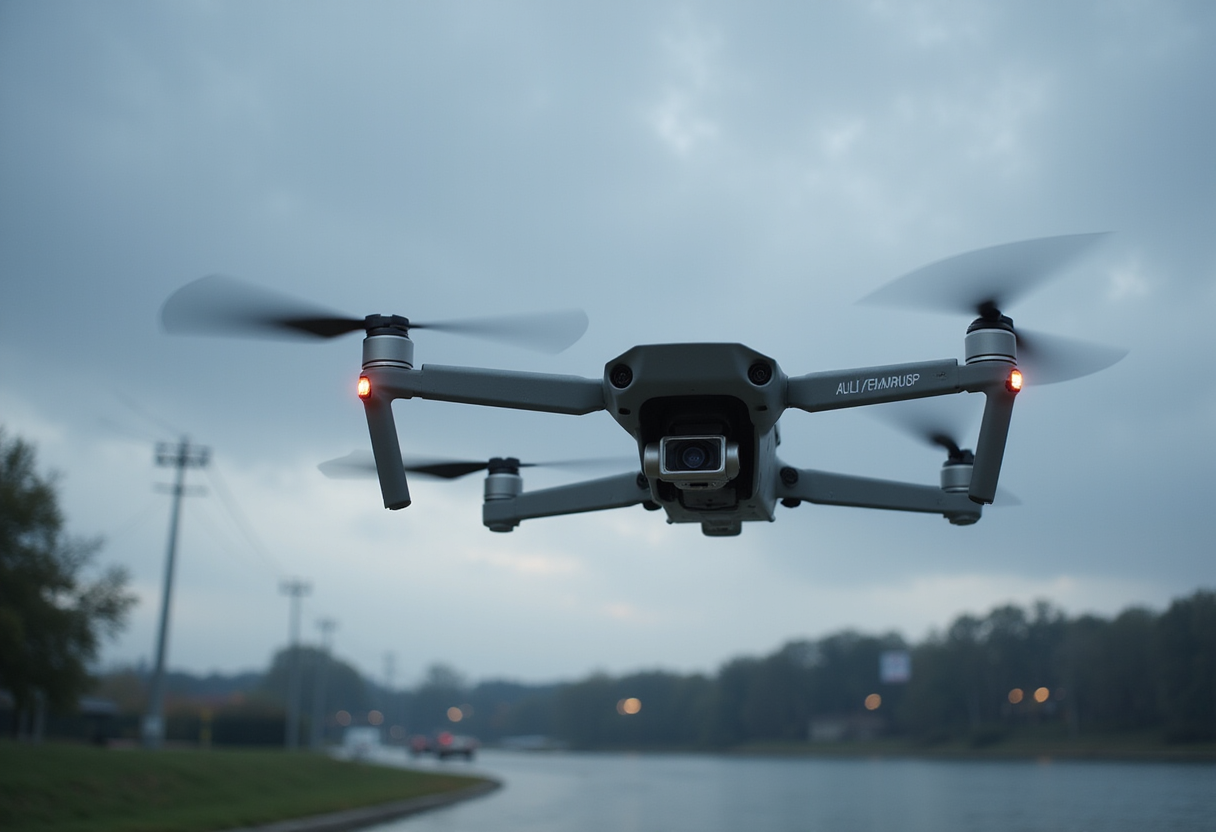
Imported drones and drone components entering the United States will face additional Section 232 tariffs of 25% to 100% starting September 3, 2026, under a proclamation President Donald Trump signed August 13 following a Commerce Department national security investigation.
The steepest duty, 100%, applies to unmanned aircraft systems (UAS) weighing more than 25 kilograms and to any drone equipped with thermal imaging — regardless of weight. Annex I of the proclamation covers thermal-equipped aircraft across weight classes from 250 grams or less up to 25 kilograms, meaning even small thermal drones land in the top tariff bracket. Docking stations and certain covered components also carry the 100% rate.
Smaller drones without thermal imaging fall under a 25% tariff. Annex II covers remotely controlled and non-remotely-controlled aircraft weighing up to 25 kilograms. These are additional duties on top of existing tariffs and charges, not replacements for them.
Most of the new duties take effect September 3, 2026. The 25% tariff on a broader set of covered components — Annex III, covering specified aircraft-parts classifications including propellers and rotors, undercarriages and other aircraft parts imported for UAS use — takes effect later, on February 9, 2027.
Commerce opened the Section 232 investigation on July 1, 2025, under the Trade Expansion Act of 1962, examining U.S. reliance on foreign sources of UAS and their components. The proclamation states: "UAS and UAS components are being imported into the United States in such quantities and under such circumstances as to threaten to impair the national security of the United States."
The White House cited the importance of drones for military operations, law enforcement, mapping, agriculture, disaster relief, search and rescue and other applications.
Domestic manufacturers exposed too
The proclamation acknowledges that the foreign-dependence problem reaches inside U.S. factories. "Most commercial and industrial UAS, even those produced in the United States, incorporate critical parts and components produced overseas," it states. The White House identifies motors, electronic speed controllers, lithium-ion batteries and docking stations among the areas of foreign dependence.
The annexes do not tax every imported motor, battery or speed controller. Annex I targets specific classifications, including static converters, certain electrical control equipment and covered aircraft parts. That leaves U.S. assemblers with a narrow window: the components they still need will cost more in some categories from September, and more again when Annex III duties arrive in February 2027.
Onshoring incentives
Alongside the duties, the proclamation directs Commerce to establish an onshoring program for companies investing in U.S. production of drones and components. Companies can submit plans to build, refurbish or expand U.S. manufacturing facilities, and approved companies may receive tariff benefits on covered imports while their investments are underway. Commerce will monitor approved plans and can rescind benefits if companies substantially fail to meet commitments.
The measures aim to "promote investment, employment, manufacturing, and innovation in the United States for UAS and UAS components and accessories," the proclamation says. The program also ties into the FCC Covered List process and directs Commerce to consider certain onshoring plans approved by the Department of War or the Department of Homeland Security, with coordination among the agencies.
Allied carve-outs
Not all supply chains face the full burden. Products from Japan, South Korea, Taiwan, Switzerland, Liechtenstein and European Union countries can qualify for a rate no higher than 15%. Qualifying UK products receive a rate no higher than 10%.
Eligibility depends on more than where the finished drone is assembled. The proclamation requires that "substantially all the critical components and technology" come from the United States or designated countries. Commerce will establish the process for determining which products qualify.
Broader policy arc
The tariff action follows the June 2025 "Unleashing American Drone Dominance" executive order, which called for measures to expand domestic drone manufacturing and strengthen U.S. supply chains. Commerce opened its Section 232 investigation the following month.
The program could still grow. Commerce can add UAS components to the tariff schedule if it determines their imports contribute to the national security concerns identified in the proclamation or undermine the action. Commerce must provide the President with an update within 120 days.
For importers and forwarders handling UAS freight, the immediate task is classification: thermal-equipped units, Annex I components and docking stations carry the 100% rate in under three weeks, while allied-origin shipments require documentation proving where critical components and technology originate before the lower rates apply.
Original: whitehouse.gov
More from Marcus Bennett
Show full bio
Senior reporter covering marketplaces and e-commerce at Waybill Wire.
145 articles
Related05
US-China trade board charts tariff relief for $60B in goods
Trump Order Hits Polysilicon Imports With 15% Tariff and Price Floors
Trump Slaps Tariffs on Key Input for Solar Panels and Chips
Mexico Customs Overhaul Threatens Border Delays, Cargo Seizures
50% Trump Tariffs on Many Canadian Imports Now in Force