WW/PORTSTERMI
Savannah lands Army Corps permit for $2.3bn container terminal
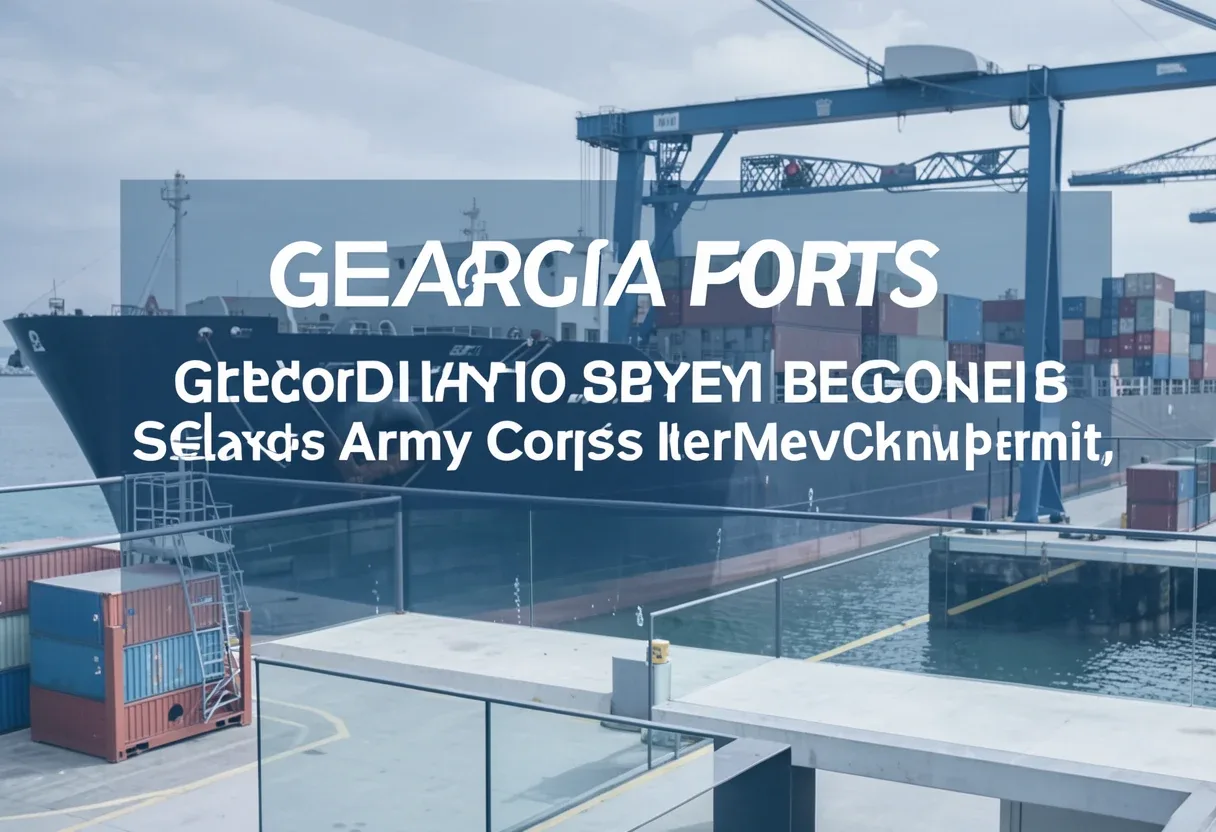
Army Corps permit clears Savannah's $2.3bn, 3.5m TEU terminal on Hutchison Island. Construction starts January 2028; GPA targets a 12m TEU gateway.
- By
- Amara Osei
- Filed
- Length
- 524 words
- Read
- 3 min
Key points05
- US Army Corps of Engineers approved the permit after a three-year review, announced 14 October at State of the Port event
- Savannah Container Terminal: $2.3bn, 350 acres on Hutchison Island, adding 3.5 million TEUs; construction starts January 2028, completion mid-2030s
- Savannah's capacity rises from 7.75 million TEUs toward a 12 million TEU gateway target
- CEO Griff Lynch retires 1 August 2027 after 16 years; revenues up 213%, container volumes up 90% under his tenure
- Separate $1.6bn Ocean Terminal upgrade from 200,000 to 1.75 million TEUs due by end of 2028
The US Army Corps of Engineers has approved the permit for the $2.3 billion Savannah Container Terminal, clearing the way for a 3.5 million TEU expansion that pushes Savannah toward a 12 million TEU gateway. Georgia Ports Authority President Kevin Price announced the permit at the annual State of the Port of Savannah event, ending a three-year federal review.
That's the hardest permitting hurdle cleared. Construction begins in January 2028, with completion pencilled in for the mid-2030s.
What does the terminal actually add?
The Savannah Container Terminal will occupy 350 acres on Hutchison Island, across the river from the existing Garden City operation. It will handle the largest container ships afloat.
For shippers, the arithmetic matters more than the acreage. Savannah currently handles 7.75 million TEUs of capacity. The new facility adds 3.5 million TEUs — a 45% uplift, roughly equivalent to bolting another Charleston onto the port. The long-term target is a 12 million TEU gateway, and this project closes most of that gap.
A $5bn programme, and a succession announcement
The terminal sits inside GPA's $5 billion infrastructure investment programme, which Chairman Alec Poitevint described as the largest in the nation. That builds on $4.13 billion already spent on port and inland infrastructure over the preceding decade — a combined push that translates to more than $9 billion across roughly 15 years.
Price's permit announcement shared the stage with news of a transition. CEO Griff Lynch will retire on 1 August 2027 after 16 years with Georgia Ports. His tenure as Chief Operating Officer from 2011 and then CEO delivered some striking numbers:
- Revenues up 213%
- Container volumes up 90%
- RoRo volumes up 60%
Lynch credited the port's trajectory to "talented employees, a supportive board and the partnership of state government and agencies" under Governor Kemp and the Georgia Legislature. Modest words for a 90% volume gain. Someone moved those boxes.
Ocean Terminal is running in parallel
The permit follows another major build already under way. GPA is spending $1.6 billion converting Ocean Terminal from a 200,000 TEU facility into a 1.75 million TEU operation — nearly a ninefold increase — with completion expected by the end of 2028.
So Savannah's capacity story runs on two tracks: Ocean Terminal delivers within three years, and Hutchison Island carries the port into the next decade.
What does this change for carriers and shippers?
For ocean carriers, it extends Savannah's ability to work the biggest vessels deployed on Asia–US East Coast services, deepening an already established Southeastern alternative to choked Northeast gateways. For importers and exporters routing through the Southeast, it signals capacity headroom well into the 2030s — less risk of the berth congestion that has periodically knocked Savannah's schedule reliability during peak seasons.
For competing ports from Charleston to Houston, it raises the stakes in the Southeastern capacity race. GPA isn't waiting for demand; it's building ahead of it.
The first concrete moves in January 2028. Until then, the pressure lands on Ocean Terminal to deliver its own near-ninefold jump by the end of that year.
Source: Container News
More from Amara Osei
Show full bio
Staff writer covering regulation, policy and their impact on Ocean and air freight, container shipping at Waybill Wire.
495 articles
Related05
Savannah Clears Federal Hurdle for $2.3 Billion Container Terminal
Savannah's $1.6bn Ocean Terminal rebuild passes 60% mark
Savannah's $1.6B Ocean Terminal Rebuild Hits 60% Mark
Savannah's Ocean Terminal berth ready for big ships as $1.6bn rebuild hits 60%
Savannah's $1.6B Ocean Terminal crosses 60% complete with 2,650-ft berth ready