WW/AIRCARGO
Perishables to plane parts: Middle East conflict strands air cargo
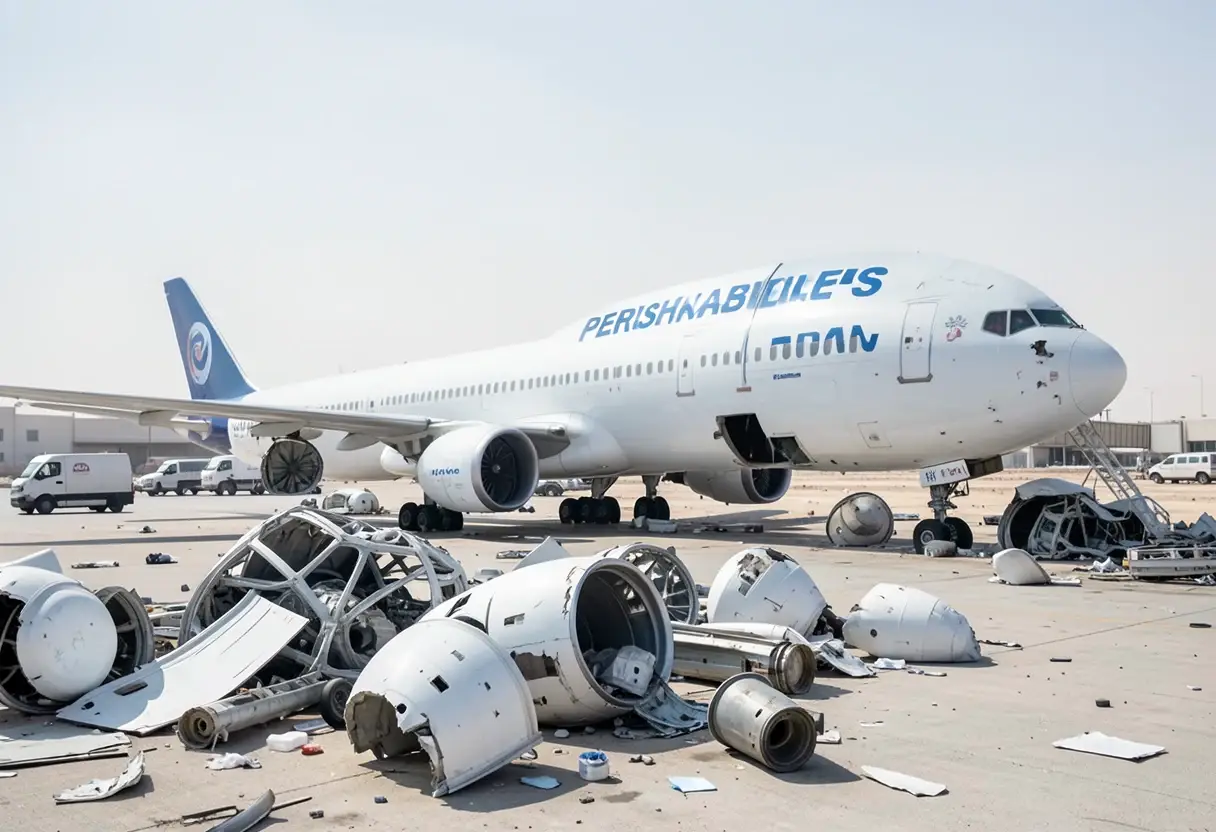
Middle East conflict is stranding air cargo from perishables to aircraft parts, Reuters reports, hitting time-critical supply chains across the region's key trade corridors.
- Desk
- Air Cargo
- By
- Marcus Bennett
- Filed
- Length
- 506 words
- Read
- 3 min
Key points04
- Reuters reports air cargo from perishables to aircraft parts stranded by Middle East conflict disruption
- Disruption spans both time-critical food supply chains and industrial AOG supply chains
- No stranded volume or dollar value has been quantified in the reporting so far
- Forwarders are rerouting freight away from the affected region at higher cost
Air cargo from perishable food to aircraft spare parts is stranded as the Middle East conflict disrupts freight operations, Reuters reports — a breakdown that hits time-critical supply chains hardest and leaves forwarders reworking routings at short notice.
The report names two very different cargo classes caught in the same bind. Perishables, which lose commercial value by the hour, and aircraft parts, the so-called AOG material that grounds fleets when it fails to arrive. That pairing matters commercially: neither commodity tolerates delay, and neither has a cheap substitute for air freight.
Why these two cargo types signal wider damage?
Perishables and AOG parts sit at the top of the airfreight value chain. When both stall, the disruption is not confined to a single trade lane or a single commodity niche. It signals that routings through the affected region — a natural corridor between Asia, Europe and Africa — are no longer reliable for even the most premium freight.
Reuters does not, it should be noted, quantify the volume stranded or attach a dollar figure to the disruption. The absence of numbers is itself informative: carriers and forwarders in active conflict zones rarely publish capacity data quickly, and early accounts tend to understate rather than overstate the operational impact.
What does this mean for shippers and forwarders?
For shippers of perishables, the immediate consequence is spoilage risk and spot-market exposure on alternative routings. For airlines and maintenance operators, delayed parts translate into parked aircraft — an AOG situation can cost an operator heavily per day, which is why AOG freight pays premium rates even in calm markets.
Forwarders face the familiar wartime calculus:
- rebooking freight onto routings that avoid the affected airspace, usually at higher cost;
- managing customer expectations where transit-time guarantees no longer hold;
- deciding which time-critical shipments get priority access to remaining capacity.
Each of those decisions carries a price. Reuters's account does not specify how far rates have moved on alternative lanes, and shippers should treat early pricing signals with caution until exchange-tracked benchmarks confirm them.
The pattern is familiar
This is not the first regional conflict to expose air cargo's dependence on stable corridors. Airspace closures force detours that burn fuel and hours, and carriers drop destinations outright when insurance, crew safety or overflight permissions fail. Cargo stranded on the ground is the visible symptom; the less visible cost accumulates in longer routings and tighter capacity elsewhere in the network.
Reuters's framing — from perishables to plane parts — suggests the disruption spans both belly-hold and freighter traffic, both import-reliant food supply chains and industrial supply chains. If that breadth holds, the effects will surface in freight-rate indices and transit-time data in the weeks ahead, whatever the pace of the conflict itself.
The caveat is necessary: conflict-driven disruption can ease as quickly as it arrives, and rerouted networks have absorbed Middle East shocks before. The test will be whether stranded volumes clear within days or persist, and that — on current reporting — remains an open question.
Source: Google News: air cargo
More from Marcus Bennett
Show full bio
Senior reporter covering regulation, policy and their impact on Ocean and air freight, container shipping at Waybill Wire.
543 articles
Related05
Attacks Hit Saudi Air Cargo as China-Europe Air Rates Slide
Iran Conflict Pushes Container Routes Off Course
Air freight rates set to climb as Middle East disruption tightens capacity
Air Cargo Demand Climbs 4.0% in April as Middle East Routes Absorb Shock
Prolonged Iran War Triggers Blank Sailings and Falling Box Demand