Air Cargo
Nvidia halts AI server shipments to four Asian markets as US export rules bite
Nvidia has told Dell, Supermicro and other partners to halt AI server shipments to Malaysia, Singapore, Thailand and Indonesia under new US export controls that require licences from 19 November.
- Desk
- Air Cargo
- By
- Marcus Bennett
- Filed
- Length
- 802 words
- Read
- 4 min
Key points
- Nvidia ordered manufacturing partners to stop server shipments to Malaysia, Singapore, Thailand and Indonesia, the FT reported citing three sources
- US export licences have been required for certain advanced chip shipments to those four countries and Brazil since 19 November
- Banks paused a $480m loan for Nvidia GPU purchases at a Malaysian data centre, Bloomberg reported
- Cathay carried 162,747 tonnes in October, up 7.5% year on year, while capacity rose only 0.5%
- Jensen Huang is due to testify before the US Senate Banking Committee on export controls on 3 December
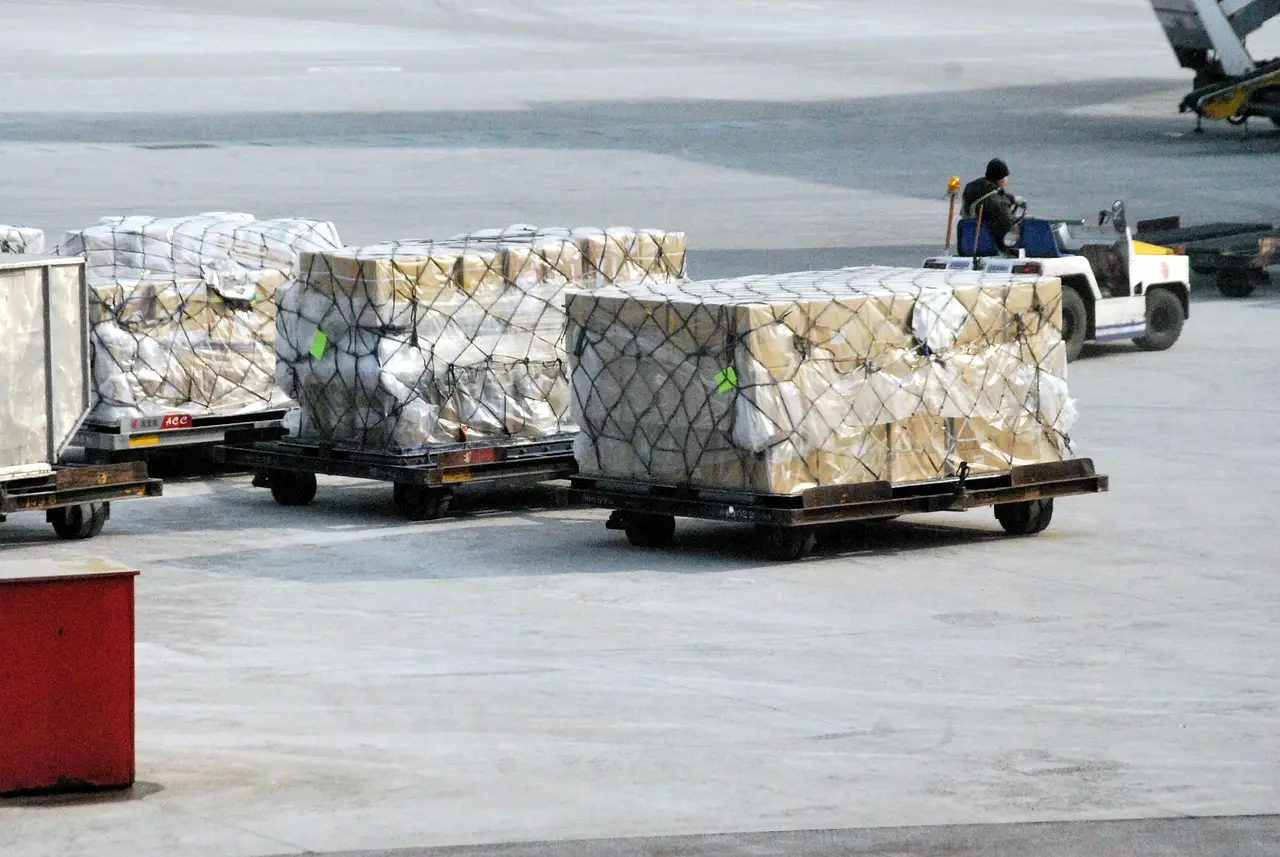
Nvidia has told its manufacturing partners to stop shipping servers containing its chips to Malaysia, Singapore, Thailand and Indonesia, according to a Financial Times report citing three sources, in a move that cuts off a fast-growing stream of air cargo into South-east Asia just as the region's freight capacity is stretched thin.
Manufacturers including Dell and Supermicro have informed buyers in the four countries that Nvidia will not allow their orders to ship, the FT reported. None of the companies involved has commented, and the duration of the halt remains unclear — a gap shippers and forwarders will want closed quickly, because nobody has yet quantified how much of the affected cargo moves by air.
Nikkei Asia had earlier reported that at least two Nvidia server partners suspended shipments to South-east Asian customers, with one also pausing orders from new customers in the region. That report, too, named neither the tonnage affected nor which shipments had been booked on freighter or belly capacity.
What triggered the halt?
Since 19 November, the US has required licences for shipments of certain advanced chips subject to its export controls to those four South-east Asian countries plus Brazil. The rules can extend to some foreign-made chips and carry an exclusion for qualifying US-headquartered end users or consignees, or those with a US-headquartered ultimate parent — a carve-out that matters for multinationals routing hardware through regional hubs.
Separate provisions target overseas data centres supplying significant computing power to certain restricted users.
Washington also moved this week to add seven companies to its Entity List, including firms linked to Nvidia partner Megaspeed, citing diversion risk. Malaysia said it would advise its data centre operators against hosting or providing services to the listed companies.
The financing side is already reacting. Bloomberg reported that banks paused a $480m loan intended to fund Nvidia GPU purchases for a data centre in Malaysia — a signal that lenders see the licence regime as more than a paperwork delay.
Why the timing is awkward for air cargo
The suspension lands on a market running hot. Fred Ruggiero, Cathay Cargo's Americas cargo chief, told The Loadstar at TIACA's Air Cargo Forum in Miami that the carrier is hunting for more intra-Asia capacity. Another airline executive at the same forum pointed to technology shipments from Taiwan and Vietnam as a major source of pressure on space.
The numbers back that up. Cathay carried 162,747 tonnes of cargo in October, up 7.5% year on year, while network-wide cargo capacity rose just 0.5% — a gap that explains the space squeeze. The carrier cited strong export demand from North-east and South-east Asia, including network equipment shipments from the south-east, and said semiconductor traffic helped drive growth in its specialist cargo business. An additional A330 freighter operated by Air Hong Kong, under a lease announced in June, is due to serve selected regional routes. Across the industry, IATA recorded a 10.2% year-on-year rise in air cargo traffic within Asia in September.
South Korea adds to the picture. The country's semiconductor exports nearly quadrupled in value in the first 20 days of November, rising 294.4% year on year to $38.5bn, with chips accounting for 49.7% of total export value over the period.
Is the traffic one-way?
Not entirely. Cathay is flying server racks in both directions across the Pacific.
"We ship a good number of server racks from Asia into the US, as well as from the US to Asia," said Mr Ruggiero, although he conceded that "we ship more on the inbound than outbound."
The US export rules could compress both flows — the restrictions cover chips shipped into South-east Asia, while data centre construction on both sides of the Pacific keeps hardware in the air. A GE Vernova logistics representative told the Miami forum that conventional utility projects typically ran on a multi-year timetable, but hyperscalers gave the company far less time to manufacture and deliver equipment to site, so it uses "a lot more air freight."
What happens next?
The political dimension is now explicit. The US move came on the same day Nvidia announced Jensen Huang's return as chief executive, and Huang is due to testify before the US Senate Banking Committee on export controls on 3 December — a session that could clarify whether the licence regime tightens further or settles into routine processing.
For carriers and forwarders, the immediate question is volume: if the suspensions hold, January — already a weak month for air cargo — loses one of its few growth engines. The industry will be hoping these suspensions are just that, and that AI hardware returns to the skies before the first quarter's capacity planning is locked in.
Source: The Loadstar
More from Marcus Bennett
Show full bio
Senior reporter covering regulation, policy and their impact on Ocean and air freight, container shipping at Waybill Wire.
1,039 articles