WW/AIRCARGO
NTSB: Amazon Air jet overran half of Miami runway in fatal crash
NTSB says an Amazon Air cargo plane flew past nearly half of a Miami runway before a fatal landing. The finding anchors a probe that will shape safety and commercial decisions for the carrier and its contractors.
- Desk
- Air Cargo
- By
- Elena Vasquez
- Filed
- Length
- 618 words
- Read
- 3 min
Key points05
- NTSB says an Amazon Air cargo plane flew past nearly half of a Miami runway before a fatal landing.
- CNN first reported the NTSB finding.
- The accident occurred during the landing phase at Miami International Airport.
- Amazon Air operates Boeing 737-800 converted freighters under contracts with ATSG, Atlas Air and ASL Airlines.
- The NTSB typically publishes preliminary reports within weeks and final probable-cause rulings within 12 to 24 months.
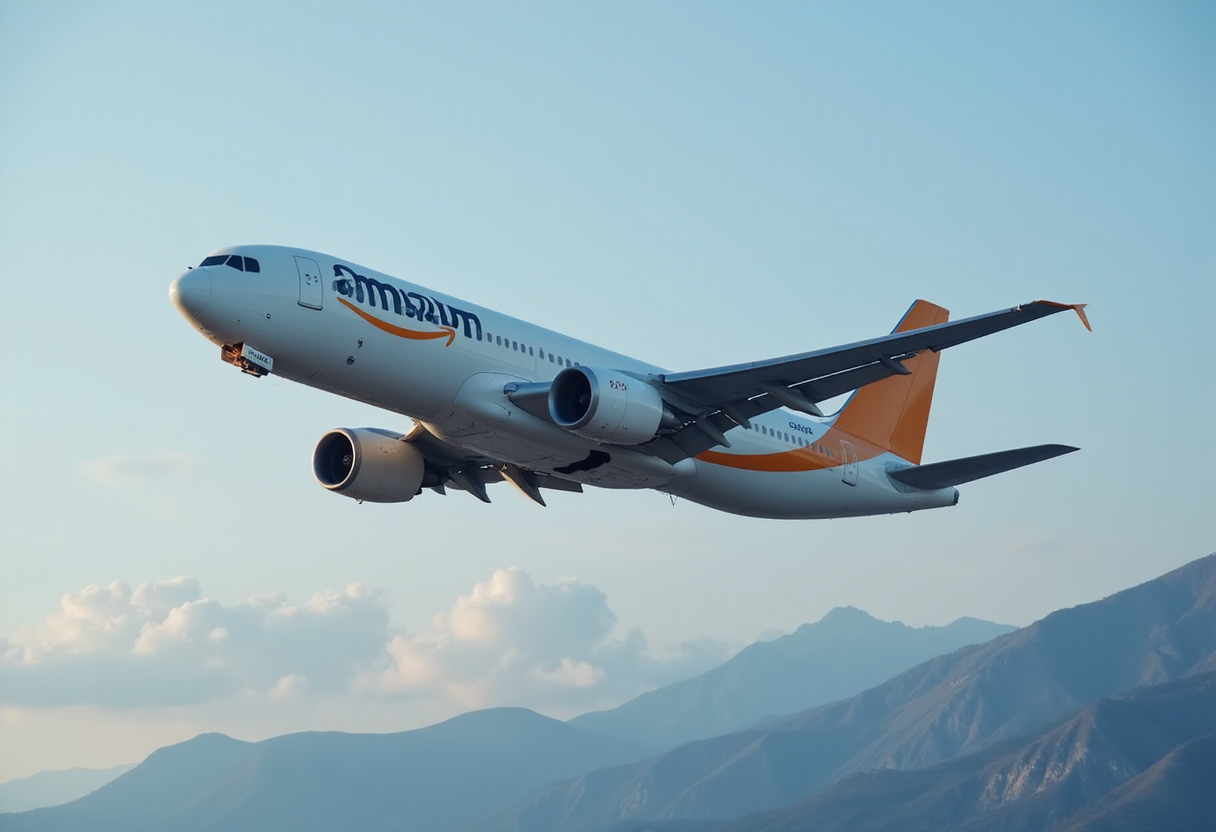
An Amazon Air cargo aircraft flew past nearly half of a Miami runway before crashing in a fatal landing, the National Transportation Safety Board (NTSB) has determined.
The finding, reported by CNN, places a runway excursion at the center of a probe into a deadly accident involving Amazon's contracted freighter network. According to CNN's report, the aircraft "flew past nearly half of Miami runway before deadly landing," per NTSB investigators.
The NTSB's preliminary account indicates the plane completed an abnormal ground roll on landing, covering roughly half the available paved surface before the fatal event. A runway overrun of that magnitude points to potential questions about approach speed, braking effectiveness, the runway distance used in the landing, or surface conditions at touchdown.
What does the NTSB finding mean?
A half-runway overrun during landing qualifies as a serious safety event. Industry accident data consistently rank runway excursions among the leading categories of commercial-aviation mishaps. An aircraft that consumes roughly 50 percent of paved surface after touchdown has lost substantial margin before reaching the end of the runway.
Investigators will typically examine:
- Approach parameters and airspeed at the runway threshold
- Aircraft weight and balance at landing
- Runway surface condition and braking action reports
- Weather data near the time of touchdown
- Crew decision-making and CRM (crew resource management)
- Maintenance records, particularly for braking systems
The NTSB typically publishes a preliminary report within weeks, followed by a factual update, and a final probable-cause determination roughly 12 to 24 months after the event.
Why Miami?
Miami International Airport (MIA) is a major cargo gateway for Latin American trade and a hub for e-commerce operators moving parcels between North America, South America, and the Caribbean. The airport ranks among the busiest cargo airports in the U.S. by tonnage, and its catchment area covers a high-volume network of import and export shippers.
Amazon Air — also marketed as Prime Air Cargo — operates a fleet of Boeing 737-800 converted freighters under contracts with carriers such as Air Transport Services Group (ATSG), Atlas Air, and ASL Airlines. These aircraft feed packages into regional sortation centers across the U.S. Southeast, with Florida a key market for next-day parcel volumes.
Any runway excursion at MIA draws attention because of the airport's high-volume cargo throughput and the densely populated areas south and west of the airfield, both of which raise the consequence of any off-runway excursion.
What about the commercial fallout?
An accident on a contracted freighter triggers obligations for the operating carrier and for Amazon, which controls routing, scheduling and network design under the Amazon Air brand. Insurers and aircraft lessors typically watch NTSB dockets closely for any indication of mechanical failure, crew error, or operational policy concerns.
Findings of this kind also feed into Amazon's carrier-selection process as the company scales its air arm. Amazon Air has grown rapidly since 2016, expanding from a handful of leased 767 freighters into a 100-plus aircraft network spanning more than 40 airports in the U.S. and Europe.
What's next?
The NTSB's probable-cause ruling will determine whether the agency issues safety recommendations to the FAA, to the operating carrier, or to Amazon as the contracting customer. Investigators will publish a factual report and, ultimately, a final report identifying the cause.
The agency has not yet released a full timeline, the aircraft registration, or the identity of those aboard. Until the NTSB publishes its preliminary report, the half-runway overrun remains the most concrete data point in the case, and commercial carriers across the parcel air network will be watching the docket for any signal that reshapes fleet or crew policy.
Source: Google News: air cargo
More from Elena Vasquez
Show full bio
News editor covering industry trends and analytics at Waybill Wire.
220 articles
Related05
Amazon Air jet floated past half of Miami runway before fatal landing, NTSB finds
NTSB: Amazon Cargo Jet Landed 3,750 Feet Past Threshold
Amazon Air pilot's late touchdown caused deadly crash, NTSB finds
NTSB: Amazon Cargo Crew Attempted Go-Around Before Fatal Crash
NTSB: No wind warning before Amazon cargo jet crashed in Miami