WW/PORTSTERMI
MSC's TiL wins Dunkirk's second container terminal concession
TiL, MSC's terminal arm, will build and run Dunkirk's second box terminal from 2029, lifting port capacity to 2m TEU as 2025 traffic hit 88% of existing capacity.
- By
- Marcus Bennett
- Filed
- Length
- 643 words
- Read
- 3 min
Key points03
- TiL will develop and operate Dunkirk's second container terminal from 2029 under the CAP 2020 programme, raising capacity from 850,000 TEU to 2m TEU.
- The project includes a 1,000m deepwater quay dredged to 17.5m, able to berth two very large container ships simultaneously; construction began in May 2026.
- Dunkirk's 2025 container traffic grew 14% to 747,000 TEU — 88% of current terminal capacity — while hinterland volumes rose 20% to 520,000 TEU.
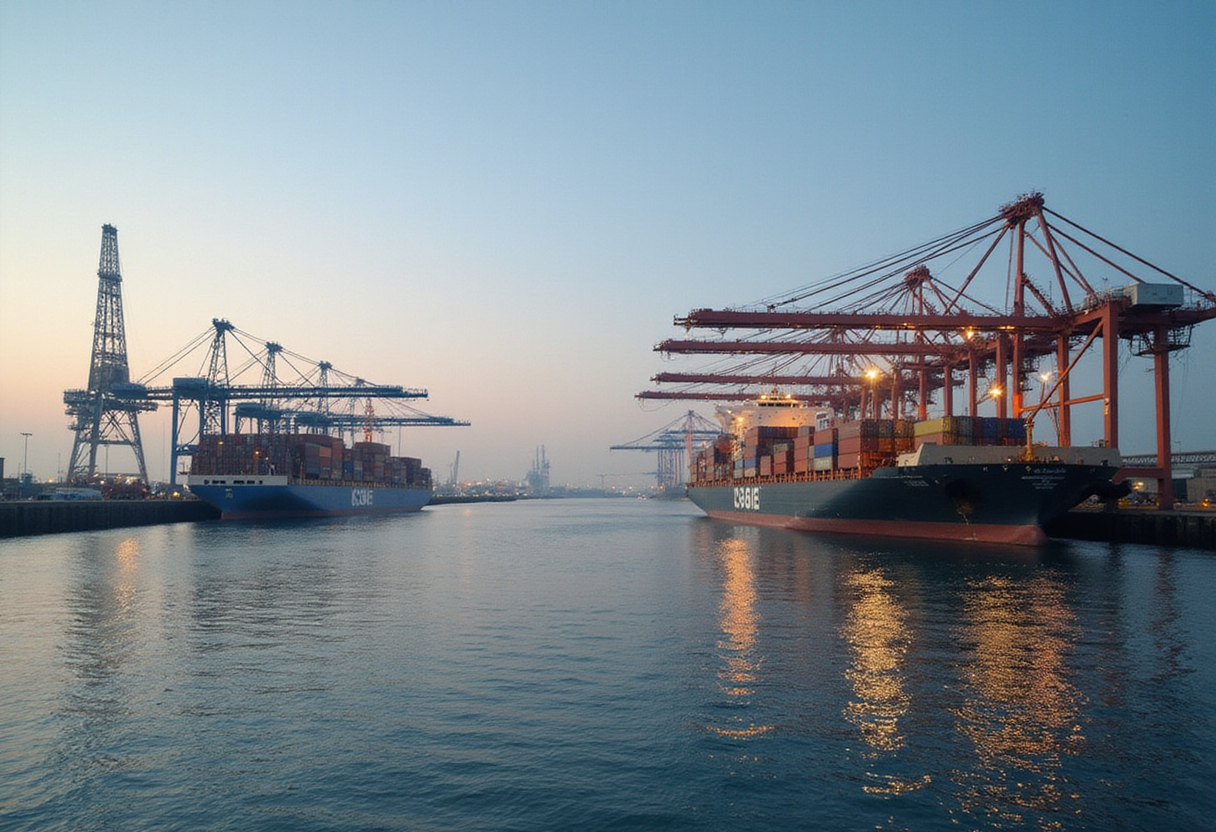
The Port of Dunkirk Authority has picked Terminal Investment Limited (TiL), MSC's terminal arm, to develop and operate the French port's second container terminal, with operations due to start in 2029.
Announced on 25 September, the decision follows an MoU signed by the port authority and TiL on 6 July. The split of responsibilities is clear: the port authority builds the infrastructure, while TiL develops the terminal and installs its equipment.
The project sits at the heart of Dunkirk's CAP 2020 expansion programme, approved by the supervisory board on 22 November 2024, which aims to more than double the port's annual container handling capacity from 850,000 TEU to 2m TEU and build out a new container complex in the port's western area.
The hardware
The new infrastructure includes a 1,000m deepwater quay plus a 170m connecting section, dredged to 17.5m. That is deep enough — and long enough — to berth two very large container ships simultaneously. Construction of the quay began in May 2026, and by the end of August crews were completing five diaphragm wall panels per week out of 188 planned. Completion is scheduled for January 2029, with the hydraulic excavation contract expected to be awarded before the end of 2026, ahead of the main dredging works. A new road linking the West Port to the A16 motorway opens in early October.
The financing closed in December 2024, when the European Commission cleared €127m in French state aid. The package also contains €87m from government via the State-Region Planning Contract and a €200m loan from Banque des Territoires, repayable over 30 years.
Why the port says it is needed
Dunkirk's own numbers make the capacity case. Container traffic rose 14% in 2025 to 747,000 TEU, matching the 2022 record and filling 88% of current terminal capacity. Hinterland container volumes climbed 20% to 520,000 TEU — the sixth consecutive year of growth — and have more than doubled over the past decade, underscoring the port's weight for shippers and manufacturers in the Hauts-de-France region.
In January 2026, port chairman Maurice Georges defended the investment on market-share grounds, arguing that lifting Dunkirk's slice of the Northern European container market from 2% to 3% would justify the spend.
For carriers and shippers, the commercial logic cuts both ways. MSC already calls at Dunkirk with several services, including the NWC-WAF service to West Africa and a Pendulum service linking the port to several European destinations. The port authority expects MSC's arrival as a terminal operator to strengthen maritime connectivity and pull in additional transhipment and import-export freight.
But TiL's entry also hands the world's largest container line a controlling position at a North European gateway — a consideration for rival carriers now weighing Dunkirk against competing calls, since terminal access and slot allocation will sit with an MSC subsidiary.
What is not public
The new terminal will be built in phases, yet TiL has not disclosed its initial capacity, planned equipment or new shipping services. The port authority has likewise withheld details of the tender process — the number of bidders, the selection criteria and the contractual commitments agreed with TiL. Concession fees, investment obligations and potential traffic targets all remain undisclosed.
Neighbouring competition
The new facility will sit next to the Flanders Terminal, operated by CMA CGM's Terminal Link. That existing facility is undergoing a €140m modernisation to lift capacity to 1.5m TEU, with two additional ship-to-shore cranes set to bring its fleet to ten by 2027.
Between the two terminals, Dunkirk is positioning roughly 3.5m TEU of capacity against a market it currently serves at 747,000 TEU — a bet that MSC-driven volume, hinterland growth and a larger North European market share will absorb the ramp-up from 2029 onward.
Original: journalmarinemarchande.fr
More from Marcus Bennett
Show full bio
Senior reporter covering marketplaces and e-commerce at Waybill Wire.
145 articles
Related05
Savannah's Ocean Terminal berth ready for big ships as $1.6bn rebuild hits 60%
Savannah's $1.6bn Ocean Terminal rebuild passes 60% mark
4.3m TEU stuck waiting at berth as port storm deepens
DP World Lands 2,000-Tonne Cranes as London Gateway Berth 5 Takes Shape
Savannah's $1.6B Ocean Terminal Rebuild Hits 60% Mark