WW/OCEANFREIG
Monjasa Buys Five Schulte Tankers in Largest-Ever Fleet Deal
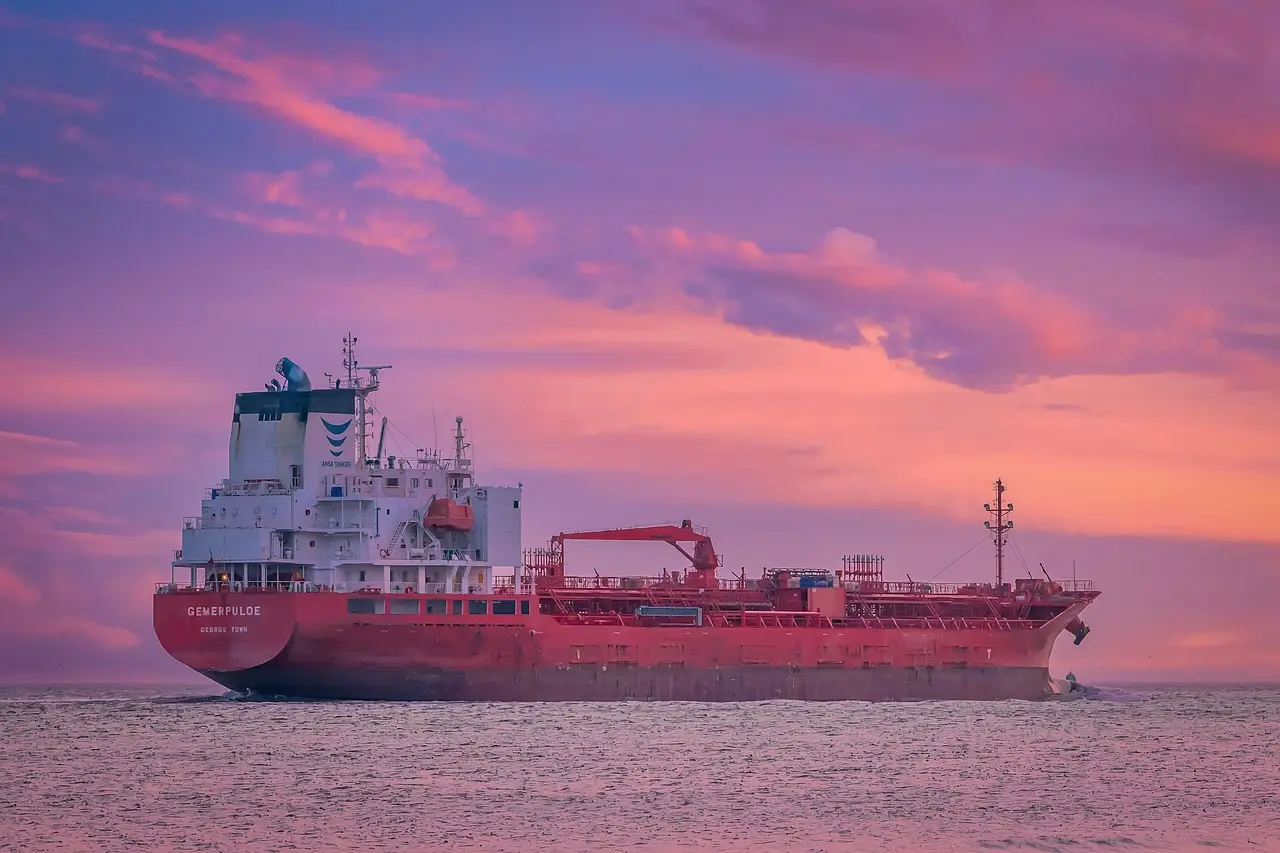
Monjasa has bought five 16,500 dwt sister tankers from Bernhard Schulte in its biggest-ever fleet deal, lifting its owned fleet to 20 ships focused on West Africa.
- Desk
- Ocean Freight
- By
- Marcus Bennett
- Filed
- Length
- 682 words
- Read
- 3 min
Key points04
- Monjasa acquired five sister product tankers of ~16,500 dwt each, built 2010–2011, from Bernhard Schulte; price undisclosed.
- The deal is Monjasa's largest-ever tonnage purchase, lifting its owned fleet to 20 tankers plus ~10 on time charter.
- Four vessels are already trading in West Africa and Northwest Europe; the fifth, Monjasa Trigger, arrives by end of November.
- The deal follows Monjasa's 2023 West African acquisitions: the 68,589 dwt Monjasa Leader and 13,051 dwt Monjasa Refiner.
Danish bunker supplier and shipowner Monjasa has acquired five sister product tankers from Germany's Bernhard Schulte — the largest single tonnage purchase in the company's history. The price was not disclosed, and that omission matters: without a figure, the market cannot judge whether the Fredericia-based group bought well or simply bought big.
The facts that are on the record point to a deliberate, homogeneous play. All five vessels were built in 2010 and 2011 and each measures roughly 16,500 dwt. Four have already joined the fleet and are trading in West Africa and Northwest Europe under new names: Monjasa Tracer, Monjasa Tuner, Monjasa Twister and Monjasa Tracker. The fifth, Monjasa Trigger, is scheduled to follow by the end of November.
Before the sale, the ships traded as Eva Schulte, Erika Schulte, Everhard Schulte, Edzard Schulte and Elisabeth Schulte respectively.
How big is the deal for Monjasa's fleet?
The acquisition lifts Monjasa's owned fleet to 20 tankers, with a further 10 or so ships on time charter. In other words, one transaction added roughly a third of the group's current owned tonnage — 25% of its total controlled fleet in a single stroke. For a company that has grown its shipping arm incrementally, that is a step-change, not a routine top-up.
Why five identical ships?
Group chief executive Anders Østergaard framed the purchase around standardisation rather than size for its own sake. Taking on five identical vessels means established operating costs and known technical requirements — a pitch that resonates with bunker operators, where crew training, spares inventory and drydocking schedules all get cheaper when ships match.
"Finding five sister vessels of this quality, at competitive market terms and with an operating profile that fits our existing fleet, is not something you come across every day," Østergaard said.
The quote is telling in what it concedes: second-hand tonnage of this quality is scarce, and "competitive market terms" is a claim the undisclosed price prevents outsiders from verifying. Still, buying five 13-to-14-year-old MR-adjacent product tankers at once suggests Monjasa moved when an owner — Bernhard Schulte, one of Germany's largest ship managers — wanted out, and that kind of counterparty rarely sells cheap assets quietly.
Where will the tankers work?
The immediate deployment is West Africa, where the ships will support Monjasa's marine fuels operations. The region is the group's stated centre of gravity for this deal, and the four delivered vessels are already splitting their time between West African and Northwest European trades.
The company is not locking itself into bunkering alone, however. Monjasa says it also sees opportunities to employ the five tankers in commercial freight trading and elsewhere in its global supply network. That flexibility is the quiet hedge in this deal: if bunkering margins compress, the tonnage can chase cargo revenue instead.
What does this continue?
The purchase extends an established West African investment pattern. In 2023 Monjasa brought in two other tankers for the region:
- Monjasa Leader — 68,589 dwt, acquired for floating storage duties
- Monjasa Refiner — 13,051 dwt, acquired for bunker supply operations
Set against that pair, the five new arrivals sit in size between them at 16,500 dwt each — small enough for port flexibility, large enough for meaningful parcel work. The 2023 deal covered storage and supply; this one adds trading optionality.
What it means for the market
For counterparties in West African bunker supply, the message is capacity: a supplier that controls more of its own tonnage can hold positions longer and price more aggressively than one dependent on spot-chartered ships. For owners of similar mid-aged product tankers, the transaction is another data point that quality sister-ship packages attract premiums in size — and that European shipping families are willing sellers at current levels, even if neither party is saying at what number.
Monjasa has given no guidance on further acquisitions, but with 20 owned ships, a proven West African template and a stated appetite for freight trading, more tonnage moves of this kind look likelier than a pause.
Source: Splash247
More from Marcus Bennett
Show full bio
Senior reporter covering regulation, policy and their impact on Ocean and air freight, container shipping at Waybill Wire.
841 articles
Related05
Exmar banks $22m profit on first suezmax resale
Asyad and MOL cash in $63m for 15-year-old LR2 tanker Haima
Trafigura buys seven SFL tankers, books $175M gain as reroutings lift values
Wallenius Wilhelmsen Bets $1.5 Billion on Up to 12 LNG Car Carriers
Emarat Maritime books six more LR1s in China, tripling fleet