WW/OCEANFREIG
Matson Christens Makua, First of Three $1 Billion Aloha Class Ships
Matson christens Makua, first of three US$1 billion Aloha Class newbuilds for its Hawaii and China–Long Beach Express trades, with 3,600 TEU LNG-ready delivery from Q1 2027.
- Desk
- Ocean Freight
- By
- James Calloway
- Filed
- Length
- 469 words
- Read
- 2 min
Key points05
- Matson and Hanwha Philly Shipyard christened Makua, first of three Aloha Class ships, on 10 October
- The three Jones Act-compliant vessels represent an investment of approximately US$1 billion
- Each ship offers 3,600 TEU capacity, 259 metres length and speeds approaching 24 knots
- Makua delivers Q1 2027, the second ship Q3 2027 and the third Q2 2028
- The newbuilds are delivered LNG-ready, unlike Matson's two existing Aloha Class vessels
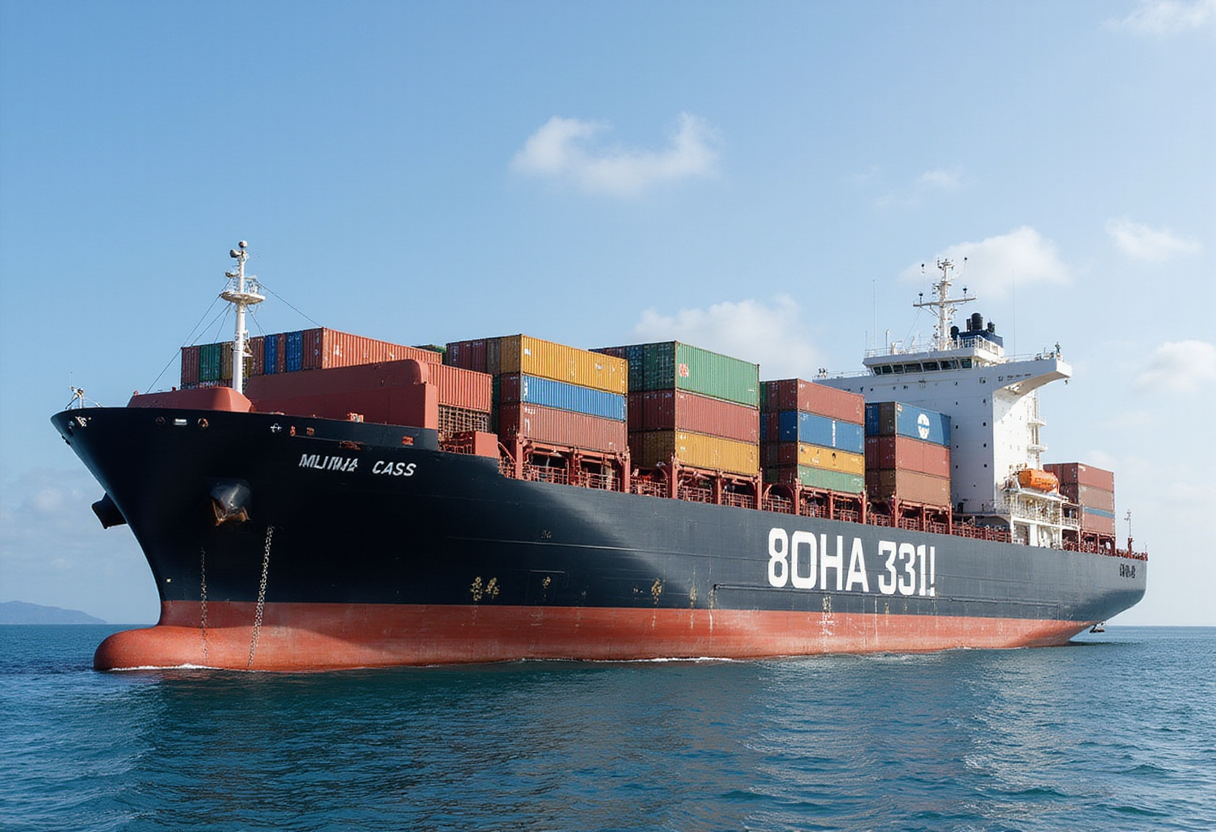
Matson has christened Makua, the first of three Aloha Class containerships worth roughly US$1 billion combined, at Hanwha Philly Shipyard in Philadelphia.
Board member Jenai Wall performed the christening on 10 October before about 300 guests, including government representatives, company executives, shipyard employees and union leaders. The three Jones Act-compliant vessels will replace three ships now operating across Matson's Hawaii and China–Long Beach Express services.
What does the newbuild programme change?
The renewal is tightly sequenced. Makua is scheduled for delivery in the first quarter of 2027, the second vessel in the third quarter of 2027 and the third in the second quarter of 2028. The follow-on ships will be named Malama and Makena.
"We look forward to putting Makua to work serving our customers early next year," said Matt Cox, Chairman and Chief Executive Officer of Matson. He added that the three vessels would improve operating efficiency, reliability and capacity across the carrier's core services.
For shippers on the Hawaii trade and the China–Long Beach Express, that translates into newer, faster tonnage and incremental capacity on lanes Matson dominates under Jones Act protections. For Matson, replacing older ships with dual-fuel newbuilds cuts a significant chunk of operating cost and emissions exposure from its core network.
How do the new Aloha Class ships compare?
Each newbuild offers 3,600 TEUs of capacity and measures approximately 259 metres in length. Top speed approaches 24 knots, ranking them among the fastest vessels in Matson's fleet.
The ships come with dual-fuel engines able to run on conventional marine fuel or LNG. Environmental features include:
- Fuel-efficient hull design
- Double-hull fuel tanks
- Freshwater ballast systems
One detail matters for the fuel transition. Matson's two existing Aloha Class vessels required modifications for LNG operation. The three new ships will arrive LNG-ready from the yard, removing retrofit cost and downtime from the delivery schedule.
The LNG-ready delivery also gives Matson optionality. It can burn conventional fuel while LNG pricing and bunkering infrastructure settle, then switch without a yard visit.
Why the Jones Act context matters?
These are Jones Act vessels, built in a US shipyard — Hanwha Philly — for deployment in US domestic and Matson-flagged trades. That regulatory frame explains both the US$1 billion price tag for three 3,600 TEU ships and the fleet-replacement logic: Matson cannot simply charter cheaper foreign-built tonnage into these services.
The christening also marks a milestone for Hanwha Philly Shipyard, which secures work across the three-ship series through 2028.
With Makua due in service in early 2027, Malama following late that year and Makena closing out the programme in mid-2028, Matson's core Hawaii and China–Long Beach Express networks will run on faster, LNG-capable tonnage within four years.
Source: Container News
More from James Calloway
Show full bio
Correspondent covering companies, deals and strategy in Ocean and air freight, container shipping at Waybill Wire.
417 articles
Related05
Matson Christens First of Three $1bn Jones Act Boxeships in Philadelphia
China United Lines Books Two 14,000 TEU Newbuilds at $150m Each
Uni-Tankers books eight stainless chemical tankers at Chinese yard
Hanwha Ocean Wins ABS Nod for 60 MW Floating Data Center
Hoa Phat Taps Nam Trieu Yard for 65,000 dwt Ultramax Newbuild